



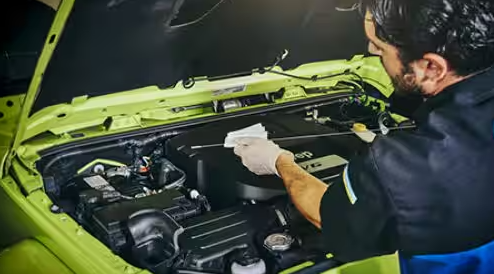
Your Jeep’s transfer case works hard behind the scenes, splitting power between your front and rear axles to deliver that legendary four-wheel-drive capability you depend on. This essential component often gets overlooked during routine maintenance. Knowing when and why to change your transfer case fluid can save you thousands in repairs and keep your Jeep running strong, whether you’re navigating Carmel’s winter roads or tackling weekend trails. If you’re due for service, schedule your service appointment at Meadowland of Carmel CDJR to keep your drivetrain protected.
Understanding Your Jeep’s Transfer Case and Why It Matters
What the Transfer Case Does in Your 4WD System
Think of the transfer case as your Jeep’s power distributor. This gearbox sits between your transmission and axles, controlling how engine power reaches all four wheels. When you shift into 4WD, the transfer case jumps into action, sending torque wherever you need it most. That means proper traction on slippery surfaces, steep hills, and rough terrain. Without well-maintained transfer case fluid, this crucial component can’t protect metal gears from friction and heat.
The fluid inside juggles multiple jobs: lubricating moving parts, pulling heat away, and keeping internal components clean. Over time, this fluid breaks down from constant pressure and temperature swings. Contamination from metal shavings and moisture cuts into its effectiveness. That makes regular fluid changes just as important as your engine oil maintenance.
How Transfer Case Service Differs from Transmission Service
Lots of Jeep owners confuse transfer case maintenance with transmission service, but these are completely separate systems that need different care. Your transmission manages gear changes and power delivery from the engine. The transfer case works downstream, handling power distribution to your axles. While they’re connected, they use different fluids and follow different service schedules.
Complete transmission service typically includes fluid exchange, filter replacement, and inspection of transmission components. Transfer case service focuses on draining old fluid and refilling with fresh lubricant designed for that gearbox’s specific needs. Both services protect your drivetrain investment, but handling each system correctly ensures nothing gets missed.
Recommended Transfer Case Fluid Change Intervals for Jeeps
Factory Guidelines for Common Jeep Models
Jeep’s factory maintenance schedules vary significantly by model, year, and drivetrain. For the Jeep Wrangler JL, the owner’s manual specifies inspecting transfer case fluid every 30,000 miles and changing it at 60,000 miles for vehicles with a manual transmission or under severe-duty use, with the automatic transmission variant potentially going longer under normal conditions. Grand Cherokee models vary widely, with some owner’s manuals specifying change intervals of 104,000 to 120,000 miles under normal use. Because intervals differ so much, consulting your specific owner’s manual or a factory-trained technician is essential for your exact vehicle.
Factory-trained technicians at our service center can also verify the recommended schedule during routine maintenance visits. Following these guidelines helps maintain your warranty coverage and ensures your four-wheel-drive system operates as designed.
Severe Driving Conditions That Require More Frequent Changes
Severe driving conditions demand more frequent service, and Jeep’s factory severe-duty schedules reflect this. For the Grand Cherokee under severe-duty use (off-roading, frequent towing, police or fleet service), the factory interval is typically 60,000 miles.
Deep water crossings, extended idling, and short trips in extreme temperatures also count as severe use. If you regularly trailer boats or campers, hit muddy trails, or plow snow during Carmel winters, your Jeep experiences harder-than-average wear.
How Your Driving Habits Around Carmel Affect Fluid Life
Off-Roading, Towing, and Weekend Adventures
Weekend adventures take a serious toll on transfer case fluid that daily drivers never see. Drop into 4WD Low on rocky trails or through deep snow, and your transfer case works overtime. The constant switching between two-wheel and four-wheel drive modes creates heat and pressure that speeds up fluid breakdown. Water and dirt intrusion during trail runs can contaminate the fluid, reducing its protective qualities.
Towing adds another layer of stress. Whether you’re hauling a boat to nearby lakes or pulling equipment for home projects, that extra weight forces your transfer case to work harder. This pushes operating temperatures up and breaks down fluid additives more quickly. Jeep owners who combine regular towing with occasional off-roading should consider checking transfer case fluid every 15,000 miles or annually, whichever comes first.
Winter Driving and Daily Commuting Considerations
Winter conditions around northern Westchester and Putnam counties create unique challenges for transfer case maintenance. Cold temperatures thicken fluid, reducing its ability to flow smoothly and lubricate moving parts during startup. Frequent use of 4WD on snowy roads means your transfer case sees more action than during summer months. Road salt and moisture can also work their way into the system through seals and vents, contaminating the fluid.
Daily commuting might seem easy on your Jeep, but short trips prevent the transfer case from reaching proper operating temperature. This incomplete warm-up cycle allows condensation to build up in the fluid. Over months and years, this moisture contamination leads to corrosion and early wear. If you’re noticing any issues with your four-wheel-drive system, contact our team for a diagnostic assessment.
Warning Signs Your Transfer Case Fluid Needs Attention
Your Jeep will definitely tell you when something needs attention. Strange noises from underneath the vehicle often signal transfer case trouble. Grinding, whining, or clunking sounds when shifting into or out of 4WD point to low or contaminated fluid. Don’t ignore these noises because they represent metal-on-metal contact that damages internal gears.
Difficulty shifting between 2WD and 4WD modes suggests your transfer case fluid has lost its effectiveness. You might notice the shifter fighting back or the system failing to fully engage. Some Jeep owners experience slipping during operation, where power delivery feels inconsistent or delayed. Checking the fluid level and condition can reveal whether you’re dealing with low fluid, contaminated lubricant, or a more serious mechanical issue.
Visible leaks beneath your Jeep point to seal failures that let fluid escape and contaminants enter. Even small leaks need immediate attention since low fluid levels quickly lead to overheating and component damage. Catching these warning signs early prevents expensive transfer case rebuilds or transmission repairs down the road.
Jeep Transmission Service: What’s Included and When You Need It
Understanding the full scope of Jeep transmission service helps you maintain your entire drivetrain properly. Comprehensive service includes draining and replacing transmission fluid, swapping out the filter, and inspecting internal components for wear. Technicians check for metal particles in old fluid that might show developing problems and examine seals, gaskets, and connections for leaks or damage.
Most Jeep models benefit from transmission service every 30,000 to 60,000 miles under normal conditions. Severe driving conditions call for more frequent attention. A transmission flush provides more thorough cleaning than a simple fluid change, removing built-up deposits and conditioning agents from throughout the system.
Factory-trained technicians at Meadowland of Carmel understand the specific requirements of Jeep transmission systems. They use proper fluids and procedures recommended by the manufacturer. This matters because using wrong fluid specifications can cause shifting problems and early wear. Professional service also includes road testing to verify smooth operation across all gear ranges.
Professional Service vs. DIY: Making the Right Choice for Your Jeep
Some Jeep owners handle transfer case and transmission maintenance themselves to save money. DIY service can work if you have mechanical skills, proper tools, and a suitable workspace. You’ll need a way to safely lift the vehicle, catch and dispose of old fluid properly, and source the correct replacement lubricants. Transfer case fluid changes are generally more straightforward than full transmission service since they involve basic drain and fill procedures.
Professional service offers distinct advantages worth considering. Certified technicians spot potential issues during routine maintenance that untrained eyes might miss. They have access to specialized tools and diagnostic equipment. Dealership service creates documented maintenance history that supports warranty claims and increases resale value. The cost at a professional shop includes expertise, proper disposal, and peace of mind that everything was done correctly.
Your choice depends on your comfort level with automotive maintenance and the complexity of the work needed. Simple fluid changes suit confident DIYers. Diagnosing transmission issues or addressing unusual symptoms calls for professional attention.
Schedule Your Jeep Transfer Case and Transmission Service in Carmel
Regular maintenance keeps your Jeep running smoothly and preserves its legendary capability. Staying current with transfer case and transmission service prevents small problems from becoming major gearbox repairs. The service team at Meadowland of Carmel understands the unique demands that driving throughout northern Westchester and Putnam counties places on your vehicle. Their factory-trained technicians use genuine Mopar parts and fluids designed specifically for your Jeep model.
Convenient Scheduling and Service Hours
Located at 1952 US-6 in Carmel, Meadowland of Carmel CDJR makes scheduling convenient. Service hours run Monday through Friday from 7:30 AM to 5 PM and Saturdays from 8 AM to 3:30 PM. Call 845-842-7355 to discuss your Jeep’s maintenance needs and set up an appointment. Whether you need routine maintenance or have concerns about unusual sounds or shifting behavior, their team provides honest assessments and quality work.
Decades of Experience Serving Hudson Valley Jeep Owners
Don’t wait until warning lights appear or problems develop. Proactive maintenance costs far less than addressing neglected transmission problems or transfer case failures. Part of the Volz Auto Group, Meadowland of Carmel brings decades of experience serving Jeep owners throughout the Hudson Valley. Their commitment to customer service and technical excellence ensures your vehicle receives the attention it deserves. Book your Jeep service today and keep your adventure-ready vehicle performing at its peak.
Connect with us


- July 2026
- June 2026
- May 2026
- April 2026
- March 2026
- February 2026
- January 2026
- December 2025
- November 2025
- October 2025
- September 2025
- August 2025
- July 2025
- June 2025
- May 2025
- April 2025
- March 2025
- February 2025
- January 2025
- December 2024
- November 2024
- October 2024
- September 2024
- August 2024
- July 2024
- June 2024
- May 2024
- April 2024
- March 2024
- February 2024
- January 2024
- December 2023
- November 2023
- October 2023
- September 2023
- August 2023
- July 2023
- June 2023
- May 2023
- April 2023
- March 2023
- February 2023
- January 2023
- December 2022
- November 2022
- October 2022
- September 2022
- August 2022
- July 2022
- June 2022
- May 2022
- April 2022
- March 2022
- February 2022
- January 2022
- December 2021
- November 2021
- September 2021