




Blog

Comparing 2026 Ram 1500 Engine Options: Which Best Fits Your Needs?

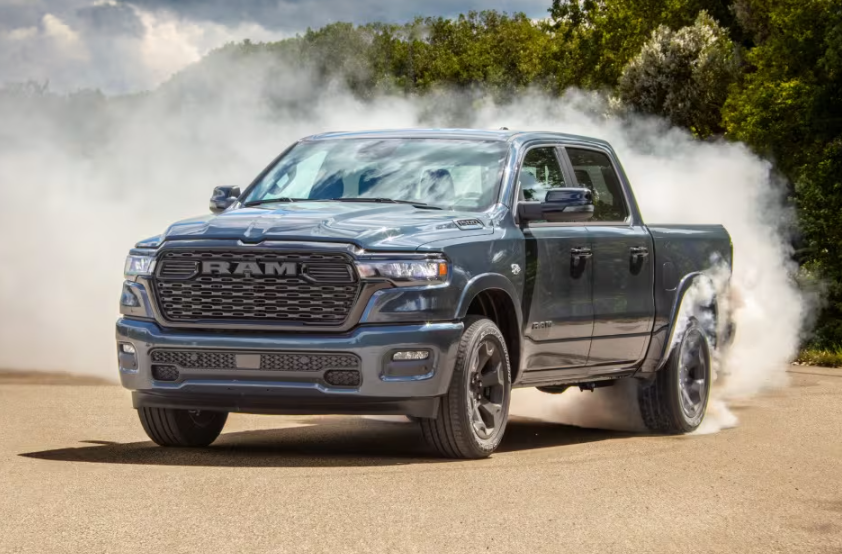
Blue 2026 Ram 1500 drifting

Choosing the right engine used to mean picking between a V6 and a V8. Now the 2026 Ram 1500 lineup spans four distinct gas powertrains, each built for a different kind of driver, and picking the wrong one could mean paying for towing muscle you'll never use or missing out on capability you actually need.

We put together this breakdown to help Hudson Valley drivers sort through the 2026 Ram 1500 engine lineup before they commit. If you'd rather start browsing right away, you can search our new inventory while you read.

2026 Ram 1500 Engine Lineup: Four Ways to Power Your Truck

Stellantis built four gas engines for the 2026 Ram 1500, and there's no diesel option this year. Every one of them pairs with a TorqueFlite eight-speed automatic transmission, so shift quality and responsiveness stay consistent no matter which engine you choose.

The lineup runs from the workhorse 3.6L Pentastar V6 up through two versions of the new 3.0L Hurricane I-6, and it closes with the returning 5.7L HEMI V8. The 2026 Ram lineup, excluding full battery-electric models, is backed by a 10-Year/100,000-Mile Powertrain Limited Warranty covering the engine, transmission, transfer case, driveshafts, differentials, and axles. It applies to original retail owners only, is not transferable, and is not available to fleet purchases. Basic bumper-to-bumper coverage remains 3 years/36,000 miles. The 2026 Ram 1500 also carries a five-star overall safety rating from NHTSA.

Quick-Reference Specs: Horsepower, Torque, and Towing

Numbers tell the story faster than words here, so we built this table to let you compare at a glance before reading the deeper breakdowns below.

Engine Horsepower/Torque Fuel Economy (City/Highway) Max Towing Payload
3.6L Pentastar V6 (eTorque) 305 hp / 269 lb-ft (+90 lb-ft eTorque boost) Up to 20/25 MPG Up to 8,130 lbs Up to 2,360 lbs
3.0L Hurricane I-6 Standard Output 420 hp / 469 lb-ft Up to 25 MPG hwy Up to 11,610 lbs Up to 1,930 lbs
3.0L Hurricane I-6 High-Output 540 hp / 521 lb-ft 15/21 MPG (4x4, Limited/Limited Longhorn/Tungsten); 14/16 MPG (4x4, RHO) Up to 10,000 lbs Up to 1,490 lbs
5.7L HEMI V8 (eTorque) 395 hp / 410 lb-ft (+130 lb-ft eTorque launch torque) Up to 20 MPG hwy Up to 11,320 lbs Up to 1,650 lbs

All four engines are available with 4x2 or 4x4 drivetrains, and towing and payload figures shift depending on cab style, bed length, axle ratio, and drivetrain. Treat these as ceiling numbers rather than guarantees for every build.

3.6L Pentastar V6: The Efficient Everyday Choice

The Pentastar V6 opens the 2026 Ram 1500 lineup, and it's still a smart pick for a lot of buyers. On its own it produces 305 hp and 269 lb-ft of torque, but the eTorque mild-hybrid system adds up to 90 lb-ft more during acceleration, so it doesn't feel underpowered pulling away from a stoplight.

It posts the best payload figure in the whole lineup at up to 2,360 lbs, which matters more than you'd think if you're hauling landscaping supplies or gear rather than a trailer. Fuel economy tops out around 20 MPG city and 25 MPG highway. Max towing sits at 8,130 lbs, the lowest of the four engines. This one is built for drivers who want efficiency and everyday usability over raw pulling power.

3.0L Hurricane I-6 (Standard Output): The New Balanced Standard

The Standard Output version of the 3.0L Hurricane I-6 is where things get interesting. This twin-turbo inline-six makes 420 hp and 469 lb-ft, numbers that land it firmly in V8-level performance territory while still returning highway fuel economy up to 25 MPG. It's the engine we'd point most buyers toward if they want serious capability without stepping up to the High-Output variant.

Something worth knowing before you build a 2026 Ram 1500 online: the Standard Output Hurricane actually tows more than its High-Output sibling. In the right configuration, Quad Cab, 6'4" bed, 4x2, 3.92 axle ratio, and the Trailer-Tow Group, it's rated to tow up to 11,610 lbs, the highest figure in the entire lineup. Horsepower alone won't tell you which engine tows more, and this is a good example of why.

The Hurricane platform is still relatively new to the market, so we'd encourage buyers to view early reliability data with reasonable optimism rather than certainty. Current data points to solid engineering, but time will tell how it holds up over the long haul compared with the Pentastar's long track record.

3.0L Hurricane I-6 High-Output: Six-Cylinder Muscle for Towing

If raw output is what you're after, the High-Output Hurricane delivers 540 hp and 521 lb-ft. That horsepower figure gives it more standard horsepower than the Ford Raptor, Chevrolet Silverado 1500, GMC Sierra 1500, and Toyota Tundra. It comes standard on the Limited, Limited Longhorn, Tungsten, and RHO trims. Its max towing rating tops out at 10,000 lbs though, noticeably behind the Standard Output's 11,610 lb ceiling.

Stellantis made that tradeoff on purpose: the High-Output Hurricane is tuned for acceleration and performance driving rather than maximum trailer capacity, so we don't recommend treating it as your default work-truck engine. Fuel economy runs 15 MPG city and 21 MPG highway in 4x4 form on the Limited, Limited Longhorn, and Tungsten trims (RHO's version of this engine is EPA-rated at 14 city/16 highway due to its off-road-oriented setup), and it carries a cost premium over the other engines, so we'd suggest reaching out about current finance options if this one catches your interest.

5.7L HEMI V8: The Iconic V8 Returns

After being dropped for the 2025 model year, the HEMI V8 is back for 2026. On its own it produces 395 hp and 410 lb-ft, with the 48-volt eTorque system adding up to 130 lb-ft of supplemental launch torque off the line. It still uses variable camshaft timing and cylinder deactivation to help manage fuel consumption, returning up to 20 MPG on the highway, and it tows up to 11,320 lbs, putting it right in the mix with the Hurricane engines for serious hauling.

You'll find it available on Tradesman, Express, Big Horn, Lone Star, and Warlock trims, offered as an upgrade on Laramie, and included at no charge on Limited and Limited Longhorn. It's arriving on the Rebel later in the model year, but it's not offered on RHO or Tungsten, both of which lean on the High-Output Hurricane instead.

Choosing Your Engine: Carmel Commutes vs. I-84 Towing

Local driving patterns matter as much as spec sheets when you're weighing engine options. Someone commuting daily through Putnam County has very different priorities than a contractor hauling equipment or a boater heading toward Fahnestock State Park on the weekends.

Best Engine for Taconic State Parkway Commuting

For drivers logging daily miles on the Taconic State Parkway, either the Pentastar V6 or the Standard Output Hurricane makes the most sense. Both deliver solid fuel economy for regular Westchester and Hudson Valley commutes without leaving performance on the table if you occasionally need to tow a light trailer or hitch up a small boat.

Best Engine for Heavy Towing Along I-84

If your routine involves regular runs on I-84 with a loaded trailer, the Standard Output Hurricane again earns the recommendation thanks to its 11,610 lb towing ceiling, with the HEMI V8 as a strong, more traditional alternative at 11,320 lbs. We'd steer most heavy-towing shoppers away from the High-Output Hurricane specifically because of its lower 10,000 lb towing rating, even though it's the more powerful engine on paper.

Matching Engine to Trim Level and Budget

The 2026 Ram 1500 spans eleven trims: Tradesman, Express, Warlock, Big Horn, Lone Star, Laramie, Rebel, RHO, Limited, Limited Longhorn, and Tungsten. Engine availability tracks closely with where each trim sits in the lineup. Work-focused trims like Tradesman and Express lean on the Pentastar V6 or HEMI V8, while the Laramie opens up the Standard Output Hurricane and offers the HEMI as an upgrade.

The Rebel currently centers on the Hurricane engines, with the HEMI arriving later in the model year for buyers who want the off-road package paired with V8 sound and feel. Higher trims like RHO, Limited, Limited Longhorn, and Tungsten bring the High-Output Hurricane into play, and that added performance does carry a cost premium over the other three engines.

We'd rather walk you through actual configurations than throw numbers at you here. Browse our 2026 Ram 1500 inventory in Carmel, NY to see what's on our lot, or explore our new Ram lineup if you're still deciding between models entirely.

Frequently Asked Questions About 2026 Ram 1500 Engine Options

Which 2026 Ram 1500 engine option tows the most? The Standard Output 3.0L Hurricane I-6 leads the lineup at up to 11,610 lbs, but only in specific configurations including Quad Cab, 6'4" bed, 4x2, and the Trailer-Tow Group.

Does the High-Output Hurricane tow more than the Standard Output version? No. The High-Output Hurricane tows up to 10,000 lbs, less than the Standard Output's 11,610 lb rating, despite its higher horsepower.

Is the 5.7 HEMI Ram back for good in 2026? Yes, the 5.7L HEMI V8 returns for 2026 after being unavailable for the 2025 model year, and it's offered across multiple trims.

Is the 3.0L Hurricane I-6 reliable? Current data points to a solid platform, but as a newer engine design, long-term reliability trends are still developing over time.

Find Your Ideal 2026 Ram 1500 Engine at Meadowland of Carmel CDJR

Sorting through 2026 Ram 1500 engine options Carmel NY shoppers are considering doesn't have to feel overwhelming. Whether you're commuting the Taconic corridor daily or towing a boat toward Fahnestock State Park on weekends, our team at Meadowland of Carmel CDJR can walk you through which powertrain actually fits your driving habits and your budget. We'll gladly set you up behind the wheel of a few configurations so you can feel the difference between the Pentastar, the two Hurricane variants, and the HEMI V8 for yourself.

Schedule a test drive at our Carmel, NY showroom, get in touch with our team with your specific questions, or stop by 1952 US-6 to see the lineup in person. Have a trade-in? We can help you value it online before you even arrive.
Recommended Posts

Gray 2026 Dodge Durango GT Plus

What Makes the 2026 Dodge Durango GT Plus a Great Family Performance SUV?

A lot of three-row SUVs force a trade-off between muscle and practicality. The 2026 Dodge Durango GT Plus skips that compromise entirely. We've spent plenty of time with this trim on the lot, and what stands out is how Dodge engineered it to haul a boat to Lake Gleneida on Saturday, then handle carpool duty to soccer practice on Monday morning. The 2026 Dodge Durango GT Plus: Bold Style Meets Family Function The Durango GT Plus is positioned as the sweet spot for families who want performance styling without giving up seven-passenger comfort. Dodge gave it a muscular stance and an aggressive front fascia that signals capability before you even turn the key. That aggressive look backs itself up: the SUV sits on a platform with 141 cubic feet of total passenger volume, so the attitude and the interior room actually work together. Carmel, NY families gravitate toward this balance for good reason. Between school runs, weekend trips to Mahopac, and highway stretches on I-84, a family SUV needs to look sharp in the school pickup line and still handle real cargo and towing demands. If you want to see the styling in person, browse our 2026 Dodge Durango inventory in Carmel, NY or schedule a test drive to get a feel for it firsthand. Powertrain Options: Pentastar V6 vs. 5.7L HEMI V8 The standard GT Plus runs a 3.6L Pentastar V6 producing 295 horsepower and 260 lb-ft of torque, paired with an 8-speed automatic and standard AWD. It's rated at 17 mpg city, 24 mpg highway, and 20 mpg combined, which makes it a sensible daily driver for commuting through Poughkeepsie or Brewster. Step up to the HEMI V8, and Dodge drops in a 5.7L engine producing 360 horsepower and 390 lb-ft of torque, still paired with that 8-speed automatic. Fuel economy dips to 14 mpg city, 21 mpg highway, and 16 mpg combined, which is the trade-off for the added muscle. It isn't subtle, but for families who tow often or just want more shove under the accelerator, it's worth the difference at the pump. Both engines come from a genuine performance pedigree, and neither feels underpowered day to day. The decision mostly comes down to how much towing and acceleration actually matter to your household. Towing Up to 7,200 Pounds for Carmel Adventures The V6 delivers 6,200 lbs of towing capacity when properly equipped, best-in-class among V6-powered midsize SUVs, and the HEMI V8 pushes that all the way to 7,200 lbs. For context, that's enough to tow a boat down to Lake Gleneida for a weekend on the water, or pull a camper up toward Clarence Fahnestock State Park without a second thought. Dodge didn't just bump up the towing number and call it a day, either. On GT Plus models equipped with the HEMI V8, the Trailer Tow Group IV hardware includes a Class IV receiver hitch, a seven-pin and four-pin wiring harness, a trailer brake controller, a 180-amp alternator, rear load-leveling suspension, and Blind Spot Monitoring with Trailer Detection. Every piece of that hardware works together as one system, engineered for towing rather than added on as an afterthought. Standard AWD for Confident Winter Driving in Putnam County Carmel, NY is the seat of Putnam County, and anyone who's driven through a Putnam County winter knows the roads turn unpredictable fast. Dodge makes all-wheel drive standard on the GT Plus, so every buyer gets the traction benefits without upgrading trims or paying extra. That standard AWD earns its keep on mornings when frost coats the windshield and you're navigating toward Clarence Fahnestock State Park's winter park in season, or just making the commute along I-84 through icy patches near Danbury. If winter driving concerns are part of your decision, our team at Meadowland of Carmel CDJR can walk you through how the AWD system performs in real Putnam County conditions. Seven-Seat Comfort and Cargo Flexibility for Growing Families The Durango GT Plus seats seven passengers standard, with available second-row fold-and-tumble captain's chairs if your family prefers a more premium, separated seating layout. The 2026 model brings refined comfort with available leather seating and heated front seats on this trim. Cargo space is just as practical: 17.2 cubic feet behind the third row, 43.3 cubic feet with the second row folded, and a maximum of 85.1 cubic feet with both rear rows down. That's room for strollers, hockey bags, and a weekend's worth of luggage without playing Tetris in the driveway. Interior Technology and Connectivity Features The GT Plus comes with a technology suite that keeps both parents and kids comfortable on longer drives, including: 10.1-inch Uconnect 5 touchscreen for navigation, media, and vehicle settings Wireless charging plus wireless Apple CarPlay and Android Auto Alpine audio system with nine speakers and a subwoofer Adaptive Cruise Control with Stop and Full-Speed Forward Collision Warning Plus Lane Departure Warning Plus and Auto High Beam Headlamp Control ParkSense Front and Rear Park Assist with Stop Blind Spot Monitoring with Trailer Detection Those driver-assist features earn their keep on longer stretches like I-84, where Adaptive Cruise Control eases highway fatigue, and ParkSense makes tighter parking situations around Carmel far less stressful. Smart Cargo Solutions for Sports Gear and Road Trips Beyond raw cargo volume, Dodge built in details that active families notice right away: Split-folding rear seats for long items like skis or hockey sticks while still seating passengers Under-floor and console storage for smaller gear out of sight For a family hauling sports equipment to Sycamore Park in Mahopac on a weekend, or packing for a longer road trip, these small design choices add up to noticeably less frustration when loading and unloading. Head-Turning Design: Performance Hood and Blacktop Package If you want your Durango GT Plus to look as capable as it drives, the Blacktop Package delivers gloss-black mirrors, black roof rails with integrated crossbars, GT gloss-black badging, 20-inch Black Noise aluminum wheels wrapped in 265/50R20 all-season tires, a performance hood, and a satin black "Dodge" tail lamp badge. For buyers who want to go further, the Blacktop Redline Package builds on that foundation with SRT spoilers, available dual stripes, Leather and Alcantara Suede SRT performance seats, Crypto Sweep etch accents, and a leather-armrest floor console. It's available on the GT Plus, GT HEMI V8 Plus, and GT HEMI V8 Premium trims. Whether you're drawn to a lighter exterior with the Blacktop treatment or prefer a darker, more aggressive look, these packages let you personalize the SUV without giving up any of its family functionality. Once you've settled on a configuration, our finance application makes it easy to move forward. Why Carmel Families Choose the Durango GT Plus Over Rival Three-Row SUVs When Carmel families cross-shop the Durango GT Plus against other three-row SUVs, the towing numbers alone tend to settle the conversation fast. Vehicle Max Towing Seating Notable Cargo/Tech 2026 Durango GT Plus (V6) 6,200 lbs 7-passenger 85.1 cu ft max cargo, 10.1-in Uconnect 5 2026 Durango GT Plus HEMI V8 7,200 lbs 7-passenger Same cargo/tech, added HEMI power 2026 Ford Explorer 5,000 lbs 6-7 passenger 85.8 cu ft max cargo 2026 Toyota Highlander/Grand Highlander 5,000 lbs 7-8 passenger 84.3 cu ft (Highlander) / 97.5 cu ft (Grand Highlander) max cargo 2026 Honda Pilot 3,500 lbs (2WD) / 5,000 lbs (AWD) up to 8-passenger up to 113.7 cu ft max cargo (trim dependent) Even the base V6 GT Plus outtows the Ford Explorer, Toyota Highlander, Toyota Grand Highlander, and Honda Pilot by at least 1,200 lbs, and the HEMI V8 widens that gap to well over 2,000 lbs against the Pilot's AWD figure. Cargo volume is generally competitive, though the Grand Highlander offers more outright cargo room, but no rival on this list matches the Durango's combination of towing muscle, standard AWD, and available HEMI V8 power in the same three-row package. Families who tow trailers, boats, or campers on a regular basis tend to land on the Durango for exactly this reason. The National Highway Traffic Safety Administration gave the 2026 Dodge Durango, the most recently tested model year, a four-star overall safety rating, which families weighing safety alongside performance and cargo space will want factored into the decision. Find the 2026 Dodge Durango Near Putnam County If you're searching for a 2026 Dodge Durango near Putnam County, Meadowland of Carmel CDJR keeps a rotating selection of Durango trims, including the GT Plus with both V6 and HEMI V8 powertrains. Because we're part of Volz Auto Group, we also have access to a broader network for sourcing specific configurations, colors, or packages if the exact GT Plus you want isn't sitting on our lot the day you visit. Our sales team can walk you through the differences trim by trim so you're comparing apples to apples, not guessing at spec sheets. Take a look at our full new Dodge vehicles lineup to see how the Durango fits alongside the rest of what Dodge offers this year. Schedule Your Test Drive at Meadowland of Carmel CDJR Specs and comparison tables only tell part of the story. The best way to know if the 2026 Dodge Durango GT Plus fits your family is to get behind the wheel. Why Buy From Meadowland Mopar-certified service on every visit Straightforward financing conversations, no last-minute surprises Local Putnam County expertise on which trim and package suits your driving habits Ready to Get Started? Contact us online or schedule your test drive today, and let's get you into a Durango GT Plus that matches how your family actually lives.

CDJR Service and Repairs

Most Common CDJR Repairs & How to Spot Them Early

Chrysler, Dodge, Jeep, and Ram vehicles get put through their paces around here, daily commutes in Carmel, NY, weekend runs out to the Hudson Valley's rougher trails. Trucks and SUVs wear down eventually, no matter how well they're built, and catching that wear early is usually what separates a small fix from a costly repair. Knowing the warning signs specific to your vehicle gives you a real advantage for both safety and your wallet, and that's exactly why we put together this guide to common CDJR repairs. If something already feels off, you can schedule a service appointment online with us anytime. Why Early Detection Saves Hudson Valley CDJR Owners Money Catching an issue early almost always costs less than dealing with the fallout later. A squealing brake pad replacement is far more affordable than replacing warped rotors and calipers, and a battery test before winter beats an emergency tow on a January morning in Brewster or Poughkeepsie. Early diagnosis also keeps your vehicle safe and reliable on roads that turn unpredictable once the cold sets in. For Hudson Valley drivers who depend on their Ram trucks or Jeep SUVs year-round, staying ahead of common CDJR repairs means fewer surprises and better long-term resale value. Brake Warning Signs Every CDJR Driver Should Know Brakes tend to give clear signals when something's wrong. Knowing what those signals mean before the problem becomes dangerous is the key. CDJR vehicles, particularly heavier models like Ram 1500 trucks and Jeep Grand Cherokees, put considerable demand on their braking systems. Brake pads typically last 30,000 to 70,000 miles, while rotors generally last 60,000 to 100,000 miles, though your owner's manual and driving habits will affect these ranges. Squealing, Grinding, and Soft Pedal Feel That high-pitched squeal you hear when slowing down is usually a built-in wear indicator, and it's worth acting on right away. Once squealing progresses to grinding, the pads have worn through completely, and metal-on-metal contact starts damaging your rotors, adding meaningful cost to what started as a simple pad swap. A soft or spongy pedal feel points to a different problem, often low brake fluid or air trapped in the hydraulic lines. Either way, the brake system can't generate consistent stopping pressure, which creates unpredictable performance exactly when you need reliability most. Vibration or Pulling While Braking Pulsation through the brake pedal or steering wheel when slowing down usually signals warped rotors. Heat cycles from repeated hard braking can cause rotors to develop uneven surfaces, and you feel that unevenness every time you apply the brakes, particularly on loaded Ram trucks or Jeep Wranglers used for towing. Pulling to one side during braking suggests uneven pad wear or a sticking caliper. Left unaddressed, this can accelerate tire wear and stress suspension components. Battery and Electrical Issues in New York Winters Cold temperatures are hard on vehicle batteries, and New York winters are no joke. The chemistry inside a lead-acid battery slows down in freezing conditions, reducing the cranking power available when you try to start your engine. For CDJR owners in Carmel and the surrounding Hudson Valley, winter battery issues rank among the most common reasons for unexpected service calls. A battery can seem fine in September and fail outright by December. The cold isn't really the cause; it just finds the weakness that was already building underneath. Signs of Battery Degradation from Cold Weather The most common early warning is a sluggish engine crank. If your Ram or Dodge takes noticeably longer to turn over on a cold morning, the battery is struggling. Watch also for dimming headlights at idle, corrosion on the terminals, or your radio and clock resetting after the vehicle sits overnight. Getting a battery load test before the season changes is a simple preventive step that can tell you whether it has enough capacity to handle winter. Dashboard Warning Lights and Sensor Glitches Cold weather can trigger sensor glitches that illuminate warning lights even without a mechanical failure. The Check Engine Light, battery light, and TPMS warnings are among the most common to appear during temperature swings. A flashing Check Engine Light means you should stop driving and have the vehicle towed; a steady light often indicates something minor, like a loose gas cap, but still deserves a look. A light that comes and goes might seem harmless but could indicate a failing sensor or weak connection worth investigating. If you're seeing recurring warnings, our certified CDJR service center in Carmel can run a proper diagnostic. Fluid Leaks and Engine Trouble Signals Fluid leaks are one of the most visible early warning signs a vehicle can give you, yet many drivers walk past a spot in the driveway without a second thought. The color and location of a leak tell a trained technician a great deal about where the problem originates and how serious it is. Oil, Coolant, and Transmission Fluid Leaks Oil leaks typically leave dark brown or black spots near the front or center of the vehicle, right beneath the engine. Low oil levels accelerate engine wear by reducing lubrication, and over time, this leads to premature damage that far outweighs the cost of sealing a gasket early. Coolant, by contrast, shows up green, orange, or pink, and can lead to overheating if the system loses enough fluid. Transmission fluid leaks present as reddish spots toward the middle of the vehicle and can impair shifting quality as levels fall. All three warrant prompt attention, particularly before a long highway drive or seasonal road trip. Rough Idling and Power Loss If your engine shudders at a stoplight or feels sluggish accelerating onto the highway, don't chalk it up to a bad day. Rough idling and power loss often point to fuel delivery problems, ignition system wear, or a sensor issue affecting the air-fuel mixture. A diagnostic scan gives your technician a clear starting point, since modern CDJR vehicles log fault codes that can identify the root cause quickly and keep diagnostic costs manageable. Suspension, Steering, and Transmission Red Flags Suspension and drivetrain issues often develop gradually, which is why they go unnoticed until they become hard to ignore. Paying attention to how your vehicle feels on the road, especially on the rough and uneven pavement common in parts of the Hudson Valley, helps you catch these problems before they turn serious. Jeep Wrangler Death Wobble Basics The Jeep Wrangler has a well-known quirk called the death wobble, a violent front-end shaking that typically triggers at highway speeds after hitting a bump or crack in the road. It's commonly caused by worn or loose tie rods, ball joints, or track bars, and it rarely stems from a single component. Throwing one part at the problem without a thorough inspection usually delivers inconsistent results. Getting it diagnosed by a technician familiar with Wrangler suspension geometry is the most reliable path to a lasting fix. Delayed Shifting and Unusual Noises Automatic transmissions in Ram trucks and Dodge vehicles are engineered for durability, but aren't immune to wear. Delayed engagement shifting into drive, hesitation between gear changes, and hard or clunky shifts are worth investigating, as these can stem from low transmission fluid, worn clutch packs, or a failing solenoid. Whining, clunking, or humming from beneath the vehicle during acceleration or coasting suggests problems in the drivetrain or differential. Catching these early typically means a fluid change or a single component repair rather than a full transmission rebuild. Your Scannable Warning-Sign Checklist Don't let any of these symptoms sit unaddressed for weeks. Owners who treat warning signs as useful information, rather than a nuisance to ignore, tend to keep their vehicles running longest. Brakes: Squealing or grinding when braking Soft or low brake pedal Vibration through the pedal or steering wheel while braking Vehicle pulling to one side when slowing down Battery and electrical: Slow engine cranking, especially in cold weather Dimming headlights at idle Corrosion on battery terminals Warning lights that appear intermittently Fluids and engine: Spots or puddles under the vehicle (note the color) Low fluid levels found during a routine check Rough idle or unexpected power loss A burning smell from the engine bay Suspension, steering, and transmission: Front-end shimmy or shake at highway speeds Clunking or knocking over bumps Delayed or rough gear changes Whining or grinding noises from underneath the vehicle Why Choose Meadowland of Carmel's CDJR Service Center When a common CDJR repair comes up, where you take your vehicle matters as much as how quickly you act. Certified Technicians and OEM Parts Our CDJR service department is staffed by manufacturer-trained technicians who work specifically on Chrysler, Dodge, Jeep, and Ram vehicles. That familiarity matters when diagnosing something like a Wrangler death wobble or an 8-speed transmission concern in a Ram 1500, and using genuine OEM parts helps preserve original performance and durability. Multi-Point Inspections A multi-point inspection gives us a full picture of your vehicle's health, not just a snapshot of the one issue you called about. Our technicians check brakes, fluids, tires, suspension, belts, and electrical systems as part of a broader evaluation, which regularly surfaces minor issues before they land on the driver's radar. Located at 1952 US-6 in Carmel, NY, we serve drivers throughout Carmel, Poughkeepsie, Brewster, and Danbury, CT. Reach the service team at 845-842-7355, Monday through Friday 7:30 AM to 5:00 PM and Saturday 8:00 AM to 3:30 PM. Schedule Your Service and Save with Current Coupons Current Offers Meadowland of Carmel regularly offers service coupons and promotions that make maintenance more accessible. Whether you need an oil change, a battery inspection ahead of winter, or brake service, checking current offers before booking can reduce the cost meaningfully. Book Your Appointment Scheduling is straightforward. Schedule your service appointment online, or call the service department directly at 845-842-7355. Service hours run Monday through Friday 7:30 AM to 5:00 PM and Saturday 8:00 AM to 3:30 PM, convenient for drivers with weekday work schedules. Frequently Asked Questions What is the most common problem with Jeep Wranglers? The most frequently discussed issue among Jeep Wrangler owners is the death wobble, a violent front-end vibration typically triggered at highway speeds when the front wheels hit a bump. It's commonly linked to worn or loose track bars, ball joints, or tie rod ends. A thorough inspection is the most reliable way to identify which components need replacement and restore stable handling. How do I know if my CDJR vehicle needs transmission service? The clearest signals are delayed engagement shifting into drive or reverse, hesitation or harsh transitions between gears, and a noticeable drop in fuel efficiency without another explanation. Reddish fluid spots beneath the vehicle indicate a transmission fluid leak, which can accelerate wear if the level drops. Any of these symptoms warrant a service appointment rather than a wait-and-see approach. Can early diagnosis really save money on repairs? Yes, and the gap can be substantial. Replacing a brake pad before it damages the rotor, sealing a gasket before oil starvation harms the engine, or identifying a weak battery before it leaves you stranded are all examples where a modest service expense prevents a much larger one. Consistent maintenance and prompt attention to warning signs remain the most cost-effective approach to CDJR ownership over the long term.

Blue 2026 Jeep Cherokee parked off-road

2026 Jeep Cherokee vs. Ford Bronco Sport: Compact SUV Face-Off

Compact SUVs are the go-to pick for drivers who want practicality without losing personality along the way. Stack the 2026 Jeep Cherokee against the 2026 Ford Bronco Sport, though, and real differences show up fast. For drivers across Carmel, Brewster, Poughkeepsie, and the Hudson Valley, this comparison matters: you need something that handles snowy winters and twisting backroads just as easily as the daily commute. If you're ready to see the Cherokee up close, browse the 2026 Jeep Cherokee for sale in Carmel, NY at Meadowland of Carmel CDJR. 2026 Jeep Cherokee vs. Ford Bronco Sport: Quick Verdict for Carmel Drivers The 2026 Jeep Cherokee brings more to the table for local drivers. It returns this model year after a three-model-year hiatus as a ground-up redesign, with standard 4x4 and a hybrid powertrain that blends genuine off-road capability with strong fuel efficiency and a generous safety package. The Ford Bronco Sport is a capable, rugged-looking machine with real off-road credentials, but it starts at a lower price and falls behind the Cherokee in fuel economy and range. If you're regularly driving Route 6, the Taconic, or unpaved roads around the Hudson Valley, the Cherokee's standard setup gives you a meaningful edge before pricing even enters the conversation. The 2026 Jeep Cherokee's Return as a Standard 4x4 Hybrid The Cherokee has always been Jeep's answer for buyers who want capability without sacrificing everyday livability. For 2026, Jeep (part of Stellantis) brings the Cherokee back with a standard hybrid powertrain and standard 4x4 across the entire lineup, making the base trim worth far more than it used to be. The hybrid system isn't a token gesture. Jeep built it to deliver real performance alongside real efficiency, not one at the expense of the other. 210 HP and 37 MPG Combined: How the Cherokee Hybrid Delivers The Cherokee pairs a 1.6L turbocharged engine with dual electric motors and a CVT, producing 210 horsepower and 230 lb-ft of torque combined. EPA ratings land at 39 city, 35 highway, and 37 combined MPG, and a 13.7-gallon tank gets you over 500 miles of range. Most compact SUV rivals force a tradeoff, either more power at the cost of efficiency, or better economy at the cost of performance. The Cherokee manages to split the difference. For drivers commuting between Carmel and White Plains, or running back and forth between Poughkeepsie and Danbury, that fuel economy adds up to real savings. The hybrid system also smooths out stop-and-go traffic; the electric motors pick up more of the work so the gas engine doesn't have to strain as hard. Standard 4x4 vs. Bronco Sport's Standard AWD Every 2026 Jeep Cherokee comes with Jeep Active Drive I 4x4, complete with rear-axle disconnect and four Selec-Terrain modes (Auto, Sport, Snow, Sand/Mud), standard. No trim upgrade, no extra cost. Ford also makes AWD standard across every 2026 Bronco Sport trim, so both vehicles guarantee all-wheel traction from the start. The real difference lies in how the systems work. AWD reacts to wheel slip after it's already happening, while the Cherokee's 4x4 setup hands drivers selectable terrain modes and more deliberate control before things go sideways. Anyone who's dealt with a January storm on a quiet Hudson Valley county road knows that extra control counts for something. Conquering Carmel and the Hudson Valley: Real-World Capability Both SUVs are built for more than mall parking lots, but they get there differently. The Bronco Sport leans hard into its trail-focused identity, with rugged styling and off-road hardware aimed at weekend adventure. The Cherokee takes a wider view, tuned to handle the trail while staying planted and composed on the highway and in the school pickup line. Around Carmel, road conditions can shift dramatically in just a few miles, plowed state highway one minute, muddy unlit back lane the next. Handling Slushy Winters with Confidence Winter driving in Putnam County doesn't wait around for a trim upgrade. The Cherokee's standard 4x4 system earns its keep the first time you're crossing a slushy intersection or backing out of an unsalted driveway, sending torque where it's needed to keep the vehicle predictable. The Bronco Sport handles snow well too, thanks to its standard AWD, but it doesn't get the Selec-Terrain equivalent or rear-axle disconnect tech that comes with the Cherokee. For families or commuters who see off-road capability as a safety feature rather than a hobby, that terrain-mode flexibility matters. Winding Hudson Valley Backroads Put to the Test Winding roads throughout Putnam and Dutchess counties tend to expose how a vehicle is actually tuned. The Cherokee's suspension leans toward ride composure, keeping occupants comfortable through elevation changes and tight curves while steering predictably at highway speed. The Bronco Sport is fun on trails, but its shorter wheelbase and off-road-focused suspension mean passengers may feel more body motion and a firmer ride on pavement. For daily drivers who occasionally head off-road rather than dedicated trail enthusiasts, the Cherokee fits the environments you're actually in most of the time. Safety and Fuel Efficiency: Feature-by-Feature Comparison Both vehicles offer modern safety packages, but the Cherokee is more generous with what comes standard. Standard Safety Technology Compared The 2026 Jeep Cherokee's standard Active Driving Assist suite includes: Forward collision warning Automatic emergency braking (AEB) Blind-spot monitoring Rear cross-traffic alert These are standard across the entire lineup, not premium add-ons you pay extra for. The Bronco Sport's Co-Pilot360 Assist+ suite is also standard and covers similar driver-assistance features, so both vehicles start buyers off with solid safety coverage. Shoppers should still check current NHTSA and IIHS ratings for both models before deciding, and Meadowland's team can walk through the specifics with you. Fuel Economy Breakdown Spec 2026 Jeep Cherokee 2026 Ford Bronco Sport City MPG 39 21-25 Highway MPG 35 28-30 Combined MPG 37 23-27 Estimated Range 500+ miles ~350-400 miles Tank Size 13.7 gallons Not hybrid-equipped Figures per official Jeep and Ford specifications and EPA ratings. Over a year of typical driving, that MPG gap adds up fast. Drivers commuting between Carmel and points in Westchester or Connecticut will feel it at the pump, and the Cherokee's hybrid system switches between electric and combustion power smoothly enough that you won't notice any tradeoff in how it drives. Pricing, Trims, and Value for Carmel NY Shoppers The 2026 Ford Bronco Sport starts at a lower MSRP of $31,845, according to Ford. The 2026 Jeep Cherokee's lineup starts at $35,000 for the base trim, with Laredo at $38,000, Limited at $40,000, and Overland at $43,000, per Jeep. All figures are manufacturer MSRP and don't include destination fees, and both MSRP and trim availability can change, so confirm current pricing with the dealership. The more important part of the value story is what's included at each price point. With standard 4x4, a hybrid powertrain, and a full safety suite across the lineup, the Cherokee's base trim delivers more standard capability than a comparably equipped Bronco Sport at a comparable price point. Towing tells a similar story: the Cherokee is rated for 3,500 lbs, while the Bronco Sport ranges from 2,200 to 2,700 lbs depending on configuration. For Carmel-area shoppers working within a set budget, the Cherokee's standard equipment often closes, or even reverses, that initial price gap. Side-by-Side Specs Comparison Table Here's how the two SUVs stack up across the specs that matter most. Feature 2026 Jeep Cherokee 2026 Ford Bronco Sport Powertrain 1.6L turbo hybrid + dual electric motors, CVT 1.5L or 2.0L turbo, 8-speed automatic Horsepower 210 HP combined 180-250 HP Torque 230 lb-ft 200-280 lb-ft Drivetrain Standard Jeep Active Drive I 4x4 Standard AWD Towing Capacity 3,500 lbs 2,200-2,700 lbs Starting MSRP $35,000 $31,845 Why the 2026 Jeep Cherokee Wins for Carmel and Hudson Valley Drivers The Cherokee wins on consistency, doing most things better than the Bronco Sport for the conditions Hudson Valley drivers actually face day to day. Standard 4x4 with Selec-Terrain modes means you're never caught off guard in a Carmel winter, the 37 MPG combined rating keeps your daily drive cheaper, and 210 horsepower means steep grades heading out of town won't leave you underpowered. The Cherokee's 3,500-lb towing capacity also beats the Bronco Sport, which comes in handy for small businesses or families hauling trailers and gear. The Bronco Sport has real appeal for buyers whose main goal is weekend trail driving and who love its look. But for drivers who need a reliable, efficient SUV that performs well through all seasons and varied terrain, the Cherokee is the more practical pick. It fits the life most Hudson Valley drivers actually live, day in and day out, not just the occasional adventure weekend. Check Availability at Meadowland of Carmel CDJR Today What Sets the Cherokee Apart Before you decide, keep these two things in mind: standard 4x4 that requires no upgrade, and a 3,500-lb towing rating that beats the Bronco Sport across the board, all backed by a 37 MPG combined hybrid powertrain. Visit or Contact Our Team If the 2026 Jeep Cherokee is on your radar, Meadowland of Carmel CDJR is the place to start. Located at 1952 US-6 in Carmel, NY, we carry a wide selection of new Jeep vehicles alongside quality used and certified pre-owned inventory. Browse our full lineup of new Jeep vehicles in Carmel, or check current Cherokee availability directly. Our financing team offers competitive rates and flexible payment plans, and our factory-trained technicians handle everything your Cherokee needs, from oil changes to bigger repairs down the road. Sales hours run Monday through Thursday from 9 AM to 7 PM, and Friday and Saturday from 9 AM to 6 PM. Call our sales team at 845-704-4245, or visit our contact page to schedule a test drive today.