




Blog / Jeep Vehicles

2026 Jeep Gladiator vs. Toyota Tacoma: Powertrain & Off-Road Capability Comparison

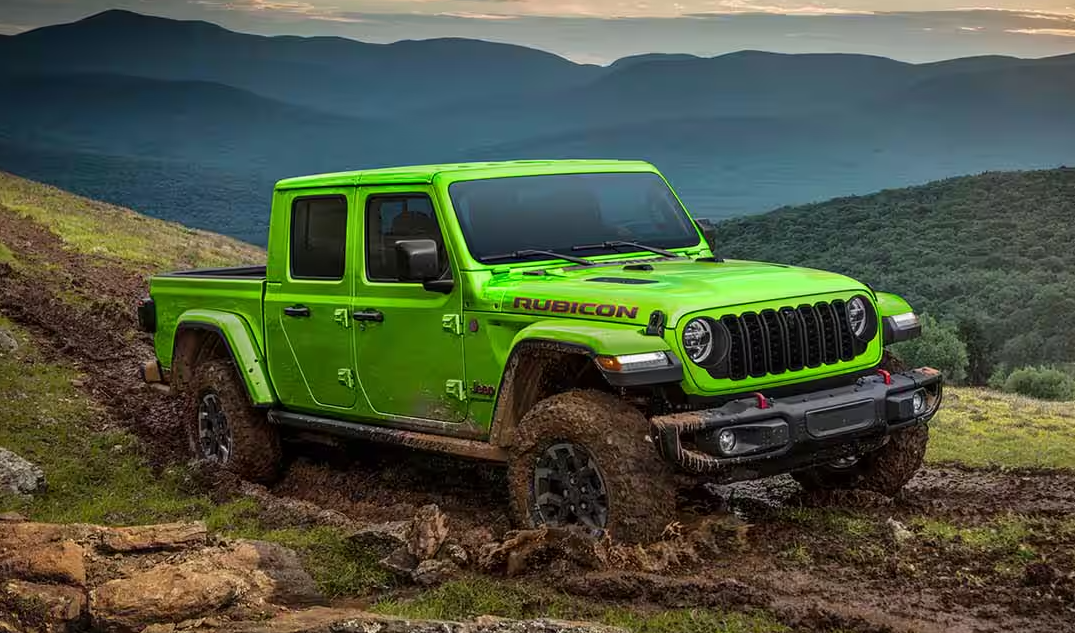
Green 2026 Jeep Gladiator Rubicon

Picking a midsize truck used to be simple. Not anymore. The 2026 Jeep Gladiator vs. Toyota Tacoma sits at the top of that conversation, and both trucks are genuinely strong contenders chasing the same buyer on paper while delivering completely different experiences once you're behind the wheel.

Whether you spend weekends on trails through the Hudson Valley or haul gear for work, powertrain performance and off-road credentials matter as much as anything else on the window sticker. Browse our new inventory or schedule a test drive to get started.

Gladiator vs. Tacoma: Two Different Philosophies in a Midsize Truck

It helps to understand what each truck is actually trying to be.

The Gladiator is built around the idea that a truck shouldn't have to compromise. It draws on decades of Jeep off-road heritage and layers that DNA onto a functional, open-air pickup platform. Drop the doors, fold the windshield, pull the top off, and you have something no other truck in this segment even attempts.

The Tacoma takes a different path. Toyota built its reputation on reliability and consistency, and the Tacoma reflects that fully. It appeals to buyers who want a capable, dependable truck that handles a daily commute just as confidently as a gravel road. Both approaches are legitimate. Which one fits you depends entirely on how you plan to use it.

Under the Hood: Comparing the 2026 Powertrains

The engine lineup is where these two trucks begin to separate in meaningful ways.

2026 Jeep Gladiator: The 3.6L Pentastar V-6

The Gladiator runs one engine for 2026: the 3.6L Pentastar V-6, producing 285 hp at 6,400 rpm and 260 lb-ft of torque at 4,400 rpm, paired with an 8-speed automatic. That simplicity is a genuine advantage. No trim-level guesswork about which powertrain you're getting. The V-6 delivers linear, predictable power that's easy to manage in demanding situations, and it has a well-earned reputation for durability every time the pavement runs out.

2026 Toyota Tacoma: Turbocharged Four-Cylinder and i-FORCE MAX Hybrid

Toyota moved to a turbocharged 2.4L i-FORCE inline-four as the standard engine. Output varies by trim: SR produces 228 hp and 243 lb-ft at 1,600 rpm, while the SR5 and higher gas trims produce 278 hp and 317 lb-ft at 1,700 rpm. The i-FORCE MAX hybrid adds an electric motor, pushing combined output to 326 hp and 465 lb-ft. That hybrid setup is appealing for drivers who cover long distances and want lower fuel costs, though the added complexity is a trade-off some off-road buyers would rather skip.

Power, Torque, and What the Numbers Mean on the Trail

Torque, not horsepower, is what moves heavy loads up steep grades and keeps a truck crawling forward when traction gets scarce. The Gladiator's 260 lb-ft edges out the Tacoma SR's 243 lb-ft, and that difference shows up on the Putnam County backroads and technical trails accessible from Carmel. The Tacoma's i-FORCE MAX hybrid does close that gap with its combined output, but the hybrid system's added weight becomes a real liability when maximum articulation and mechanical simplicity are priorities on the trail.

Towing and Hauling: Which Truck Works Harder?

Towing Capacity Head-to-Head

The Gladiator holds a clear advantage here. Properly equipped, it tows up to 7,700 lbs. The Tacoma maxes out at 6,500 lbs on gas configurations and drops to 6,000 lbs with the hybrid. That's a meaningful gap for anyone who tows boats, campers, or trailers on a regular basis.

Payload and Bed Utility for Weekend Adventurers

Payload tells a similar story. The Gladiator carries up to approximately 1,720 lbs, while Tacoma payload ranges from 1,155 to 1,705 lbs, depending on configuration. Beyond the numbers, the Gladiator's removable doors and fold-down windshield create utility options no conventional cab-and-bed arrangement can match.

If you're ready to see available configurations, explore our Gladiator inventory in Carmel, NY or schedule a test drive today.

Off-Road Capability: Trail Rated vs. Trail-Ready

Both trucks market themselves to outdoor enthusiasts, but their off-road credentials come from genuinely different engineering foundations. The Gladiator carries the Trail Rated badge, earned through rigorous off-road trials measuring traction, water fording, articulation, ground clearance, and maneuverability. The Tacoma is capable off-road, no question, but it approaches that capability from a different structural base.

Suspension Architecture: Solid Axle vs. Independent Rear

The most fundamental off-road difference between these two trucks is rear suspension design. The Gladiator uses a solid rear axle, which allows both wheels to move together as terrain demands. When one wheel drops into a rut or over a rock, the axle maintains contact and keeps traction where you need it. That articulation is critical on uneven terrain.

The Tacoma uses a solid rear axle with either leaf springs or a coil-spring multi-link setup, depending on trim. This delivers a smoother, more composed ride on pavement and light trails when configured with coil springs. The trade-off versus the Gladiator's full coil-sprung Dana 44 setup is less factory-tuned articulation and a different approach to load-carrying. For technical off-roading, the Gladiator's coil-sprung Dana 44 axles paired with available locking front and rear differentials provide a hardware advantage that genuinely matters.

Worth noting: the Tacoma TRD Pro is equipped with 2.5-inch FOX QS3 internal bypass shocks with rear remote reservoirs over its solid rear axle with coil-sprung multi-link locating arms.

Factory Hardware: Lockers, Skid Plates, and Ground Clearance

The Gladiator Rubicon includes front and rear locking differentials, an electronic sway-bar disconnect for maximum articulation, 33-inch tires, Rock-Trac 4WD, full skid plates, and 11.1 inches of ground clearance (the Mojave reaches 11.6 inches, the highest of any Gladiator).

The Tacoma TRD Pro brings 2.5-inch FOX QS3 internal bypass shocks, 33-inch tires, Multi-Terrain Select, Crawl Control, a standard locking rear differential, a standard Stabilizer Disconnect Mechanism (SDM) front sway bar disconnect, and skid plates, with 11.5 inches of ground clearance. For moderate to challenging off-road conditions, it performs with real confidence. For the most technical rock crawling, the Rubicon's locking front differential and Rock-Trac 4:1 low-range transfer case provide hardware the Tacoma TRD Pro doesn't match.

2026 Gladiator vs. Tacoma: Specs Comparison at a Glance

Specification2026 Jeep Gladiator (Sport)2026 Toyota Tacoma (SR 4x2)2026 Toyota Tacoma (i-FORCE MAX Hybrid)
Engine3.6L Pentastar V-62.4L Turbo I-42.4L Turbo I-4 Hybrid
Horsepower285 hp @ 6,400 rpm228 hp326 hp
Torque260 lb-ft @ 4,400 rpm243 lb-ft @ 1,600 rpm465 lb-ft
Transmission8-speed automatic8-speed automatic8-speed automatic
Max Towing7,700 lbs6,500 lbs6,000 lbs
Max Payload~1,720 lbsup to 1,705 lbsVaries
Fuel Economy (city/hwy/comb)17/22/19 mpg20/26/23 mpg23/24/23 mpg
Ground ClearanceRubicon 11.1 in. / Mojave 11.6 in.9.4 in.TRD Off-Road 11 in. / TRD Pro 11.5 in.
Drivetrain4WDRWD / 4WD4WD

Real-World Performance Around Carmel and Beyond

The Hudson Valley offers a compelling mix of terrain for midsize truck owners. From rocky backroads near Carmel and the trails at Fahnestock State Park to open highways toward Poughkeepsie and Danbury, a truck needs to perform well across multiple settings. The Gladiator handles that range comfortably: its V-6 delivers confident acceleration on highway on-ramps, the open-air design makes summer driving genuinely enjoyable, and the off-road hardware means no trailhead needs a second thought.

The Tacoma brings consistent, reliable performance to those same roads. Drivers who prioritize comfort and fuel efficiency will appreciate the i-FORCE MAX hybrid on longer commutes. But when conditions get rough, the Gladiator's additional off-road hardware and solid axle architecture give it a clear edge on the terrain surrounding Carmel.

Which Midsize Truck Is Right for You?

The decision comes down to priorities:

  • Maximum off-road hardware, higher towing capacity, open-air driving capability → Gladiator
  • Daily commute comfort, fuel savings, hybrid option → Tacoma

Want a truck that tackles serious terrain, removes its doors for a summer trail run, and tows a 7,700-lb trailer? The Gladiator is the clear choice. If fuel efficiency and hybrid technology are your primary concerns, the Tacoma makes a strong case.

For buyers leaning toward the Gladiator, we carry a full selection of new Jeep vehicles at Meadowland of Carmel, including multiple Gladiator trims from Sport to Rubicon.

Test Drive the 2026 Jeep Gladiator at Meadowland of Carmel CDJR

The Gladiator's capabilities are best experienced in person. We're located at 1952 US-6 in Carmel, NY, serving drivers throughout Carmel, Poughkeepsie, Brewster, and Danbury, CT.

Contact us to schedule your test drive and find out firsthand why the 2026 Jeep Gladiator is the stronger choice for serious off-road and towing capability in the midsize segment.
Posted in:

Related Posts

2026 Jeep Grand Wagoneer interior

Top Interior Features in the 2026 Jeep Grand Wagoneer You'll Love

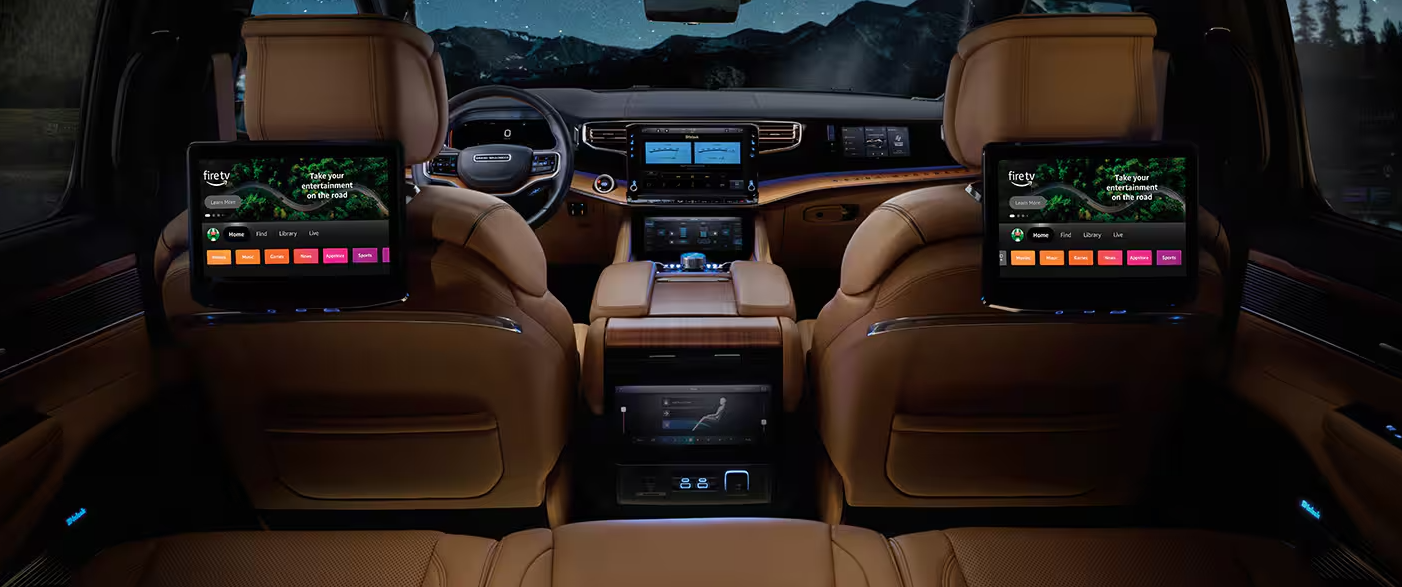
The 2026 Jeep Grand Wagoneer interior doesn't just compete in the luxury segment. Once you're inside, it's clear this cabin was designed with real intention. The materials hold up to scrutiny, the technology feels well thought out, and there's genuine space for everyone. If you've been searching for a three-row SUV that delivers on both comfort and capability, the Grand Wagoneer makes a strong case. more Why the 2026 Jeep Grand Wagoneer Interior Raises the Bar for Luxury SUVs Luxury SUVs have traditionally asked buyers to accept trade-offs. The third row is often barely usable, and the premium materials turn out to be surface-level. The Grand Wagoneer interior breaks from that pattern. Jeep built this cabin with enough detail to rival dedicated luxury brands, pairing real craftsmanship with livable space in a way that feels considered rather than cosmetic. What makes this generation stand out is how that design philosophy carries through the entire cabin rather than stopping at the driver's seat. Every row gets real attention, and every surface gets a finish worth noticing. For families who log meaningful time in their vehicles, whether on daily commutes through Putnam County or weekend road trips, that kind of consistency matters. A Digital Dashboard That's Hard to Ignore Technology is where the Grand Wagoneer dashboard makes its most immediate impression. The architecture is built around a well-integrated digital ecosystem that keeps everything visible and accessible without cluttering the cabin. The 75-Inch Screen Cluster and What It Does The centerpiece of the Grand Wagoneer interior is a setup that delivers up to 75 inches of total screen space across the first two rows, combining the driver display, infotainment screen, passenger display, and rear-seat entertainment into one cohesive system. The driver gets simultaneous access to navigation, vehicle performance data, and driver-assist monitoring, all laid out to minimize eye movement and keep key information in your peripheral field. For anyone who has spent time on unfamiliar stretches of Route 6 or the Taconic, that kind of clarity is genuinely useful. Passenger-Side Display and Controls The Grand Wagoneer also features a dedicated 10.25-inch Front Passenger Interactive Display. Front-seat passengers can browse entertainment options, adjust navigation inputs, or access vehicle cameras without pulling the driver's attention from the road. It's a subtle design shift with a real practical payoff: the front passenger becomes an active participant rather than just along for the ride. The layout also retains physical controls for key functions, so nothing important gets buried in touch menus. Second-row passengers can tap into available 10.1-inch Rear Seat Entertainment Screens with available Amazon Fire TV Built-In, plus an articulating lower comfort display for climate and seat settings. These screens make up much of that 75-inch total, so they're worth confirming on the trim and package you're considering. Premium Materials and Craftsmanship From Every Angle Technology is only half the story. The other half is what you feel when you run your hand across the door panel or settle into the seat. The Grand Wagoneer interior earns its luxury designation through materials that hold up to close inspection. Upholstery, Surface Finishes, and Interior Color Options Higher trims offer available Palermo leather-trimmed seating alongside genuine walnut wood accents and metal trim throughout. Leather-trimmed door panels and a leather-wrapped center console extend the premium feel beyond just the seats. Interior color combinations include Global Black, Sea Salt/Black, and Tupelo/Black, giving buyers real options for personalization. Photos don't fully communicate the tactile quality. You need to sit inside one to understand how the surfaces work together. Three-Row Comfort Built for Real Family Life Whether the third row actually works for adults is the question most families buying a three-row SUV care about most. In the Grand Wagoneer, it does, with enough legroom for teenagers and average-height adults to sit comfortably rather than just tolerate the space on short trips. Front and Second-Row Features Worth Knowing Grand Wagoneer seating capacity accommodates up to eight passengers across three rows, with second-row captain's chairs in the standard configuration and an available eight-passenger seating package that swaps in a second-row bench. Buyers who need the eighth seat should confirm the package is included on their build. Front seat adjustability varies by trim, climbing to available 24-way power-adjustable front seats with massage capability on the upper trims, paired with Palermo leather-trimmed seating. Lower trims offer fewer adjustment points, so buyers who want the full 24-way massage setup should confirm it's included on their chosen configuration rather than assuming it carries across the lineup. Heated and ventilated front seats are standard across the lineup, along with a heated steering wheel and memory settings for the driver seat, steering wheel, and audio. Second-row captain's chairs provide power adjustment, heating, and ventilation on select trims. Jeep also equips the Grand Wagoneer with more second-row legroom than competitors in its class, along with the most first- and second-row hip room in the segment. Third-Row Livability and Cargo Flexibility That third-row legroom is far from guaranteed in this class. Power-folding third-row seats are available on select trims, and with rows folded, cargo capacity expands meaningfully for ski trips or larger hauls. Concert-Quality Sound With the McIntosh Audio System The available McIntosh audio system is one of the more distinctive features in the full-size luxury SUV segment. Jeep equipped the Grand Wagoneer with 23 specifically tuned speakers, including a 12-inch dual voice coil subwoofer, all powered by a 24-channel, 1,375-watt amplifier. McIntosh has a long reputation in home audio, and their automotive work brings that same fidelity into the cabin. Whether you're streaming music or running audio through Apple CarPlay or Android Auto, the quality difference is immediately noticeable. We encourage anyone curious about this system to come experience it firsthand at our Carmel, NY location. How Interior Comfort Upgrades Vary Across Trim Levels The Grand Wagoneer lineup includes several configurations, each with a different approach to interior appointments. The table below summarizes how key interior features differ across trims. Trim Front Seat Adjustability Massage Seats Audio System Seating Material Head-Up Display Panoramic Sunroof Grand Wagoneer Power-adjustable No Standard audio Leather-trimmed Available Available Limited Altitude Power-adjustable No Upgraded audio Leather-trimmed Available Available Upland Power-adjustable No Upgraded audio Leather-trimmed Available Standard Limited Reserve Power-adjustable Available Available McIntosh Palermo leather available Available Available Summit Obsidian Up to 24-way power Yes Available McIntosh (23-speaker) Palermo leather available Available Standard Summit Reserve Up to 24-way power Yes Available McIntosh (23-speaker) Palermo leather available Available Standard The fundamental spaciousness and digital setup carry through at every level. The experiential details shift meaningfully as you move up, so buyers should compare trim features carefully to make sure the options they want most are actually included. If you're weighing the Grand Wagoneer against a slightly smaller three-row option, you can also browse the new Jeep Grand Cherokee to see how the two compare before deciding. Perfect for Hudson Valley Families: Long Drives and Daily Errands The Hudson Valley places specific demands on family vehicles. Winter road conditions are real. Weekends regularly mean longer drives out to Westchester, Dutchess County, or beyond. Daily life involves school pickups, highway commutes, and after-school logistics, often all in the same afternoon. The Grand Wagoneer handles all of it without compromise. The available four-wheel-drive system manages seasonal conditions with confidence, and the air suspension on higher trims adjusts ride height based on terrain. Inside, the cabin insulation keeps highway noise low enough that conversation doesn't require extra effort. For families driving regularly between Carmel, Poughkeepsie, Brewster, or into Danbury, CT, the Grand Wagoneer is a practical fit for the region's lifestyle. Explore the 2026 Jeep Grand Wagoneer at Meadowland of Carmel CDJR Reading about the Grand Wagoneer interior gets you most of the way there, but the full picture only comes together when you're sitting inside one. Meadowland of Carmel CDJR, located at 1952 US-6 in Carmel, NY, carries new Grand Wagoneer inventory and welcomes customers from across the Hudson Valley, including Poughkeepsie, Brewster, and Danbury, CT. We invite you to explore our new Jeep lineup to see what's currently available, or schedule a test drive to experience the cabin in person. Our team is available Monday through Thursday from 9 AM to 7 PM and Friday through Saturday from 9 AM to 6 PM. If you have questions about trim levels or want to explore financing options, don't hesitate to contact us directly at 845-704-4245. We're here to help you find the right configuration for your family.

Gray 2026 Jeep Compass on road

2026 Jeep Compass vs. Honda CR-V: Capability, Tech & Pricing

Choosing between two well-regarded compact SUVs is rarely simple, especially when each one brings genuine strengths to the table. The 2026 Jeep Compass vs. Honda CR-V debate comes up often among shoppers around Carmel, NY, and for good reason. Both vehicles sit comfortably in the same class, serve similar budgets, and target drivers who want a capable, tech-forward SUV for daily use. The similarities fade quickly once you look under the surface. The Compass leans into rugged capability and trail-ready design without sacrificing everyday comfort. The CR-V counters with a roomy cabin, smooth ride quality, and a family-first orientation that's hard to argue with. If you're weighing these two and trying to figure out which fits your actual lifestyle, the breakdown below should help you make a clearer call. more Getting to Know the 2026 Jeep Compass and Its Five Trims The 2026 Jeep Compass arrives with five distinct trims, each targeting a slightly different type of buyer. Rather than treating every trim as a minor variation of the last, Jeep has designed these configurations with clear personality differences. That structure makes it easier to find the exact version that fits your commute, your weekends, or your budget, without overpaying for features you don't need. Latitude and Latitude Altitude: Everyday Confidence, Elevated Style The Latitude is the entry point into the Compass lineup, and it delivers more than you'd expect at its price. Standard AWD comes included across every trim, which is a meaningful advantage for anyone dealing with wet roads or light snow around Carmel, NY and the broader Putnam County area. The standard 8.4-inch Uconnect touchscreen with wireless Apple CarPlay and Android Auto is intuitive and responsive, the kind you can figure out without digging through a manual. The Latitude Altitude builds on that foundation with visual upgrades that sharpen the Compass's overall look. Darker trim accents and bolder badging give it a sportier, more assertive presence. For drivers who want something that stands out without jumping into a premium price range, the Altitude package delivers real appeal without a dramatic cost increase. Limited and Limited Altitude: Comfort and Premium Upgrades Move up to the Limited and the Compass starts to feel like a genuinely premium compact SUV. An available upgrade to the 10.1-inch Uconnect display, heated front seats, and upgraded interior materials make a noticeable difference on longer drives or family outings. These trims suit buyers who appreciate thoughtful details and don't want to feel like they made compromises just because they chose a compact over a midsize. The Limited Altitude blends the comfort-focused amenities of the Limited with the distinctive styling of the Altitude models. It's a strong combination for drivers who want their SUV to reflect both taste and practicality. If you're cross-shopping the Compass against competitors and looking for something with a more upscale feel at a reasonable price, these trims are worth a close look. Trailhawk: Built for the Roads Less Traveled The Trailhawk is where the Compass separates itself most clearly from the CR-V and from most other vehicles in the compact SUV segment. This trim is purpose-built for off-road performance, featuring enhanced suspension geometry and a Selec-Terrain system with Rock mode, giving you hardware specifically designed to handle rough, uneven ground with confidence. Whether you're working through a muddy trail upstate or dealing with a rough winter back road near Carmel, the Trailhawk gives you tools the CR-V simply doesn't offer. The rugged design isn't just cosmetic either. It's a genuine off-road performance package, capable on surfaces that would stop most crossovers cold. For outdoor enthusiasts who see their SUV as a tool for getting somewhere rather than just driving to it, this trim makes a strong case. What the Honda CR-V Brings to the Table The CR-V has built a loyal following for very understandable reasons. It offers one of the most spacious interiors in the compact SUV class, with thoughtful storage solutions and a rear cargo area well-suited to grocery runs and longer road trips alike. Fuel efficiency is another strong suit, with EPA estimates of 28 city / 33 highway mpg in FWD configuration and 27 city / 31 highway mpg with AWD, making it an attractive option for commuters who spend significant time on the highway. The CR-V's safety technology suite is thorough, and its reliability reputation is well-established. Resale values tend to hold up solidly over time, which is worth factoring into total cost of ownership. When comparing the CR-V against the Compass on purely practical, family-focused criteria, it earns its reputation. What you give up, though, is off-road versatility and any real trail capability. All-Weather Capability and Real-World Performance Living in Putnam County means dealing with real weather: slick winter intersections, slushy streets, and wet back roads that can turn challenging quickly. Both SUVs are designed to handle it, though they approach all-weather confidence from different starting points. The CR-V delivers a composed, stable on-road experience in rain and light snow, with its optional AWD system working quietly in the background. AWD is not standard on the CR-V; it's available on most trims but requires an upgrade. The Compass takes a broader approach. Every trim comes standard with AWD, giving you that baseline confidence without any additional decisions. The Trailhawk goes further, with Selec-Terrain and Rock mode actively adjusting power delivery and stability control to match the surface you're on. For drivers who regularly encounter unpaved roads, muddy conditions, or weekend gear-hauling into the hills, that level of adaptability matters. The Compass can also tow up to 2,000 pounds, compared to the CR-V's 1,500-pound towing capacity, a useful difference if you haul a trailer or gear on weekends. Tech, Comfort, and the Everyday Cabin Experience Technology is a deciding factor for many compact SUV buyers, and the Compass vs. CR-V comparison in this area is competitive. A side-by-side look at the key specs: Feature 2026 Jeep Compass Honda CR-V Engine 2.0L turbo inline-four 1.5L turbo Horsepower 200 hp 190 hp Torque 221 lb-ft 179 lb-ft Transmission 8-speed automatic CVT AWD Standard Available (standard onTrailSport Hybrid and Sport Touring Hybrid) Towing 2,000 lbs 1,500 lbs Fuel Economy (AWD) 24/32 mpg 27/31 mpg The 2026 Compass features a standard 8.4-inch Uconnect touchscreen with wireless Apple CarPlay and Android Auto across the lineup, with an available 10.1-inch display on mid-range and higher trims. The CR-V's interface is clean and easy to use, and its connectivity options are well-implemented. Where the Compass has an edge is in the sense of premium polish and the variety of features available as you move through its trim structure. The Limited and Limited Altitude trims offer a level of comfort refinement that makes extended driving noticeably more enjoyable. Pricing and Value: What You Get at Each Step Up The 2026 Compass is structured to offer strong value at each trim step, with meaningful feature additions that justify the cost difference rather than incremental padding. The Latitude provides a capable, well-equipped starting point. The Limited and Limited Altitude trims add premium comfort features that bring the cabin experience closer to near-luxury territory. The Trailhawk commands a premium that reflects its unique off-road engineering and is genuinely unlike anything Honda offers in this class. The CR-V sits at a comparable price range in most trims, and its higher configurations are well-justified for buyers prioritizing interior room and fuel efficiency. For those seeking a compact SUV that also brings genuine off-road capability, the Compass consistently delivers more at each price point without forcing you to choose between everyday usability and the ability to venture off the pavement. The Bottom Line: Which SUV Is Right for You? The choice between the 2026 Jeep Compass and the CR-V comes down to how you use your SUV. If off-road capability and trail-ready performance are priorities, the Compass is the clear answer. The Trailhawk has no real counterpart in Honda's lineup. If maximum cabin space and time-tested family practicality matter more, the CR-V is a sensible, well-rounded choice that earns its reputation. For drivers in Carmel, NY who want everyday comfort and the confidence to handle whatever Putnam County winters throw at them, the Compass makes a strong case. The five-trim structure means you can find the right version without overspending, and the all-weather capability built into every configuration fits the region's conditions well. If you're ready to explore your options, browse the new Jeep Compass inventory in Carmel, NY or take a look at the full new Jeep lineup for sale in Carmel, NY at Meadowland of Carmel CDJR. Our team can walk you through the trims, answer your questions, and get you behind the wheel at a time that works for you.

Gray 2026 Jeep Compass parked

2026 Jeep Compass Latitude vs. Limited Altitude: Feature & Value Guide

Picking the right Jeep Compass trim isn't just about the price tag. It's about figuring out which features actually matter to your daily life, your commute, and how you want to feel behind the wheel. Here at Meadowland of Carmel CDJR, we work with Carmel, NY-area buyers every day who are wrestling with exactly this decision, so we put this guide together to make it simple. Browse our current 2026 Jeep Compass in Carmel inventory or schedule a test drive to see both trims in person. more What You're Really Deciding When Choosing Between These Two Trims When you compare the 2026 Jeep Compass Latitude vs. Limited Altitude, you're really choosing between smart practicality and a more refined, premium experience. The Latitude delivers honest value with modern technology and solid capability at a more accessible price. The Limited Altitude layers in bolder styling, upgraded interior materials, and advanced tech for buyers who want their daily driver to feel like a genuine step up. Neither trim is a compromise. Both have real strengths in the Jeep Compass lineup. The real question is which strengths matter most to you, and that depends on your budget, your lifestyle, and what you expect every time you climb in. The 2026 Jeep Compass Latitude: More Than Just the Entry Point It would be a mistake to write off the Latitude as the bare-minimum option. Among the 2026 Jeep Compass trims, it's built to deliver a complete, well-rounded experience without charging you for features you'll rarely use. Tech, Comfort, and Everyday Convenience The Latitude comes with a capable infotainment setup built around an 8.4-inch Uconnect 5 touchscreen. Wireless Apple CarPlay and Android Auto make staying connected simple, no cable fumbling required. Heated front seats are a genuine comfort during cold Carmel winters, and the heated steering wheel means you're not gripping something frigid on your morning commute. These aren't spec-sheet fillers. They're well-integrated features that make the Latitude genuinely easy to live with day after day. Safety Features and AWD Capability Safety technology is where the Latitude earns real respect. Jeep equips it with Full-Speed Forward Collision Warning Plus with automatic emergency braking, Blind Spot Detection, and a solid suite of driver assistance features that work quietly in the background. Whether you're merging onto a busy highway or squeezing into a tight parking lot on errand day, these systems give you real confidence. Standard Jeep 4x4 AWD with Selec-Terrain makes the Latitude a capable year-round vehicle. For buyers dealing with mixed weather on fall and winter roads around Carmel, that AWD system with multiple terrain modes adds practical versatility that matters when conditions turn on you fast. Understanding the Limited Altitude: A Premium Trim With a Bold Look The Limited Altitude is not a separate trim level. It's the Limited trim with the Altitude package applied on top. That distinction matters because you're getting everything the Limited already brings, with a layer of aggressive styling and additional features stacked onto that foundation. Knowing that makes the value calculation a lot clearer. What the Altitude Package Adds to the Limited The Altitude package brings a distinctive blacked-out aesthetic that sets this configuration apart immediately. Gloss black exterior accents, a black two-tone roof, LED headlamps, 19-inch Painted Satin Granite Crystal aluminum wheels, and unique Altitude badging give the Limited Altitude a sport-forward presence that the Latitude's monotone exterior and 17-inch aluminum wheels simply don't match. For buyers who want their Compass to make a visual statement on Carmel roads, this package delivers that personality without any aftermarket work. The exterior changes aren't random add-ons, either. They work together to create a unified blacked-out look that feels deliberate rather than cosmetic. Interior Upgrades and Advanced Technology Step inside the Limited Altitude and the difference is immediate. Heated black leatherette front seats replace the Latitude's premium cloth and vinyl, and available heated rear seats make longer trips more comfortable for everyone. Dual-zone automatic climate control means the driver and passenger aren't battling over the temperature dial, which matters on longer commutes or weekend road trips. The infotainment upgrade is meaningful here too. Jeep gives the Limited Altitude a 10.1-inch Uconnect 5 touchscreen, larger than the Latitude's 8.4-inch display, and adds available Alexa Built-In, connected services, and an available 10.25-inch digital cluster. Wireless charging takes care of the cable clutter that builds up over time. A foot-activated liftgate, rain-sensing wipers, auto-dimming mirror, and 8-way power driver seat round out the convenience upgrades that make daily use noticeably smoother. On the safety side, the Limited Altitude adds Adaptive Cruise Control with Stop & Go and ParkSense rear park-assist on top of everything the Latitude already includes. 2026 Jeep Compass Latitude vs. Limited Altitude: Feature Comparison Table Here's a side-by-side look at the core differences between these two trims to help you compare at a glance. Feature Latitude Limited Altitude Engine & Drivetrain 2.0L Turbo I4, 200 HP, 221 lb-ft torque, 8-speed auto, Jeep 4x4 AWD, Selec-Terrain Same 2.0L Turbo I4, 200 HP, 221 lb-ft torque, 8-speed auto, Jeep 4x4 AWD, Selec-Terrain Wheels 18-inch aluminum 19-inch Satin Granite Crystal or gloss black Exterior Styling Body-color door handles, monotone exterior Gloss black accents, black two-tone roof, LED headlamps, fog lamps, unique badging Seating & Interior Premium cloth/vinyl, heated front seats, heated steering wheel Heated black leatherette front seats, available heated rear seats, dual-zone automatic climate control Infotainment Uconnect 5, 8.4-inch touchscreen, wireless Apple CarPlay/Android Auto, 6-speaker audio Uconnect 5, 10.1-inch touchscreen, available Alexa Built-In, connected services, available 10.25-inch digital cluster Convenience Power liftgate, passive entry, remote start Foot-activated liftgate, rain-sensing wipers, auto-dimming mirror, wireless charging, 8-way power driver seat Safety & Driver Aids Full-Speed Forward Collision Warning Plus, Blind Spot Detection All Latitude features + Adaptive Cruise Control with Stop & Go, ParkSense rear park-assist Both trims share the same 2.0L turbocharged engine, AWD system, and Selec-Terrain capability. What separates them is the styling package, interior materials, infotainment screen size, and the expanded driver assistance and convenience features that come with the Limited Altitude. Price Difference and Real-World Value for Carmel Shoppers The price gap between the Latitude and the Limited Altitude is meaningful but not extreme. The Latitude is positioned to keep capable AWD technology and solid everyday features accessible to budget-conscious buyers. The Limited Altitude commands a higher price, and that step up reflects specific, named improvements: heated black leatherette seating, the larger 10.1-inch Uconnect 5 touchscreen, Adaptive Cruise Control with Stop & Go, wireless charging, dual-zone automatic climate, and the full Altitude exterior treatment. If you plan to keep the vehicle for several years, those upgrades add up to a noticeably better day-to-day experience over time. Adaptive cruise control on a regular highway commute reduces fatigue in ways that are hard to quantify but easy to feel after a few months. Wireless charging and a foot-activated liftgate are small conveniences that earn their place every single day. That said, if your priority is AWD capability, solid safety tech, and a connected infotainment experience without paying for amenities you won't regularly use, the Latitude delivers genuine, well-rounded value right from the start. We're happy to walk you through financing options that make either trim more accessible than you might expect. Explore our new Jeep vehicles in Carmel or view current inventory to see what's available and start building a payment plan that fits your budget. Which Trim Matches Your Priorities? There's no objectively correct answer in the Latitude vs. Limited Altitude debate. It comes down to what you value most and how you actually use your vehicle. The Latitude Is the Right Call If... The Latitude is the smart pick if you want a fully capable, technology-equipped SUV without stepping into luxury pricing. It's ideal for practical commuters, families looking for a dependable all-season vehicle, and buyers who appreciate modern safety tech and solid connectivity without paying for amenities they won't regularly use. The standard Jeep 4x4 AWD, Uconnect 5 infotainment, heated front seats, and Full-Speed Forward Collision Warning Plus give you a complete, well-rounded experience. You don't need to spend at the top of the range to get a genuinely capable Compass. The Limited Altitude Makes Sense If... The Limited Altitude is worth the investment if you spend significant time in your vehicle and want that time to feel like a step up. Heated black leatherette seating, dual-zone automatic climate control, Adaptive Cruise Control with Stop & Go, wireless charging, and the larger 10.1-inch Uconnect 5 touchscreen all add up to a noticeably more refined daily experience. The Altitude package's blacked-out exterior is a real differentiator for buyers who want their Compass to stand out from the crowd. If you're the kind of driver who notices and actively values those details, the Limited Altitude will satisfy in ways the Latitude simply isn't designed to match. Explore Both Trims at Meadowland of Carmel CDJR Reading about these trims only tells part of the story. The best way to decide between the 2026 Jeep Compass Latitude and Limited Altitude is to sit in both, drive both, and feel the difference for yourself. We carry both configurations here in Carmel, NY and our team is ready to walk you through each trim without any pressure. We serve buyers across Carmel, Poughkeepsie, Brewster, and Danbury, CT, and we're known for a straightforward buying experience with no surprises. Contact us online to check current availability, ask about financing, or set up a time to come in. The comparison gets a lot clearer once you've experienced what each trim actually delivers on the road.