




Blog / Service

How Often Should You Change Your Oil?

To keep your vehicle in great shape, you must change the oil regularly. But how long should you wait between changes? You don't want to wait too long, as this could cause problems with the vehicle, and the cost of changing it too frequently soon adds up. Below, we'll answer how often you should change your oil, along with why you should make an oil change one of your top priorities as a vehicle owner.

Schedule An Oil Change

How Often Should You Change Your Oil?

How often you should change your oil depends on a few factors. Generally speaking, car manufacturers recommend changing your oil every 7,500 to 10,000 miles. Changing your oil this often typically results in better engine protection. However, there are a few factors to consider that may alter these adjustments.

For example, if you use your vehicle for "severe" driving, then you'll want to change your oil more frequently. Severe driving includes things such as making many short trips under 5 miles, driving in extremely hot weather, driving at low speeds for long distances, taking your vehicle off-road, racing your vehicle, or using your vehicle to tow something over long distances. Driving in these sorts of conditions can put extra strain on your engine, which is why we recommend that you change your oil a little more frequently.

You'll also want to consider the age of your vehicle. Newer vehicles use synthetic oil, which lasts longer. If you're driving an older vehicle, it may use regular oil, which doesn't protect the engine as well. In this case, you may want to change your oil every 5,000 miles or so.

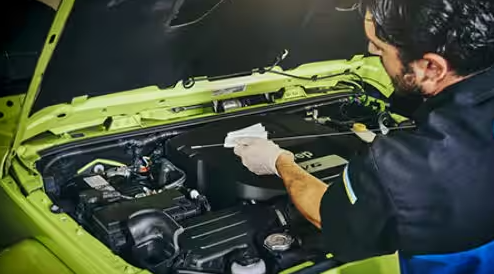
Lastly, if you have a new vehicle that's still under warranty, this can impact when you should get an oil change. To ensure you don't void the powertrain warranty, you'll want to bring your vehicle in for an oil change at the recommended intervals within your owner's manual. Your vehicle may even have a built-in oil-life monitor, which uses real-time data to alert you when it's time for an oil change. Check the various menus in your dashboard to see if there are any alerts related to getting an oil change.

In short, to determine when to get an oil change, all you need is a little common sense. Take the recommendation of 7,500 to 10,000 miles and adjust it based on your personal driving habits. If you think your driving habits may warrant getting an earlier oil change, you certainly won't do any harm by replacing it early.

Benefits of a Regular Oil Change

Getting a regular oil change is one of the best things you can do for any vehicle. When you regularly change the oil, you get a few key benefits, including:

Better Performance

Regular oil changes lead to better performance. Your engine is a finely tuned piece of machinery. It relies heavily on clean engine oil to operate at its best. As engine oil degrades, the engine has to work harder and as a result, loses efficiency and power. If you want to get the most out of your engine, you should change the oil at regular intervals.

Better Protection

By changing your vehicle's oil regularly, you're helping to protect your engine in the long run. As we said, when an engine has dirty oil, or when it's low on oil, it doesn't operate as efficiently. This leads to the engine having to work harder, which can result in damage. Since engine repairs are some of the most expensive you can face as a car owner, you should do what you can to avoid them. When compared with the cost of engine repairs, an oil change every few months is a small price to pay.

Retain Vehicle Value

A vehicle that receives regular oil changes will retain more of its value. When it finally comes time to sell or trade-in your vehicle, you'll want to get as much for it as you can. One of the factors potential buyers will look at is how well you cared for the vehicle. A vehicle history report will show how often you received oil changes, which will let potential buyers know what sort of condition the engine is in. Schedule regular oil changes now, and you'll be glad you did when the time comes to sell or trade your vehicle.

Signs You Need an Oil Change

While it's a good idea to change your vehicle's oil at regular intervals, there are also signs that may indicate it's time to change your oil. For example, if you notice that your vehicle doesn't accelerate as fast as it used to, it could be due to poor engine oil quality. Similarly, if your vehicle takes longer to start up, it could be because the engine oil isn't moving as quickly through the engine, something that an oil change can remedy.

Look out for any strange noises or smells. If you hear a knocking sound while you're driving, this is often the result of needing an oil change. You may also notice a burning smell, which is a common sign that you have an engine oil leak. In either case, it's important to have an expert service technician investigate the issue as soon as you can, otherwise, it could lead to lasting damage and expensive repairs.

Schedule Your Next Oil Change at Meadowland of Carmel

When you need an oil change near Carmel, New York, bring your vehicle to Meadowland of Carmel. Our expert service team will be happy to assist you, quickly performing an oil change and getting your vehicle back to you in no time at all. We can also answer any questions you may have about getting an oil change, such as what type of oil to use, how often to change the oil for your specific make and model, and how to check your oil in-between visits. To get started, please schedule an appointment online today, stop by during business hours, or contact us at any time.

Photo Credit: Image by Kenny Eliason is licensed with Unsplash License
Posted in:

Related Posts

Jeep Service

How Often Should You Change the Transfer Case Fluid on Your Jeep?

Your Jeep's transfer case works hard behind the scenes, splitting power between your front and rear axles to deliver that legendary four-wheel-drive capability you depend on. This essential component often gets overlooked during routine maintenance. Knowing when and why to change your transfer case fluid can save you thousands in repairs and keep your Jeep running strong, whether you're navigating Carmel's winter roads or tackling weekend trails. If you're due for service, schedule your service appointment at Meadowland of Carmel CDJR to keep your drivetrain protected. more Understanding Your Jeep's Transfer Case and Why It Matters What the Transfer Case Does in Your 4WD System Think of the transfer case as your Jeep's power distributor. This gearbox sits between your transmission and axles, controlling how engine power reaches all four wheels. When you shift into 4WD, the transfer case jumps into action, sending torque wherever you need it most. That means proper traction on slippery surfaces, steep hills, and rough terrain. Without well-maintained transfer case fluid, this crucial component can't protect metal gears from friction and heat. The fluid inside juggles multiple jobs: lubricating moving parts, pulling heat away, and keeping internal components clean. Over time, this fluid breaks down from constant pressure and temperature swings. Contamination from metal shavings and moisture cuts into its effectiveness. That makes regular fluid changes just as important as your engine oil maintenance. How Transfer Case Service Differs from Transmission Service Lots of Jeep owners confuse transfer case maintenance with transmission service, but these are completely separate systems that need different care. Your transmission manages gear changes and power delivery from the engine. The transfer case works downstream, handling power distribution to your axles. While they're connected, they use different fluids and follow different service schedules. Complete transmission service typically includes fluid exchange, filter replacement, and inspection of transmission components. Transfer case service focuses on draining old fluid and refilling with fresh lubricant designed for that gearbox's specific needs. Both services protect your drivetrain investment, but handling each system correctly ensures nothing gets missed. Recommended Transfer Case Fluid Change Intervals for Jeeps Factory Guidelines for Common Jeep Models Jeep's factory maintenance schedules vary significantly by model, year, and drivetrain. For the Jeep Wrangler JL, the owner's manual specifies inspecting transfer case fluid every 30,000 miles and changing it at 60,000 miles for vehicles with a manual transmission or under severe-duty use, with the automatic transmission variant potentially going longer under normal conditions. Grand Cherokee models vary widely, with some owner's manuals specifying change intervals of 104,000 to 120,000 miles under normal use. Because intervals differ so much, consulting your specific owner's manual or a factory-trained technician is essential for your exact vehicle. Factory-trained technicians at our service center can also verify the recommended schedule during routine maintenance visits. Following these guidelines helps maintain your warranty coverage and ensures your four-wheel-drive system operates as designed. Severe Driving Conditions That Require More Frequent Changes Severe driving conditions demand more frequent service, and Jeep's factory severe-duty schedules reflect this. For the Grand Cherokee under severe-duty use (off-roading, frequent towing, police or fleet service), the factory interval is typically 60,000 miles. Deep water crossings, extended idling, and short trips in extreme temperatures also count as severe use. If you regularly trailer boats or campers, hit muddy trails, or plow snow during Carmel winters, your Jeep experiences harder-than-average wear. How Your Driving Habits Around Carmel Affect Fluid Life Off-Roading, Towing, and Weekend Adventures Weekend adventures take a serious toll on transfer case fluid that daily drivers never see. Drop into 4WD Low on rocky trails or through deep snow, and your transfer case works overtime. The constant switching between two-wheel and four-wheel drive modes creates heat and pressure that speeds up fluid breakdown. Water and dirt intrusion during trail runs can contaminate the fluid, reducing its protective qualities. Towing adds another layer of stress. Whether you're hauling a boat to nearby lakes or pulling equipment for home projects, that extra weight forces your transfer case to work harder. This pushes operating temperatures up and breaks down fluid additives more quickly. Jeep owners who combine regular towing with occasional off-roading should consider checking transfer case fluid every 15,000 miles or annually, whichever comes first. Winter Driving and Daily Commuting Considerations Winter conditions around northern Westchester and Putnam counties create unique challenges for transfer case maintenance. Cold temperatures thicken fluid, reducing its ability to flow smoothly and lubricate moving parts during startup. Frequent use of 4WD on snowy roads means your transfer case sees more action than during summer months. Road salt and moisture can also work their way into the system through seals and vents, contaminating the fluid. Daily commuting might seem easy on your Jeep, but short trips prevent the transfer case from reaching proper operating temperature. This incomplete warm-up cycle allows condensation to build up in the fluid. Over months and years, this moisture contamination leads to corrosion and early wear. If you're noticing any issues with your four-wheel-drive system, contact our team for a diagnostic assessment. Warning Signs Your Transfer Case Fluid Needs Attention Your Jeep will definitely tell you when something needs attention. Strange noises from underneath the vehicle often signal transfer case trouble. Grinding, whining, or clunking sounds when shifting into or out of 4WD point to low or contaminated fluid. Don't ignore these noises because they represent metal-on-metal contact that damages internal gears. Difficulty shifting between 2WD and 4WD modes suggests your transfer case fluid has lost its effectiveness. You might notice the shifter fighting back or the system failing to fully engage. Some Jeep owners experience slipping during operation, where power delivery feels inconsistent or delayed. Checking the fluid level and condition can reveal whether you're dealing with low fluid, contaminated lubricant, or a more serious mechanical issue. Visible leaks beneath your Jeep point to seal failures that let fluid escape and contaminants enter. Even small leaks need immediate attention since low fluid levels quickly lead to overheating and component damage. Catching these warning signs early prevents expensive transfer case rebuilds or transmission repairs down the road. Jeep Transmission Service: What's Included and When You Need It Understanding the full scope of Jeep transmission service helps you maintain your entire drivetrain properly. Comprehensive service includes draining and replacing transmission fluid, swapping out the filter, and inspecting internal components for wear. Technicians check for metal particles in old fluid that might show developing problems and examine seals, gaskets, and connections for leaks or damage. Most Jeep models benefit from transmission service every 30,000 to 60,000 miles under normal conditions. Severe driving conditions call for more frequent attention. A transmission flush provides more thorough cleaning than a simple fluid change, removing built-up deposits and conditioning agents from throughout the system. Factory-trained technicians at Meadowland of Carmel understand the specific requirements of Jeep transmission systems. They use proper fluids and procedures recommended by the manufacturer. This matters because using wrong fluid specifications can cause shifting problems and early wear. Professional service also includes road testing to verify smooth operation across all gear ranges. Professional Service vs. DIY: Making the Right Choice for Your Jeep Some Jeep owners handle transfer case and transmission maintenance themselves to save money. DIY service can work if you have mechanical skills, proper tools, and a suitable workspace. You'll need a way to safely lift the vehicle, catch and dispose of old fluid properly, and source the correct replacement lubricants. Transfer case fluid changes are generally more straightforward than full transmission service since they involve basic drain and fill procedures. Professional service offers distinct advantages worth considering. Certified technicians spot potential issues during routine maintenance that untrained eyes might miss. They have access to specialized tools and diagnostic equipment. Dealership service creates documented maintenance history that supports warranty claims and increases resale value. The cost at a professional shop includes expertise, proper disposal, and peace of mind that everything was done correctly. Your choice depends on your comfort level with automotive maintenance and the complexity of the work needed. Simple fluid changes suit confident DIYers. Diagnosing transmission issues or addressing unusual symptoms calls for professional attention. Schedule Your Jeep Transfer Case and Transmission Service in Carmel Regular maintenance keeps your Jeep running smoothly and preserves its legendary capability. Staying current with transfer case and transmission service prevents small problems from becoming major gearbox repairs. The service team at Meadowland of Carmel understands the unique demands that driving throughout northern Westchester and Putnam counties places on your vehicle. Their factory-trained technicians use genuine Mopar parts and fluids designed specifically for your Jeep model. Convenient Scheduling and Service Hours Located at 1952 US-6 in Carmel, Meadowland of Carmel CDJR makes scheduling convenient. Service hours run Monday through Friday from 7:30 AM to 5 PM and Saturdays from 8 AM to 3:30 PM. Call 845-842-7355 to discuss your Jeep's maintenance needs and set up an appointment. Whether you need routine maintenance or have concerns about unusual sounds or shifting behavior, their team provides honest assessments and quality work. Decades of Experience Serving Hudson Valley Jeep Owners Don't wait until warning lights appear or problems develop. Proactive maintenance costs far less than addressing neglected transmission problems or transfer case failures. Part of the Volz Auto Group, Meadowland of Carmel brings decades of experience serving Jeep owners throughout the Hudson Valley. Their commitment to customer service and technical excellence ensures your vehicle receives the attention it deserves. Book your Jeep service today and keep your adventure-ready vehicle performing at its peak.

A pile of different types of screws on top of each other

The Essential Role of Spark Plugs in Your Vehicle

When it comes to the smooth operation of your vehicle, spark plugs may not be the first component that comes to mind, yet they play an indispensable role in your car's engine performance. These small devices ignite the air-fuel mixture in the engine's cylinders, enabling your vehicle to start and run efficiently. Neglecting to maintain or replace spark plugs can lead to various problems, from reduced fuel efficiency to engine misfires. At Meadowland of Carmel, we're committed to keeping your vehicle in peak condition. This guide provides essential information about spark plugs, including how they work, how to identify when they need replacing, and the best practices for maintaining them. more Schedule Service Service Center Call Us How Spark Plugs Work Spark plugs are critical components in an internal combustion engine. They function as the ignition source for the air-fuel mixture, producing the necessary spark to initiate combustion. When you turn the ignition key, the vehicle's battery sends electrical energy to the spark plug, which generates a spark at the tip of the plug. This spark ignites the compressed air-fuel mixture in the engine's cylinders, causing a mini-explosion that pushes the pistons and ultimately powers the vehicle. This process is repeated thousands of times a minute while your engine is running, illustrating just how vital spark plugs are to your vehicle's operation. A well-functioning spark plug ensures efficient combustion, contributing to better performance and fuel economy. Life Span of Spark Plugs How long do spark plugs last? The average life span of spark plugs depends on several factors, but many standard plugs are designed to last between 30,000 and 100,000 miles. It's a good idea to consult your vehicle owner's manual for specific recommendations tailored to your car's make and model. The factors that influence a spark plug's life expectancy include: Type of spark plug: Copper spark plugs typically last around 20,000 miles, while iridium and platinum spark plugs can last up to 100,000 miles or more. Driving conditions: Frequent short trips or stop-and-go driving can cause spark plugs to wear out faster. Engine condition: Issues such as oil leaks or an improperly tuned engine can contribute to premature spark plug wear. Fuel quality: Lower-quality fuel can lead to deposits forming on spark plugs, reducing their effectiveness. To find the exact plug type and replacement components engineered for your model, explore our full catalog of Mopar parts and accessories. Identifying Worn-Out Spark Plugs Identifying worn-out spark plugs can help you better maintain your vehicle's performance. Here are some common signs you need to replace spark plugs: Engine misfires: If your engine struggles to start or runs unevenly, it could be a sign that your spark plugs are failing. Reduced acceleration: Difficulty picking up speed when you accelerate can indicate that your spark plugs aren't firing correctly. Poor fuel economy: If you notice a sudden increase in fuel consumption, it may be time to check your spark plugs. Strange noises: Knocking or rattling sounds coming from the engine can also suggest your spark plugs are malfunctioning. Check engine light: If your check engine light illuminates, it's a good idea to have your spark plugs inspected, as this can indicate misfires. If you experience any of these issues, don't hesitate to reach out to Meadowland of Carmel for a thorough inspection. Our team of expert technicians can help uncover the problem's root cause and resolve the issue. The Impact of Neglecting Spark Plug Replacement What happens if you don't change your spark plugs? Failing to replace worn spark plugs can have serious repercussions for your vehicle. Ignoring the need for replacement may lead to the following: Engine misfires: Continued use of worn spark plugs can cause persistent misfires, leading to uneven engine performance and potential engine damage. Poor fuel efficiency: Inefficient combustion can decrease your fuel economy by up to 30%, causing you to spend more at the pump. Increased emissions: Worn spark plugs can lead to incomplete combustion, resulting in higher emissions that are harmful to the environment. Engine damage: Prolonged neglect can cause additional strain on your engine, potentially leading to costly repairs or even engine failure. When and How To Replace Spark Plugs How often should spark plugs be replaced? It's generally a good idea to change them every 30,000 miles, but always check your owner's manual for specific recommendations. Additionally, if you notice any of the symptoms mentioned earlier, it's time to act. If you prefer doing your own vehicle maintenance at home, you can easily order genuine OEM parts online directly through our dealership. Here's a step-by-step guide to replace your spark plugs yourself: Gather your tools: You'll need a socket wrench, spark plug socket, gap gauge, and new spark plugs. Remove the ignition wires: Gently pull the ignition wires off the old spark plugs. Be careful not to damage the wires. Extract the old spark plugs: Use the spark plug socket and wrench to unscrew the old plugs from the engine. Check the gap: Before installing new spark plugs, use a gap gauge to ensure the gap is set to the manufacturer's specifications. Install new spark plugs: Carefully thread the new spark plugs into the engine by hand before tightening them with the socket. Reconnect the ignition wires: Push the ignition wires back onto the new spark plugs, ensuring a secure fit. Test your engine: Start the engine to ensure everything is functioning properly. Although replacing spark plugs can be a DIY task, it's always a good idea to have a professional handle the job. At Meadowland of Carmel, our skilled technicians are ready to assist with spark plug replacement and overall vehicle maintenance to ensure your car runs at its best. Benefits of Replacing Spark Plugs Regularly changing your spark plugs comes with a variety of benefits, including: Improved fuel economy: Fresh spark plugs ignite fuel more efficiently, leading to better fuel economy and savings at the pump. Smoother engine performance: New spark plugs facilitate consistent combustion, resulting in a smoother ride and more responsive acceleration. Reduced emissions: Healthy spark plugs contribute to cleaner combustion, helping to minimize your vehicle's environmental impact. Reliable starts: With new spark plugs, you can expect your engine to start easily and run without hesitation. Visit Our Auto Service Center in Carmel, NY Spark plugs are a small yet essential component of your vehicle's engine. Proper maintenance and timely replacement can prevent a range of issues and ensure optimal performance. If you think it's time for a spark plug replacement or if you have questions about your vehicle's maintenance, don't hesitate to contact Meadowland of Carmel. Our team is here to help you keep your vehicle running smoothly. If your engine is misfiring or struggling to start, don't wait— schedule a service appointment with our certified technicians today. Image credit: A pile of different types of screws on top of each other by Shraga Kopstein, licensed by Unsplash License

How to Tell When Your Vehicle Lights are Failing

A vehicle's lights are some of its most important components, as they ensure safety while on the road by providing visibility at night and in extreme weather. Headlights, taillights, and brake lights keep you safe by signaling your presence to other drivers. When your car's lights fail, you'll experience reduced visibility and might encounter legal issues, especially if you get pulled over while one of your exterior lights is out. At Meadowland of Carmel in New York, we know how crucial it is for your vehicle to have working interior and exterior lights. That's why we operate a comprehensive service department where our expert technicians will repair or replace any lights on your vehicle that aren't working properly. Visit us the next time your lights fail to experience our outstanding service. Before you visit, let's look at how to tell when your vehicle lights are failing and what you can do about it. Understanding Different Vehicle Lights Here's a list of the most common types of vehicle lights and their purposes: Headlights: Headlights are at the front of the vehicle and provide visibility in the dark and during rainy or snowy weather. Brake lights: These sit at the back of the car and signal to vehicles behind you that you're applying the brakes and slowing down. Indicators: Turn signals are an example of indicators which flash to inform other drivers that you're about to turn. There are also emergency light indicators that flash when you stop the car for emergency reasons. Interior lights: The overhead lights in the interior illuminate the cabin so you can see inside your vehicle. Daytime running lights: These are specialized headlights for use during the day without directing too much glare at other drivers. Signs of Failing Lights There are many signs to look out for that can inform you of light failure or damage. For example, when your lights dim, flicker, or emit unfamiliar patterns or colors, they usually have a dying bulb that needs replacing. Similarly, if your lights don't turn on or off when they should, an issue likely needs repairing. Many vehicles have indicator lights on the dashboard that will turn on when there's a problem with the exterior lights. Common Causes of Light Failure The most common causes of light failure in cars include burnt-out light bulbs and damage from collisions or weather. For example, condensation on headlights during warm months interferes with the bulbs and wiring. Additionally, an exterior light damaged in an accident will likely not function correctly until it's professionally repaired. Electrical issues are another key cause of light problems in cars. These can include wiring malfunctions, such as frayed or disconnected wires. They can also include battery issues like a dead battery or shorted circuit. Whether the voltage is too high or too low, electrical malfunctions can harm a car's lights. Checking and Maintaining Vehicle Lights To ensure your lights are always working, regularly test them by turning on each light, especially ones you haven't used in a long time. You can also perform DIY maintenance to keep your lights looking good and working as they should. For example, you can clean your lights with a vinegar solution and turn your car off completely after every drive to allow the battery to recharge. If you suspect your vehicle's light malfunctions are due to an electrical issue or if your vehicle uses complex lighting assemblies that are difficult to remove, it's time to seek professional help. In these cases, it's best to schedule a service appointment so a professional technician can safely repair the electrical components and remove all assemblies correctly. Replacing Vehicle Lights When your car's lights need replacing, there are a few things to consider before you get started. First, ensure you choose the right bulbs for your vehicle, as bulbs that aren't compatible with your car likely won't connect or function properly. Taking safety precautions when changing lights, such as wearing gloves and safety glasses and ensuring you turn the car off to prevent electrocution is also crucial. Here's a step-by-step guide for replacing your headlights: Turn off your car. Open the hood to find the headlight wires. Disconnect the headlight wires. Take out the old headlight bulb. Install the new headlight bulb. Reconnect the wires and test the headlights. Here's a step-by-step guide for replacing your brake lights or taillights: Turn off your car. Open the trunk to find the taillight assembly. Remove the taillight assembly. Take the bulb out of the taillight assembly. Install the new taillight bulb. Reinstall the taillight assembly. Legal Implications and Safety Concerns There are several legal regulations surrounding vehicle lights. These laws ensure all cars on the road have headlights that offer adequate visibility so drivers can see their surroundings and other vehicles. Another aspect of vehicle light regulation is glare. The government has regulations in place to reduce the glare your headlights direct toward other drivers. For instance, there's a law requiring headlight systems to have both upper and lower beams. The main reason for this law is that functional and non-distracting vehicle lights promote safety for everyone on the road. Drivers are less likely to get into accidents when they can see everything around them clearly, including other cars highlighted by their lights. One case study from 2023 supported earlier findings that daytime running lights improve safety by reducing the frequency of multi-vehicle collisions during the day. This showcases how different types of vehicle lights help protect everyone while driving. Service Your Lights at Meadowland of Carmel Being able to recognize the signs of failing vehicle lights is crucial. It's important to get regular maintenance and replace your lights promptly when they stop working. This will help you stay safe on the road and ensure you comply with traffic laws. Contact us if you notice one of your vehicle lights is failing, and our expert service department will repair or replace them. Don't forget to ask about our service specials that will save you money when you book an appointment to service your lights with us. Photo Credit: turned-on vehicle headlight on the street by Marcus Bellamy is licensed with Unsplash License