




Blog / Jeep Vehicles

Blog

All Jeep Vehicles Local Ram Trucks Dodge Models Local Restaurants Service Chrysler Vehicles CDJR Vehicles Charger Vehicle Tips Jeep Wagoneer Used Vehicles
Jeep Gladiator Brake Replacement

When to Replace the Brakes in Your Jeep Gladiator

Brake maintenance is crucial for the safety and performance of any vehicle. As the Jeep Gladiator models from 2022 and 2023 approach their first year of ownership, drivers may wonder when brake replacement becomes necessary. Whether you're in this group or own a newer or older Gladiator, understanding when to replace your Jeep Gladiator's brakes is essential. At Meadowland of Carmel, we understand the importance of a properly functioning brake system. Read our guide to learn more about Jeep Gladiator brakes and when they need servicing. New Gladiator Inventory Brake Service Call Us Today Key Signs That Indicate Brake Replacement Is Needed There are signs indicating it's time to replace the brakes on your Jeep Gladiator. One is a high-pitched squealing or grinding noise when you apply the brakes, usually because the brake pad's wear indicator touches the brake rotor, signaling the pad material has worn down to a critical level. Another indication is a spongy or soft feeling in the brake pedal. If you need to press the pedal further than usual to achieve the same braking power, it may be a sign of worn brake pads or a problem with the brake fluid. Vibrations or pulsations in the brake pedal or steering wheel when braking can also indicate an issue. These often occur because of warped or unevenly worn brake rotors, which can compromise braking performance and safety. Lastly, a visual inspection of the brake pads can provide valuable insight into their condition. If the brake pad material has worn down to less than a quarter inch thick, it's time to schedule a brake replacement. How Driving Habits Influence Brake Wear on Your Gladiator Your driving habits can significantly impact the wear and tear of your Gladiator's brakes. Frequent stop-and-go traffic, such as in urban areas or during rush hour, can strain your vehicle's brakes, causing them to wear out more quickly. Constant acceleration and deceleration require the brakes to work harder, increasing heat and friction. Hauling heavy loads or towing a trailer can also influence brake wear on your Gladiator. The added weight stresses the braking system, requiring more braking force to slow down or stop the vehicle. Off-road driving — navigating rough terrain, steep inclines, and muddy or sandy conditions — can strain your Gladiator's brakes more. It's crucial to be aware of your surroundings and adjust your driving habits to minimize unnecessary brake wear. Aggressive braking, sudden stops, or riding the brakes downhill can also accelerate brake wear. By practicing smooth, controlled braking and anticipating stops, you can help extend the life of your vehicle's brake pads and rotors. To optimize brake life, be mindful of your driving habits and adjust them when necessary. Maintain a safe following distance to allow for gradual braking and avoid excessive speed. Also, plan your routes to minimize frequent stopping and starting. Checking and Maintaining the Tires on Your Jeep Gladiator Proper tire maintenance is essential for optimal brake performance on your Jeep Gladiator. Tires that are underinflated, overinflated, or have uneven tread wear can negatively impact braking efficiency and safety. Regularly checking the tire pressure is crucial to ensure your Gladiator's tires are properly inflated. For the recommended tire pressure, consult the owner's manual or the tire information placard on the driver's side door jamb. Driving with underinflated tires can increase braking distances and reduce handling, while overinflated tires can lead to a harsher ride and uneven tread wear. Monitoring tread depth is another important aspect of tire maintenance. Adequate tread depth is essential for maintaining traction, especially in wet or slippery conditions. You can easily check the tread depth using a tire tread depth gauge or by performing the penny test. Insert a penny into the tire tread with Lincoln's head facing down; if you can see the top of his head, it's time to replace your tires. Regular tire rotations can also help extend the tires' useful life and promote even wear on Jeep Gladiator models. Rotating the tires every 5,000 to 7,500 miles, or as the manufacturer recommends, can help ensure that all four tires wear evenly, improving overall performance and longevity. Recommended Brake Service and Maintenance Schedule Following the recommended brake service and maintenance schedule is essential for keeping your Jeep Gladiator's brakes in optimal condition. While the exact schedule may vary depending on your driving habits and conditions, there are general guidelines you can follow. For newer Jeep Gladiators, including the 2024 model, we recommend performing a brake inspection at every oil change. During these inspections, a qualified technician will assess the condition of the brake pads, rotors, calipers, and brake fluid and make any necessary adjustments or recommendations for replacement. It is essential to be proactive about replacing the brake pads when they end their service life. On average, brake pads last around 30,000 to 70,000 miles, depending on your driving habits and the type on your Gladiator. You should also check and replace the brake fluid as needed. Over time, brake fluid can absorb moisture, leading to decreased braking performance and potential damage to brake components. The general recommendation is to flush and replace the brake fluid every two years or every 30,000 miles. Maintaining Your Gladiator for Optimal Performance Regular brake and tire maintenance is crucial to ensure your Gladiator remains safe and reliable. By paying attention to the signs of brake wear, conducting visual inspections of the brake pads, and following the Jeep Gladiator brake service schedule, you can address any concerns promptly and keep your vehicle in optimal condition. You can also help extend the life of your Gladiator's brake system by being mindful of your driving habits, using genuine parts designed for your vehicle, and entrusting its maintenance to our team of experts at Meadowland of Carmel. Experience the Meadowland of Carmel Difference At Meadowland of Carmel, we understand the importance of new and used Jeep Gladiator maintenance. Our state-of-the-art service center is staffed by factory-trained technicians with the expertise and knowledge to handle all your Jeep Gladiator's maintenance and repair needs. With our commitment to exceptional customer service, you can trust us to provide honest, transparent advice and high-quality work. Schedule a service appointment today or contact our friendly staff to discuss your Jeep Gladiator's maintenance needs.
Jeep Grand Cherokee Comparison

2024 Jeep Grand Cherokee vs 2024 Ford Explorer

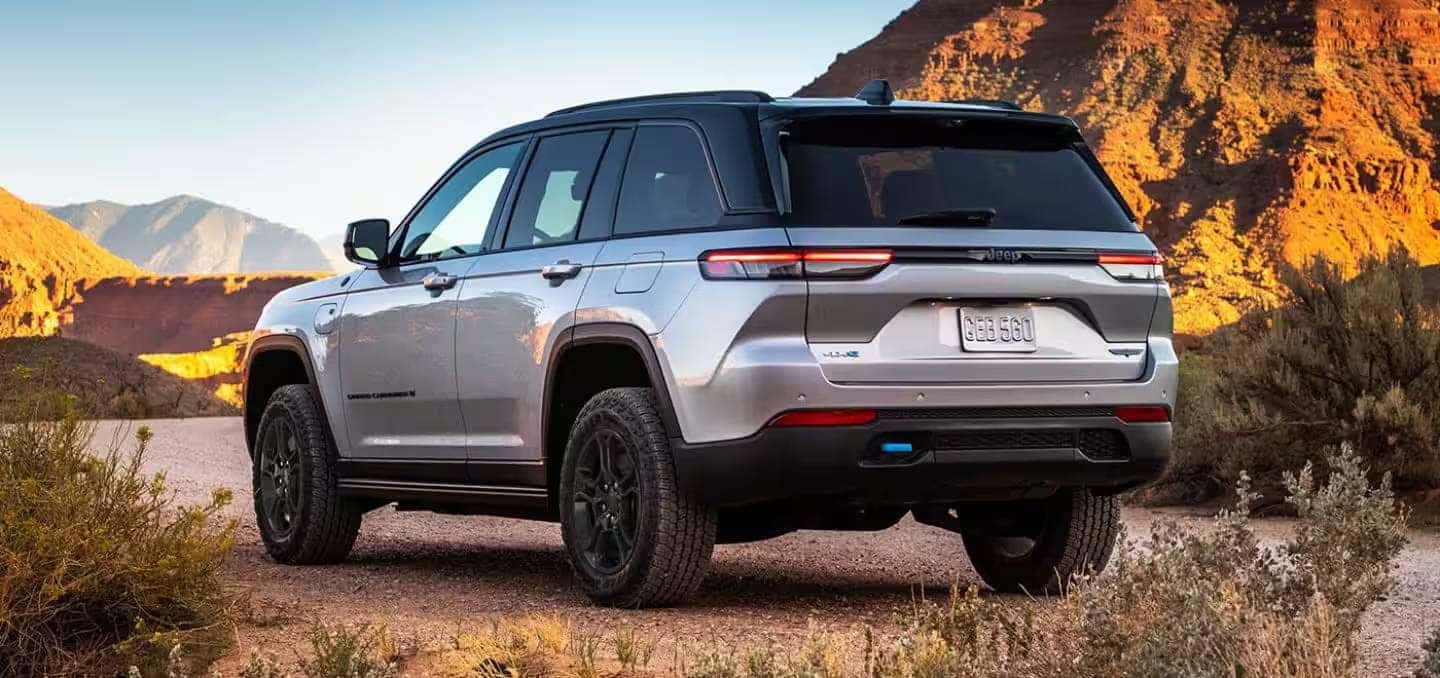
The 2024 Jeep Grand Cherokee and the 2024 Ford Explorer are popular choices among shoppers for midsize SUVs in Carmel, New York. Both vehicles offer a range of features, capabilities, and trim levels to suit different needs and preferences. Let's compare the 2024 Jeep Grand Cherokee vs. 2024 Ford Explorer in critical areas, including price, reliability, performance, safety, technology, and comfort, to help you make an informed decision. New Jeep Inventory Jeep Grand Cherokee Inventory Used Jeep Vehicles Call Us Performance and Powertrain Comparison Under the hood, the 2024 Jeep Grand Cherokee and 2024 Ford Explorer offer powerful engine options. The Grand Cherokee comes standard with a 3.6L Pentastar V-6 engine that produces 293 horsepower and 260 lb-ft of torque. For those seeking more power, an available 5.7L HEMI V-8 engine delivers an impressive 357 horsepower and 390 lb-ft of torque. In comparison, the Explorer's base engine is a 2.3L EcoBoost four-cylinder that generates 300 horsepower and 310 lb-ft of torque, while its most potent option is a 3.0L EcoBoost V-6 that produces 400 horsepower and 415 lb-ft of torque. Regarding fuel efficiency, the Grand Cherokee's base V-6 engine achieves an EPA-estimated 19 mpg in the city and 26 mpg on the highway. The Explorer's base four-cylinder engine offers slightly better fuel economy, with an EPA-estimated 21 mpg in the city and 28 mpg on the highway. However, the Grand Cherokee's available V-8 engine provides a significant advantage in towing capacity, with a maximum of 7,200 pounds compared to the Explorer's 5,600-pound limit. Interior Comfort and Technology Features Both the 2024 Jeep Grand Cherokee and the 2024 Ford Explorer offer well-appointed interiors with a range of comfort and technology features. The Grand Cherokee's cabin is luxurious, with available nappa leather upholstery, heated and ventilated front seats, and a dual-pane panoramic sunroof. The Explorer's interior is spacious and functional, with optional leather seating surfaces and a twin-panel moonroof. In terms of technology, the Grand Cherokee offers an available 10.1-inch touch-screen infotainment system with Apple CarPlay and Android Auto compatibility and a customizable 10.25-inch digital gauge cluster. The Explorer features an available 10.1-inch vertical touch screen with the SYNC 4 infotainment system and a 12.3-inch digital instrument panel. However, the Grand Cherokee pulls ahead with its available 19-speaker McIntosh audio system, massaging front seats, and a 10.3-inch passenger display. Safety and Driver-Assistance Features Safety is a top priority for the 2024 Jeep Grand Cherokee and 2024 Ford Explorer. The Grand Cherokee comes standard with advanced safety features, including full-speed forward collision warning with active braking, lane departure warning with lane-keep assist, and adaptive cruise control. The Explorer also offers a range of standard and available safety technologies, such as blind-spot monitoring, rear cross-traffic alerts, and lane-keep assist. The Grand Cherokee has a slight edge in terms of safety, thanks to its more comprehensive standard safety package. Additionally, the Grand Cherokee has consistently earned high marks in crash tests conducted by the National Highway Traffic Safety Administration and the Insurance Institute for Highway Safety. Pricing and Value Considerations When comparing the 2024 Jeep Grand Cherokee and the 2024 Ford Explorer, it's essential to consider their pricing and overall value. The Grand Cherokee's starting MSRP is $36,495, while the Explorer's base model starts at $36,860. Along with a slightly lower starting price, the Grand Cherokee offers more standard features at its base trim level, such as the advanced safety technologies mentioned earlier. Regarding long-term value, the Grand Cherokee has a strong reputation for reliability and resale value. Jeep offers a competitive protection package with a five-year/60,000-mile powertrain and a three-year/36,000-mile basic warranty. The Explorer, while still a reliable choice, may not hold its value as well as the Grand Cherokee over time. Exterior Design The 2024 Ford Explorer and 2024 Jeep Grand Cherokee have distinct exterior designs that cater to different tastes. The Ford Explorer has a more modern, sleek appearance, while the Jeep Grand Cherokee offers a rugged yet refined aesthetic. Both SUVs have LED headlights as standard, with the higher trims offering panoramic sunroofs, different wheel options, and other exterior features. Your personal preferences will determine the better exterior design choice. Off-Road Capabilities One area where the 2024 Jeep Grand Cherokee truly shines is in its off-road capabilities. With available features such as the Quadra-Trac II 4x4 system, Selec-Terrain traction management system, and an electronic limited-slip rear differential, the Grand Cherokee is well-equipped to handle a variety of terrains and conditions. While it's also quite capable, the Explorer can't match the Grand Cherokee's off-road prowess. The Grand Cherokee also offers an air suspension system that raises the vehicle's ground clearance to 10.9 inches, further enhancing its off-road abilities. The Grand Cherokee's superior off-road capabilities may decide if you and your family enjoy adventurous outings or frequently travel to remote locations. Experience the Benefits of the 2024 Jeep Grand Cherokee at Meadowland of Carmel If you're interested in experiencing the 2024 Jeep Grand Cherokee firsthand, feel free to contact us for a test drive. Our knowledgeable staff will happily answer all your questions and help you explore this impressive SUV's various trim levels and features. Whether you're in the market for a new or used vehicle, our dealership offers financing options to help make your dream car a reality.

Jeep Wrangler Tires

When Should You Replace Tires on a Jeep Wrangler?

A Jeep Wrangler is a workhorse vehicle capable of taking any terrain in stride and handling any challenge you throw at it. However, any car eventually needs new tires so that it can continue to operate at its best. If you're a Jeep Wrangler owner, you must know what signs to look out for that indicate it's time to change the tires. In this article, we at Meadowland of Carmel discuss when you should replace the tires on a Jeep Wrangler-based on our knowledge and experience. New Wrangler Inventory Tire Service Call Us Today How Do I Know When To Replace My Jeep Wrangler's Tires? If you suspect it might be time to change your tires, get a tread depth tool from your local auto hardware store and check if you have at least 2/32 of an inch of tread left. Any lower than that will cause your tires to fail an inspection. Realistically, it would be best if you never allowed the tread to get that low in the first place. An easier way to tell is that almost all tires have a wear bar running sideways along the tire. If this wear bar crosses two tread blocks, it's time to get some new tires for your Wrangler. How Often Should I Replace the Tires? You should replace the tires when they get too damaged or the tread is too worn down. Most tires don't last long enough to wear out from age unless the vehicle is left unused for a long time. For regular commuting, your front tires should be replaced every 30,000 miles and your rear tires every 60,000 miles, as their tread will have worn down significantly over this mileage. Check your tires' sidewalls every four to five years, and never use tires over 10 years old, as the rubber will have degraded regardless of the tires' storage conditions. If you regularly use your Wrangler on trails, mountains, and rough terrain, you may wear your tread more than usual. Wranglers can handle rough terrain just fine, and being able to take on terrain challenges is half the fun of owning a Jeep, but this will lead to a need for more regular maintenance. Regularly check your tires for damage on their treads and sidewalls, and replace them immediately if you find any holes or missing material. What Happens If I Don't Replace My Tires? If you don't replace your tires, this can lead to serious safety concerns for your vehicle. A lack of tire tread has significantly increased stopping distance for vehicles, especially in wet conditions. This increases the risk of collisions with other cars and the possibility of running off the road while making turns. Ensuring you have sufficient tread on your Wrangler's tires keeps your ride safe and maintains your vehicle's stopping distance and handling. Why Should I Keep My Tire Wear Even? If you don't rotate your tires, your tread blocks can wear at different rates and cause your Wrangler to shake while driving. Uneven tire wear can be frustrating, as it may mean that you need to replace individual tires more often than the others. This is because the car's front end generally takes more of the car's weight, so the tread wears more heavily in this area. This uneven tire replacement can be costly in the long run. It can also lead to uneasy handling and skidding if the tread wear is bad. What Model Years Should Look For a Tire Replacement? The model of your Wrangler can significantly influence what stock tires come with your vehicle out of the factory and what sort of replacements you should look for. If you're considering upgrading the tires on a Jeep Wrangler you bought from Meadowland of Carmel with stock 17-inch terrain tires, consider how you will use the vehicle. If you travel on off-road terrain regularly, your stock tires will handle off-road well but will not be optimized for that kind of activity. Consider upgrading to at least 30- to 32-inch tires for off-road terrain. Jeep Wrangler Wheels and Tires At Meadowland of Carmel, our Jeep Wranglers come with stock tires that differ depending on the model. For example, the 2023 Jeep Wrangler Sport has 17-inch 245/75R17 stock all-terrain tires that suit commuting, general travel, and occasionally taking on rough terrain. By comparison, the 2024 Jeep Wrangler Sahara has 20-inch 255/60R20 all-season tires from the factory that have better grip in wet and dry conditions off-road. If you don't travel off-road often, stick with your stock tires since they're better at enduring ordinary terrain without changing. If you regularly travel off-road, you may want to upgrade to at least 30- to 33-inch tires, necessitating a change in your Jeep's lift height. If you are a severe off-road traveler, you may want to upgrade to 40-inch Jeep Wrangler mud tires to give you the best ground clearance and ability to handle even the most challenging terrain. Contact our parts department to further discuss your Jeep Wrangler tire options. Ready for a Tire Change? If your Jeep Wrangler's tires need replacing, or you're in the market for a new Jeep Wrangler, we're happy to help. Our expert technicians can offer advice based on their knowledge and experience to find the tire solution that fits your needs and how you will use your Wrangler. We provide services for tire rotations and tire replacements, and we can help you buy new tires for your Wrangler. Contact our services department using our Contact Us form or 845-842-7355 to schedule an appointment with us.

Jeep Gladiator Towing

2024 Jeep Gladiator Towing Capacity

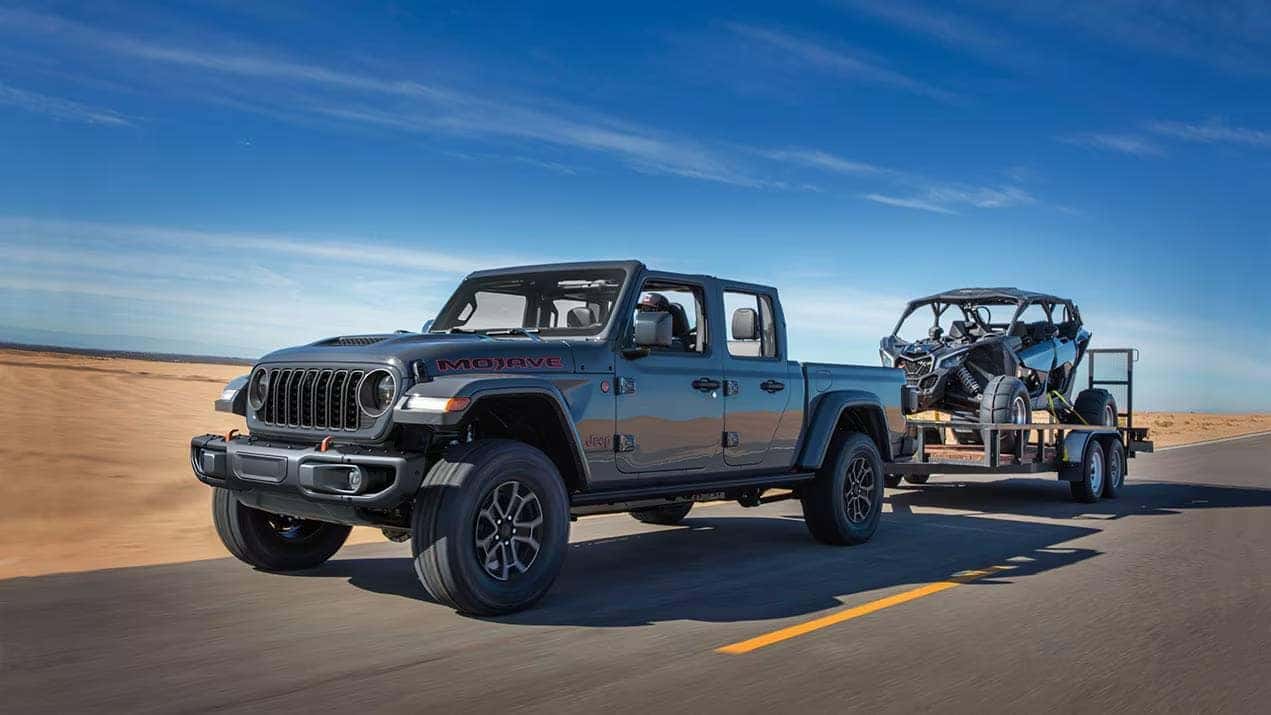
The 2024 Jeep Gladiator is a powerhouse designed to shoulder the heaviest burdens, tow way above its weight class, and give you an all-around performance vehicle that can continue to surprise you. The towing capacity of the 2024 Jeep Gladiator is a hot topic, and its impressive hauling capabilities may help sway your decision to invest in a new workhorse vehicle for the coming year. In this article, our team at Meadowland of Carmel explores the 2024 Jeep Gladiator's towing capacity, engine specifications, and reliability for particular use cases. What Is the 2024 Jeep Gladiator's Maximum Towing Capacity? The 2024 Jeep Gladiator offers outstanding towing performance for a four-wheel-drive adventure truck, allowing you to take on the most significant challenges, whether that's hauling your buddies out of the mud on the trail or pulling trailers. It offers a pickup's brute strength and hauling capabilities while maintaining the versatility and all-terrain capability of a four-wheel-drive Jeep that we know and love. 2024 Jeep Gladiator Sport models available at Meadowland of Carmel can achieve 7,700 pounds maximum gas towing capacity, an unmatched towing strength in the small pickup vehicle class. Jeep Gladiator Engine Performance Specs We can thank the 2024 Jeep Gladiator's 3.6L Pentastar V-6 engine for its towing capacities. This engine comes as standard in the entire 2024 Jeep range, including the Gladiator, Wrangler, and even the Grand Cherokee. It boasts 285 horsepower and 260 lb-ft of torque and can achieve up to 16 mpg in the city or 23 mpg on the highway. This high-spec engine will keep the 2024 Jeep range running year-on-year, taking whatever challenges you throw at it. How Can I Use the Jeep Gladiator's Towing Capacity? The maximum towing capacity of the 2024 range of Jeep Gladiators may seem excessive for a small pickup, but its high load ceiling guarantees performance for a wide range of heavy-duty tasks. The 2024 Jeep Gladiator's tolerance for heavy towing means that you can easily attach a trailer hitch and pull a trailer loaded to the brim. This includes holiday trailers, cargo trailers, gooseneck trailers, and any towing attachment that fits within the Gladiator's hauling capabilities. This makes the 2024 Gladiator a reliable option if you regularly tow varied cargo and adapt to towing challenges on the fly. Who Is the Jeep Gladiator's Towing Capacity Useful For? The Jeep Gladiator's high hauling capacity is helpful for adventurers, holidaymakers, and working professionals due to the wide-ranging applications of its towing capacity. For example, adventurous Jeep owners can easily hitch a Jet Ski carrier or a trailer of two to three dirt bikes to their 2024 Gladiator. Working professionals could reliably use their Gladiator to tow a work trailer full of supplies or a small one- or two-horse trailer to a show. Holidaymakers could tow a medium-sized camper or a small fishing boat to their local spot. The possibilities are endless for the Gladiator's impressive capabilities. Other Jeep Gladiator Towing Features The ease of towing with the 2024 Jeep Gladiator doesn't stop at its high towing weight capacity. Each Jeep Gladiator has a 5.5-foot truck bed, which adds a whole extra dimension of cargo space in addition to your towing capacity. 11.6 inches of ground clearance ensures that no matter how weighed down the Gladiator is, you have plenty of room to work with navigating uneven terrain and bumps. The 12.3-inch integrated touch screen's Trail Guides and Adventure Guides can help you plan routes effectively while accounting for your towing load. Snow-rated tire options increase the Gladiator's capability to tow even in snowy and lightly icy conditions. The rear-mounted trailer hitch camera can help you keep track of your trailer mid-drive and identify problems on the move. The Mojave X and Rubicon X further include steel bumpers and rock rails to protect your Jeep Gladiator from challenging rocky conditions. The 2024 Gladiator range also includes transmission skid plates and three options of American Expedition Vehicles packages to meet greater protection requirements. Whatever your needs, at Meadowland of Carmel we're here to help you find the 2024 Gladiator option that meets them. How Do Towing Weights Impact My Jeep Gladiator's Miles Per Gallon? As much as a Jeep Gladiator answers any towing task you throw at it, this performance comes at a cost. No matter how light the load, any towing weight will impact a Jeep Gladiator's miles-per-gallon performance due to the additional energy required to pull the extra weight of a trailer. Estimates suggest that the overall miles per gallon of a vehicle decreases by around 2% per 100 pounds of tow weight added, significantly impacting how many miles you can get out of a fuel tank. To help mitigate reduced fuel economy, plan and bear additional fuel consumption in mind when you know you have a load to tow and a tank to fill—estimate where you're likely to run dry and check if gas stations are on your route. Also, in addition to greater fuel consumption, higher tow weights will also increase wear on your Gladiator's tires, so you may need to get them rotated and changed more frequently. Bring your Gladiator into our Service Center for regular maintenance checks if you test its performance to the limits. Ready To Tow Your Next Load? If you need a vehicle for regular towing, we can help you find a Jeep Gladiator to meet even the most demanding tasks. To see the range of 2024 Jeep Gladiators at Meadowland of Carmel, check out our Jeep Gladiator New Vehicles page or visit us in person at our dealership in Carmel, New York. If you'd like to discuss your requirements with a team member, give us your thoughts using our Contact Us form or ring us on 845-704-4245, and one of our representatives will be happy to answer any questions.

2024 Jeep Gladiator Bed Space

2024 Jeep Gladiator vs 2024 Ford Ranger

If you're shopping for a midsize truck, you've probably seen the Jeep Gladiator and Ford Ranger. These two pickups offer impressive capability throughout their lineups and have the latest must-have in-vehicle technology. You'll also find premium trims that may surprise you for their quality and comfort. Sorting through the various features and options can be challenging. Read as our midsize truck experts at Meadowland of Carmel in New York compare these two popular vehicles. 2024 Jeep Gladiator vs. 2024 Ford Ranger: Trim Levels and Pricing Jeep manufactures seven Gladiator trims. Ford makes the Ranger in four trim levels. Here's a look at their respective MSRPs. 2024 Jeep Gladiator Trim MSRP 2024 Ford Ranger Trim MSRP 2024 Jeep Gladiator Sport $37,895 2024 Ford Ranger XL $32,670 2024 Jeep Gladiator Sport S $41,990 2024 Ford Ranger XLT $35,610 2024 Jeep Gladiator Willys $45,590 2024 Ford Ranger LARIAT $43,630 2024 Jeep Gladiator Rubicon $51,990 2024 Ford Ranger Raptor $55,470 2024 Jeep Gladiator Mojave $51,990 2024 Jeep Gladiator Rubicon X $61,990 2024 Jeep Gladiator Mojave X $61,990 The Ranger's base model is less expensive than the Gladiator's if you're strictly motivated by price. If you consider style, capability, comfort, and technological features essential, keep reading to see which truck stands out. 2024 Jeep Gladiator vs. 2024 Ford Ranger: Exterior Style These midsize pickups may be in the same category but look remarkably different. The Gladiator is longer, while the Ranger is wider. The Gladiator boasts rugged good looks that speak to its capability. From its signature six-bar grille to its round headlights and boxy proportions, it remains unmistakably a Jeep. The Ranger takes its lead from its big brother, the F-150. Ranger trucks look bold but fall short of rugged, except for the Raptor model, which has off-road equipment, including skid plates, performance shocks, and all-terrain tires. Jeep's open-air driving is the most significant difference between these trucks. Removable doors and windows have been a staple of Jeep's Wrangler lineup, from which the Gladiator evolved. You can get a moonroof and roll down the Ranger's windows, but it doesn't compare. If classic pickup truck styling suits you, we recommend you go with a full-size Ram 1500. 2024 Jeep Gladiator vs. 2024 Ford Ranger: Powertrain Jeep dropped the turbo-diesel engine for the 2024 model year, sticking only with the 3.6-liter Pentastar V-6 engine with stop/start technology. This powertrain produces 285 horsepower and 260 lb-ft of torque. The Gladiator can tow up to 7,700 pounds. Ford has three available engines for the Ranger lineup. A 2.3-liter EcoBoost engine comes standard, producing 270 horsepower and 310 lb-ft of torque. With this engine, the Ranger can tow up to 7,500 pounds. A 2.7-liter EcoBoost engine is available that generates 315 horsepower and 400 lb-ft of torque. It offers the same towing capacity. The Raptor has a 3.0-liter EcoBoost engine that puts out 405 horsepower and 430 lb-ft of torque. It can only tow up to 5,510 pounds because of the Raptor's heavier equipment. 2024 Jeep Gladiator vs. 2024 Ford Ranger: Capability Every Gladiator trim comes standard with four-wheel drive and has Jeep's Trail Rated or Desert Rated badge. To earn the Trail Rated badge, a Jeep must pass grueling off-road tests covering water fording, ground clearance, articulation, maneuverability, and traction. The Mojave trim has the only Desert Rated badge among the Gladiator models. It passed five tests covering traction, desert prowess, ride control and stability, maneuverability, and ground clearance. Jeep engineered the Gladiator to perform well on and off the road. When you leave the pavement behind, you can rely on Dana solid axles, front and rear tow hooks, rock rails, sway bar disconnect, steel skid plates, performance shocks, and the Tru-Lok electronic locking differential. Jeep's available Off-Road+ system automatically optimizes your Gladiator's throttle, shift points, and traction control for high-speed passes over dunes and low-speed rock crawling. Jeep adds a trail camera system for eyes on the ground in front of your Gladiator to help navigate over and around difficult terrain. The Ford Ranger comes standard with a rear-drive platform on all trims except the Raptor. Adding four-wheel drive costs $3,485 on the LARIAT and XLT trims and $3,645 on the XL, quickly closing the gap between the Gladiator's pricing that includes four-wheel drive. The FX4 Off-Road Package offers off-road-tuned shocks, a steel bash plate, an electronic-locking rear differential, and selectable Mud/Ruts and Sand drive modes. It adds another $1,295 to your cost. You also get Ford Trail Control, which displays pitch, roll, and steering angle data on the center stack. 2024 Jeep Gladiator vs. 2024 Ford Ranger: Interior Comfort and Convenience The Gladiator's power-operated premium leather seats with contrast stitching provide surprising interior comfort. Heated seats and a heated steering wheel are standard on the top trims. A roomy cabin has best-in-class front and rear headroom. Convenient features, such as a lockable rear-seat storage compartment and a removable speaker, enhance your adventures. The speaker can withstand the weather and survive in up to 3 feet of water for 30 minutes. Ranger XL and XLT models have cloth bucket seats that operate manually. The LARIAT trim offers a heated steering wheel and power-operated leather-trimmed seats. The second-row seat conveniently folds flat to allow for oversized cargo. The Ranger has more bed utility features, such as integrated box side steps, in-bed power, LED lighting, a versatile tailgate, and zone lighting, letting you do more than haul gear. Test-Drive the 2024 Jeep Gladiator Today At first glance, the Gladiator appears to be the more expensive of the two vehicles. However, Ford's menu-style pricing drives the Ranger's cost up, whereas the Gladiator comes standard with many desirable features. After a thorough review, you get more capability in a ruggedly stylish package with the Gladiator. We invite you to browse our online inventory to see what you may like. Once you find a model that interests you, please visit our Carmel showroom. One of our Gladiator experts will answer your questions and demonstrate its exceptional capabilities.

2024 Jeep Wrangler Cargo Space

2024 Jeep Wrangler Cargo Space

For decades, the iconic Jeep Wrangler has been the go-to vehicle for off-road enthusiasts because of its legendary prowess on the toughest trails. Past models may have been a little basic on the inside, as the focus was on their capabilities, but all that has changed. With this proven adventure vehicle, Jeep has focused on becoming the perfect mix of comfort and utility without sacrificing its capability. For 2024, the Wrangler has updated styling and a refreshed interior with more comfort features and enhanced technology. This guide examines the 2024 Jeep Wrangler's cargo space and interior amenities closely. New Jeep Vehicles New Jeep Wranglers Call Us Today Redesigned 2024 Jeep Wrangler On the outside, the 2024 Jeep Wrangler has redesigned exterior features, and the distinctive seven-slot grille has been updated to provide more airflow to the powertrain. Choose from two- or four-door body styles, each with removable doors, a roof, and a fold-flat windshield for open-air thrills. Inside, the front seats have been optimized for better visibility and are now available with 12-way power adjustment on higher trims. The refreshed dash design features a best-in-class 12.3-inch touchscreen as standard. Wrangler body styles are available in Sport, Sport S, Willys, Rubicon, and Rubicon X trim levels.  The Sahara and Rubicon 392 trims are available in four-door versions only. Jeep Wrangler Trunk Space The trunk space of a 2024 Jeep Wrangler varies according to which body style you choose. Behind the rear seats of two-door models, you'll find 12.9 cubic feet of luggage space sufficient for two carry-on suitcases. In the four-door Wrangler, you get 31.7 cubic feet of trunk space, which can hold up to 10 carry-on cases. Standard cargo tie-down loops help keep your gear in place. You'll also find plenty of clever storage solutions throughout the cabin for stowing smaller items. When you've got more gear than passengers, folding down the two-door Wrangler's rear seats gives you up to 31.7 cubic feet of cargo space with a payload of 997 pounds. If you want to take toys along on your adventures, the two-door model, when properly equipped, offers a towing capacity of up to 2,000 pounds, enough to haul a jet ski, motorcycle, or small fishing boat trailer. With the four-door version, the maximum cargo volume increases to 72.4 cubic feet, enough for plenty of camping gear. The payload ranges from 1,088 pounds to 1,327 pounds.  The four-door model can tow up to 3,500 pounds with the right equipment. With that, you could tow a large boat trailer, a pop-up camper, or a small travel trailer. Always check your Jeep owner's manual for towing capacities. Powerful Jeep Wrangler Engine Lineup Enabling the Wrangler's cargo and towing capabilities is a lineup of powerful and efficient engines. Standard power is provided by a 3.6-liter V-6 engine that delivers 285 horsepower and 260 lb-ft of torque. It's paired with a six-speed manual transmission or an eight-speed automatic. Depending on the trim level, you can opt for a refined 2.0-liter turbocharged four-cylinder engine delivering 270 horsepower and 295 lb-ft of torque.  Under the hood of the Rubicon 392 is a mighty 6.4-liter V-8 engine that pumps out 470 horsepower and 470 lb-ft of torque. These two engines come exclusively with an eight-speed automatic transmission. All models come standard with four-wheel drive. Generous Wrangler Passenger Space Both the two-door and four-door Wrangler have seating for five people with up to 104 cubic feet of passenger volume, but the dimensions differ slightly, with four-door models having more rear hip and legroom. The dimensions for two-door models are: Legroom (front/rear): 41.2 inches/35.7 inches. Headroom (front/rear): 42.6 inches/41.7 inches. Shoulder room (front/rear): 55.8 inches/57.7 inches. Hip room (front/rear): 53.9 inches/45.0 inches. For the four-door Wrangler, the dimensions are: Legroom (front/rear): 41.2 inches/38.3 inches. Headroom (front/rear): 42.6 inches/41.7 inches. Shoulder room (front/rear): 55.8 inches/55.8 inches. Hip room (front/rear): 53.9 inches/56.7 inches. Whether heading out on a road trip or hitting the off-road trails, passengers will have a comfortable and roomy ride. Jeep Wrangler Interior The Wrangler's cabin has been updated with a more modern feel but still retains its signature rugged characteristics. The re-engineered front seats offer more comfort and optimal visibility on the road and the trails. The standard interior color is black, while the Rubicon 392 stands out with its red upholstery. Most models feature stylish and durable cloth seats, while the Rubicon X and Rubicon 392 have luxurious and supple nappa leather upholstery and an eight-way power-adjustable driver's seat. Standard on the top trims and available on others are comfort features such as heated power-adjustable front seats, dual-zone automatic temperature control, a heated steering wheel, and a leather-wrapped brake handle and shift knob. Enhanced Technology The Wrangler has upgraded technology features for 2024. Most trims have a 7-inch digital instrument cluster for clear vehicle information. Every Wrangler now has the Uconnect 5 infotainment system and a class-leading 12.3-inch touchscreen. You also get an available 4G LTE Wi-Fi hotspot, Android Auto and Apple CarPlay integration, hands-free phone and audio, and an eight-speaker sound system with satellite radio. Higher trims offer a GPS navigation system, integrated voice command, HD Radio, and a premium Alpine audio system with nine speakers, including a subwoofer and 552-watt amplifier. An available trial subscription to Adventure Guides from Trails Offroad enables you to access maps of more than 200 off-road trails, making it easier to navigate your wilderness adventures. You can also upgrade to gain access to over 3,000 destinations. Are You Ready To Load Up Your Gear and Hit the Trails? The 2024 Jeep Wrangler's cargo space allows you to load up plenty of gear for your off-road escapades. Come and see our inventory of Wranglers today at our Meadowland of Carmel dealership here in Carmel, New York, or browse our Jeep lineup online. When you find a Wrangler that suits you, contact us to schedule a test drive. Our team is ready and waiting to demonstrate your great features. Photo Credit: Image via OEM

Are Jeep Wranglers reliable used vehicles?

If you want to take advantage of all the outdoor activities around Carmel, New York, one great way to do so is with an off-road vehicle. Jeep Wranglers are popular, as they can handle rough terrain and provide excellent versatility. Then there's the iconic style of the Jeep Wrangler, blending rugged functionality with timeless style. Its boxy silhouette, seven-slot grille, and round headlights pay homage to its military roots while embodying adventure and freedom. However, you may have concerns about the long-term reliability of used Wranglers. Below, we'll highlight what you need to know about them, including whether you can count on them down the road. New Jeep Inventory Used Jeep Vehicles Call Us Jeep Wrangler Overview The Jeep Wrangler, an iconic off-road vehicle, traces its roots back to World War II when Willys produced the “Quad,” a small four-wheel drive prototype, for the U.S. Army. Renowned for its rugged capability, the Wrangler has evolved while retaining its distinct design and off-road prowess. Key features include its robust body-on-frame construction, solid front and rear axles for superior articulation, and removable doors and tops for an open-air driving experience. The latest models boast modern amenities such as touch-screen infotainment systems and advanced safety technology, balancing traditional and contemporary expectations. With its rich heritage and unwavering commitment to off-road excellence, the Jeep Wrangler continues to captivate adventure enthusiasts worldwide. Jeep Wrangler Reliability Jeep Wranglers are surprisingly reliable vehicles. According to RepairPal, Wranglers are above average in terms of reliability compared to other vehicles, scoring a 3.5 out of 5 reliability rating. Additionally, owners have to deal with unscheduled repairs an average of 0.3 times per year, typical for compact SUVs but lower than the 0.4 times per year for all other vehicle models. However, since Wranglers are often used in challenging situations, the probability of a repair being labeled severe or a major issue is higher than that of other vehicle models, though the number of those issues is low. Used Jeep Wrangler Issues When exploring used Wranglers, knowing the most common issues they can experience is important. Understanding these beforehand helps you know what to look for when exploring your options. For example, one concern is rust, particularly in older models, as Wranglers often endure tough off-road conditions. To be sure you're making the best choice, check the frame, suspension components, and undercarriage for any signs of corrosion. Another issue to watch for is wear and tear on the soft top or hardtop seals, which can lead to leaks. Additionally, some owners report electrical system problems, including issues with the dashboard controls and lighting. Evaluate the transmission, too, as manual transmissions may experience premature wear. Thoroughly inspect any used Wrangler you're considering, and read its vehicle history report to ensure it's free of past issues. Costs to Maintain and Repair a Wrangler Due to its off-roading nature, Jeep Wranglers may need a little more maintenance than other vehicles to stay in shape. Some common service jobs include: Regular oil changes: Crucial for the engine's health and are recommended every 5,000-10,000 miles, depending on the Wrangler model and engine type. Est. Cost: $35-$75 Differential fluid change and transfer case fluid replacement: Checking and changing these fluids as the owner manual recommends helps keep the gears of your Wrangler in good condition. Est. Cost: $75-$200 Tire rotations, alignments, and proper tire inflation: Taking care of your tires is essential for even tread wear and handling. Est. Cost: $110 to $130 Inspection of suspension components and bolts: Regular checks of the suspension components ensure optimal handling and stability in addition to safety. Tightening loose bolts keeps your Wrangler running smoothly. Est. Cost: $70 to $90 Brake system inspections: Maintaining your brakes, including checking the pads, rotors, and fluid, is vital for safe driving. Est. Cost: $88 to $111 Servicing your used Jeep Wrangler regularly will help extend its life span. To save money on your next maintenance visit, check out our latest service specials. Jeep Wrangler Longevity and Durability When properly maintained, Jeep Wranglers can last a long time. According to Motor and Wheels, the average life span for a Wrangler is 10-15 years, and they average 100,000-280,000 miles. The length of its life is likely impacted by how well the owner took care of it and what conditions they typically drove in. If you're looking for a used vehicle you can drive for years, a Jeep Wrangler is a good bet. Pros and Cons of Buying a Used Jeep Wrangler Opting for a used Wrangler has its own advantages and considerations. On the positive side, buying used often means a lower initial cost compared to a new model. Wranglers hold their value well, making them a good investment. Their iconic design, off-road capabilities, and open-air driving experience are also enduring pros. Jeep Wranglers are also highly customizable, making it easy to adapt yours to your specific needs and style. There are some downsides to be mindful of, as well. The fuel efficiency may not be optimal, and wind noise can be pronounced due to the removable top. You should also consider potential maintenance costs, especially if the vehicle has been heavily used off-road. However, thoroughly inspecting a used Wrangler and checking its maintenance history can give you peace of mind. Tips for Buying a Used Jeep Wrangler When considering purchasing a used Jeep Wrangler, follow these tips for a smoother and more informed transaction: Inspect the vehicle for off-road wear Review the maintenance records Check the soft top's/hardtop's condition Perform a transmission check Go for a thorough test drive Research the market value By diligently researching and inspecting used Jeep Wranglers, you increase the likelihood of making a well-informed and satisfying purchase. Meadowland of Carmel Is Your Go-To Dealer for Used Jeep Wranglers Ultimately, for those seeking adventure and versatility, a used Jeep Wrangler offers a blend of rugged charm and practicality. If you want to explore this option, Meadowland of Carmel is here to help. Our team can show you the used Wranglers we have in stock and set you up with a test drive, answering any questions you may have along the way. Get started today by browsing our used inventory or contacting us to schedule a visit to our dealership.

Manual vs Automatic Transmission in Jeep Wrangler

How Long do Transmissions usually last in Jeep Wranglers?

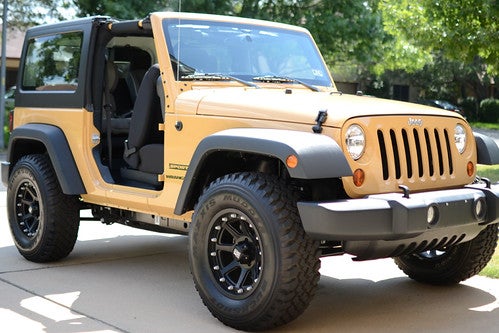
The Jeep Wrangler needs no introduction. This icon of off-road adventuring has carved an enduring legacy in the hearts of automobile enthusiasts worldwide. Its reputation for ruggedness and longevity has cemented its place as a beloved classic. Whether you're behind the wheel of a vintage model or the latest release, owning a Wrangler is a dream come true for many. As a Wrangler owner, you'll likely be as hands-on as possible with your rig. While discussions often revolve around aspects such as the suspension, engine, or differential, the transmission, an often overlooked yet vital component, deserves equal attention. This article aims to show how long transmissions last in Jeep Wranglers and the signs you need a transmission repair. more Search New Inventory New Jeep Wrangler Inventory Manual vs. Automatic Transmission in Jeep Wranglers Before we delve into the nitty-gritty details of transmission longevity, let's first address the fundamental difference between manual and automatic transmission in Jeeps. While both serve the same purpose of transferring power from the engine to the wheels, they do so in different ways. A manual transmission, commonly called a stick shift, requires the driver to change gears manually using a clutch pedal and gear shifter. On the other hand, an automatic transmission does this automatically, without any physical input from the driver. The choice between a manual and automatic transmission in a Jeep Wrangler often comes down to personal preference and lifestyle. Here are a few reasons why drivers may favor one over the other. Jeep Wrangler Manual Transmission The manual transmission offers numerous benefits for purists who prefer a conventional driving experience. It's reliable and less complex than its automatic counterpart, making it easier to maintain and repair. It offers the driver more control, allowing manual gear shifts that provide a more connected and engaging driving experience. A manual transmission can make even the simplest drive an exciting journey. Plus, a manual transmission is generally less expensive in terms of purchase and maintenance costs. Jeep Wrangler Auto Transmission Automatic transmissions are increasingly popular and cater to drivers who prioritize convenience and ease of use. Ideal for commuting, particularly in traffic, automatic transmissions require less effort from the driver, allowing for a more relaxed driving experience. As technology advances, automatic transmissions are constantly improving in efficiency and performance. Despite costing more, they're ubiquitous on the sales floor, providing potential buyers plenty of options. How Long Do Transmissions Usually Last? Now that we've established the difference between manual and automatic transmissions, let's dive into the main question: how long do they last in Jeep Wranglers? On average, a transmission in a Jeep Wrangler can last anywhere from 100,000 to 200,000 miles. However, this is a broad estimate, as numerous factors can affect the life span of your transmission, including: Maintenance: Regular maintenance and fluid changes can significantly extend the life of your transmission. Driving conditions: Frequent towing, off-roading, or driving in extreme weather conditions can put more strain on your transmission and shorten its life span. Driving style: Aggressive driving, such as speeding and sudden stops and starts, can wear down your transmission faster. Age of vehicle: Older vehicles tend to have more wear and tear on their transmissions, which can lead to a shorter life span. Manufacturer flaw: In rare cases, a transmission may fail prematurely due to a design or manufacturing flaw. Signs of a Failing Transmission Keeping an eye out for symptoms of a failing transmission can help prevent costly repairs. Here are some common signs to watch out for. Failed or Delayed Gear Shifts Jeeps with a 42RE or 42RLE four-speed automatic transmission often experience delayed or failed gear shifts, particularly when shifting from first to third or third to fourth gear. Typically, there are no accompanying check engine lights or other symptoms. Leaking Transmission Fluid A red fluid under your vehicle usually indicates leaking transmission fluid, potentially from a seal, gasket, or one of the lines. It's hazardous for your transmission and other heat-sensitive components of the vehicle. As not all transmission fluids are red, consult a professional mechanic if you notice any leaking fluids. Faulty Torque Converter Jeeps equipped with a 42RE or 42RLE four-speed automatic transmission, particularly those made after 2000, may experience sporadic torque converter clutch or overdrive engagement problems. These issues can manifest as irregular shifts, sudden changes in engine speed, or a lack of power. Intermittent Shifts to Neutral Intermittent neutral shifts may occur unexpectedly in front-wheel-drive Jeeps equipped with a ZF9HP48 nine-speed automatic transmission. This issue often shows no relation to driving conditions or overheating, yet activates the check engine light and stores a specific diagnostic trouble code (DTC) in the engine control unit. Gear Slipping or Erratic Shifting Front-wheel-drive Jeeps with an A6MF1 six-speed automatic transmission can experience irregular gear shifts or slippage, particularly noticeable when cold. This may trigger the check engine light and store corresponding DTCs. Which Jeep Wrangler Models Have Transmission Issues? Known for their exceptional durability and impressive off-road capabilities, Jeep Wranglers aren't devoid of transmission issues, with some models being more susceptible than others. Specifically, the JL generation, which includes models produced between 2018 and 2023, faced recall campaigns to tackle critical transmission problems causing gear slippage. As a Jeep owner, observing shifting problems is vital to preserving your vehicle's health. Subtle changes such as delayed gear engagement, gear slippage, or abnormal noises can hint at underlying issues. Promptly addressing these issues can help resolve transmission problems before they cause breakdowns or permanent damage. Whether your Jeep Wrangler has a manual or automatic transmission, regular maintenance is crucial to extending its life span and ensuring a smooth driving experience. Schedule Transmission Repair at Meadowland of Carmel As with any vehicle, regular maintenance is key to keeping your Jeep's transmission running smoothly for as long as possible. At Meadowland of Carmel, our experienced technicians have extensive knowledge and expertise in servicing all types of Jeeps and use only genuine Mopar parts for repairs and replacements. If you don't want to service your vehicle, you can sell it to us or trade it in for a newer model. Contact us today to schedule a service appointment or explore our new and used Jeep inventory. Photo Credit: 2013 Jeep Wrangler Dune by Jason Weaver is licensed with CC BY 2.0 DEED

Jeep Wrangler that has seen some miles

How Often Should You Service a Jeep Wrangler? Wrangler Maintenance Guide

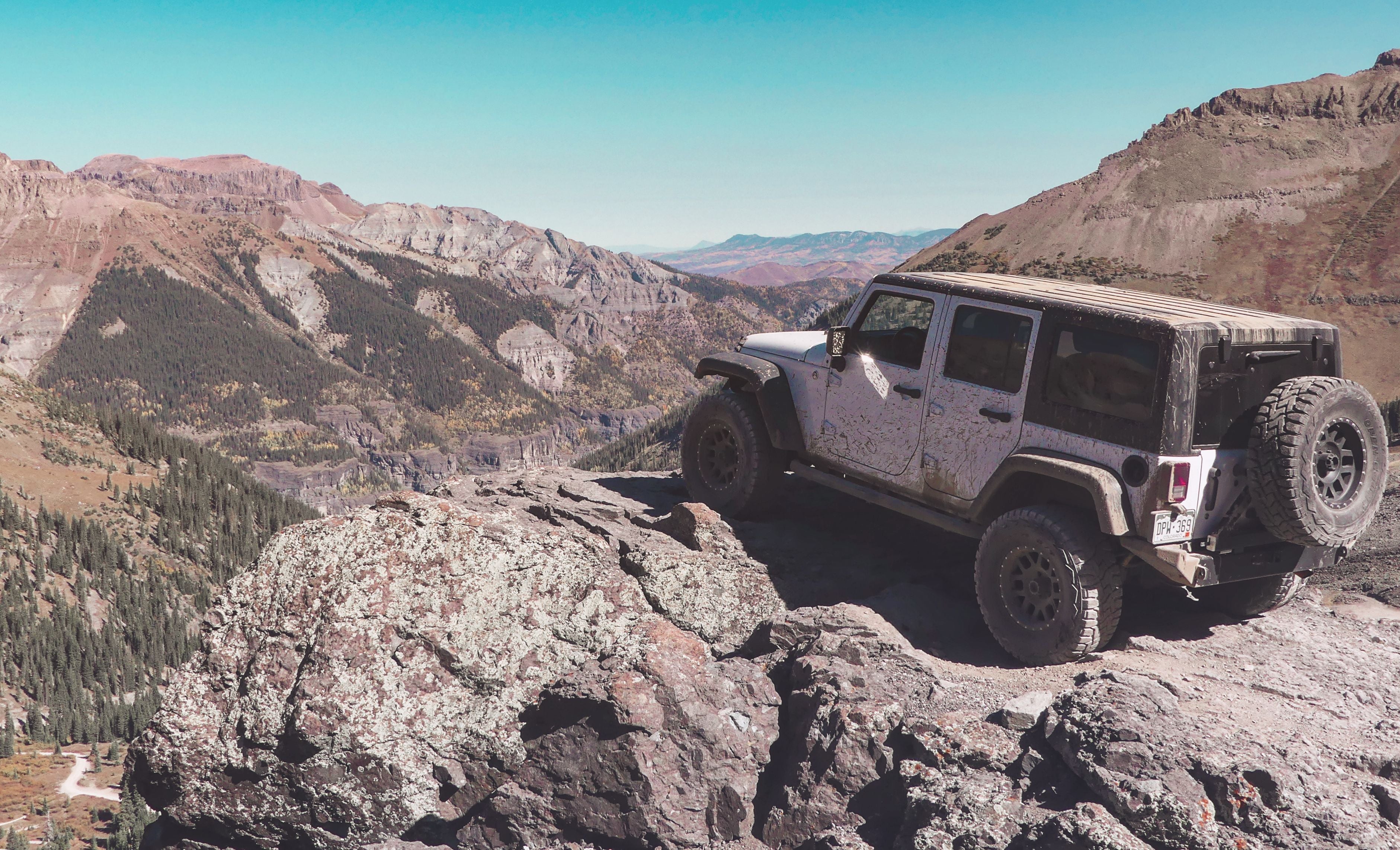
Keeping your Jeep Wrangler in top condition is essential to ensure it can easily tackle the toughest terrains and challenges. A well-maintained vehicle is both proactive in preventing issues and reactive in addressing them promptly. Whether you’re hitting the trails or just commuting to work, your Wrangler deserves the same attention to detail you’d give any adventure gear. Stay ahead of breakdowns and keep it trail-ready with this maintenance guide. more Contact Us Jeep Inventory Search Our Specials Navigating Gas Engine Maintenance for Your Jeep Wrangler If you own a Jeep Wrangler with a gas engine, staying on top of maintenance is key to ensuring your vehicle remains ready for any adventure. Jeep Wrangler Oil Change Your Jeep Wrangler is designed with an intelligent oil change indicator system. This helpful reminder takes the guesswork out of scheduling service appointments, but it's more than just a simple timer: Factors influencing reminders: The system adapts based on your vehicle use. Whether you're making short trips around town or towing heavy loads, these conditions can prompt earlier maintenance notifications. Indicator messages: When it's time for an oil change, expect a clear “Oil Change Required” message accompanied by a chime or a “Change Oil” alert flashing in the odometer area. Resetting the indicator: Post-service, this indicator should be reset. While this is typically handled by an authorized dealer after servicing, procedures are available to reset the indicator if you change the oil yourself. Interval guidelines: To keep your engine running smoothly, make sure your oil change intervals don't exceed 10,000 miles (16,000 km), 12 months, or 350 hours of engine operation. This is especially important for fleet vehicles. Jeep Wrangler Maintenance Checks Regular checks between service intervals are crucial and should include: Engine oil level. Windshield washer fluid level. Tire pressure. Coolant reservoir level. Brake master cylinder fluid level. Power steering fluid level. Interior and exterior lights. Comprehensive Service at Each Oil Change Interval When you bring your Wrangler in for an oil change at Meadowland Crysler Dodge Jeep Ram's (CDJR's) service department, our experts will cover a full checklist, including: Changing the oil and filter. Rotating tires at signs of wear. Inspecting and cleaning battery terminals. Checking constant velocity (CV)/universal joints. Evaluating brake components. Assessing the cooling system and hoses. Examining the exhaust system. Inspecting the air cleaner filter. Greasing the door latches as needed. Lubricating the door hinge joints with white lithium grease biannually. Additional Mileage-Based Maintenance Tasks As you accumulate miles on your Wrangler, other maintenance tasks become due at specific intervals: Every year or every 10,000 miles: Inspect the CV/universal joints. Every two years or every 20,000 miles: Inspect and potentially replace front suspension components and brake linings. Adjust the parking brake as needed. Every three years or every 30,000 miles: Replace the engine air cleaner filter to ensure optimal engine performance. Axle and transfer case fluid checks: Inspect the axle fluids at two years or 20,000 miles, and then every four or 40,000 miles. Also, check the transfer case fluid at three-year intervals starting at 30,000 miles. Spark plug replacement: If you have a 2.0L engine, replace the spark plugs every 60,000 miles. For a 3.6L engine, replacement is due every 100,000 miles. Cooling system service: At the decade mark or 150,000 miles — whichever comes first — it's time to flush and replace the engine coolant to ensure your Wrangler doesn't overheat under pressure. Following this detailed maintenance schedule will help ensure that each component of your gas-engine Jeep Wrangler functions seamlessly. When it's time for service or parts replacement, using certified original equipment manufacturer parts guarantees that your vehicle maintains its integrity and performance standards. Diesel Engine Care for the Jeep Wrangler: A Tailored Approach Diesel-powered Jeep Wranglers demand a specialized maintenance regimen to ensure longevity and reliability. Understanding the nuances of diesel engine care is crucial for keeping your rugged companion road-ready. Jeep Wrangler Service Intervals Your diesel Wrangler is also equipped with an automatic oil change indicator system. For diesel engines, it's essential to adhere to the following service intervals: Regular oil changes: Stick to oil change intervals that do not exceed 10,000 miles (16,000 km) or 12 months. Engine oil filter replacement: Replace the filter and ensure the filter cap is correctly tightened to maintain oil pressure. Monthly Vigilance In between services, perform monthly checks on the: Engine oil level. Windshield washer fluid level. Tire pressures. Coolant reservoir level. Brake master cylinder fluid level. Lighting functionality. Comprehensive Diesel-Specific Checks During every oil change, as your vehicle's system indicates, Meadowland CDJR's technicians will: Change the engine oil and filter. Refill diesel exhaust fluid tanks completely. Drain water from the fuel filter assembly. Rotate tires at signs of irregular wear. Inspect and service battery terminals. Check CV/universal joints and brake components. Evaluate the cooling system, hoses, exhaust system, and engine air cleaner filter — especially important for off-road enthusiasts. Every second oil change interval also calls for a fuel filter replacement — which is critical to maintaining diesel engine health. Additional Diesel Maintenance Milestones With continued use, other maintenance tasks are scheduled at these intervals: Every two years or 20,000 miles: Inspect the suspension components and brake linings. Consider axle fluid inspection if under heavy-duty use. Every three years or 30,000 miles: Transfer case fluid inspection and replacing the engine air cleaner filter are due. Long-term commitment: At the decade mark or upon reaching significant mileage landmarks, such as 100,000 or 150,000 miles, further replacements, such as drive belts and coolant flushes, are necessary for optimal operation. Special Attention for Biodiesel Users If you're using biodiesel blends from B6 to B20: Shortened oil change intervals: Adjust your schedule to accommodate more frequent changes — every 8,000 miles (12,875 km) or six months. Fuel filter focus: Maintain vigilance with fuel filters due to biodiesel's propensity for clogging; replace every second oil change unless severe conditions dictate more frequent changes. Meadowland CDJR's experienced service team ensures that all aspects of your diesel Jeep Wrangler's maintenance are managed precisely. Seasonal Maintenance Matters Too Seasonal changes bring about different challenges for your Jeep Wrangler: Winter prep: Antifreeze levels are crucial as temperatures drop. Tire tread depth matters more on icy roads. Summer checks: Cooling system efficiency is vital during hotter months. Air conditioning systems need regular checks to keep cabin temperatures bearable on sizzling days. Following the Jeep Wrangler Maintenance Schedule Regular maintenance keeps your Jeep Wrangler running smoothly and protects your investment on rugged adventures. If you're near Brewster, Mahopac, or Patterson and need Jeep Wrangler service, Meadowland of Carmel has you covered. By paying attention to each milestone interval, our experienced technicians at Meadowland CDJR in Carmel, New York, will ensure you get the most out of every appointment. Keep adventuring with confidence knowing that a dedicated team backs your journey every step of the way. Photo Credit: An Off Road Vehicle on a Natural Rock Formation by Gunnar Ensign is licensed with Pexels License

Change Jeep Key Fob Battery

How to Change Jeep Key Fob Battery

At some point during the ownership of your Jeep, you might find yourself pressing the unlock button on your key fob, only to be silent. This could signal that it's time to replace the battery in your Jeep key fob. Thankfully, replacing it in your key fob is relatively simple. In this comprehensive guide, we'll take you through the process step by step so you can confidently return to enjoying all your Jeep's conveniences. Steps for Changing Your Jeep's Key Fob Battery Whether you're facing a nonresponsive button or simply performing routine Jeep maintenance, understanding how to change the battery in your Jeep key fob is an invaluable skill. Below, we'll guide you through this straightforward process to ensure that you can quickly and easily restore full functionality to your key fob and continue to enjoy your beloved Jeep's seamless operation. What You'll Need A small flathead screwdriver or a key fob opening tool. A new CR2032 battery (check your owner's manual for the correct battery type). Step-By-Step Instructions Here are some steps you can follow that can help you easily change the battery in your Jeep's key fob: Step 1: Identify Your Key Fob Type Jeep has various key fobs over different model years. Verify your type; whether it's for a Wrangler, Grand Cherokee, or another model could slightly change the procedure. Step 2: Open the Key Fob Locate the seam where both halves of your key fob join together. Using a small flathead screwdriver or a dedicated key fob tool, gently insert it into the groove near the keyring mount. Step 3: Pry Apart Carefully Apply gentle pressure to pry apart the two halves of your key fob. Avoid excessive force or twisting motions, which can damage your key fob. Step 4: Remove and Replace Battery Once opened, carefully remove the old battery from its compartment. Damaging the battery during removal can result in the battery it leaking or causing damage to your key fob. Take note of how it's placed — most will have the positive side facing up. Replace it with a new CR2032 battery, ensuring to match the old one's orientation. Step 5: Reassemble Your Key Fob Before snapping both pieces back together, ensure that all components are seated correctly and that no internal buttons have been dislodged. Align both halves and press them firmly until they click into place. Tips For Changing Your Key Fob Battery Some tips to consider: Some newer models may have an additional metal support bracket that must be removed before accessing the battery. It's recommended that you handle the new battery with clean gloves or a cloth to avoid getting oils from your skin on it, which could potentially cause corrosion and shorten its life span. How To Program a Jeep Key Fob In the modern world of automotive technology, the key fob stands as a pinnacle of convenience and security for your vehicle. However, programming or reprogramming this compact device is not as straightforward as simply changing its battery. For Jeep owners, understanding the intricacies of key fob programming is crucial. The Need for Professional Programming Jeep has designed its key fobs with sophisticated electronic systems that interact uniquely with each vehicle. Programming a Jeep key fob isn't just about syncing frequencies; it involves ensuring its embedded security features correctly align with your vehicle's onboard computer systems. This process typically involves proprietary diagnostic equipment and software only available to authorized dealers. Why Use Authorized Dealers? Here are several compelling reasons why Jeep key fob programming should be exclusively handled by professionals at an authorized dealership: Advanced security: Modern Jeep key fobs come equipped with advanced security features that require precise calibration. Authorized dealers can access the specific codes and tools needed to properly sync these settings. Proper equipment: Dealerships possess the specialized diagnostic tools required for accurate programming. This equipment ensures that all electronic components in the key fob communicate correctly with your vehicle's computer system. Expertise: Technicians at authorized dealerships are trained specifically in Jeep technology and follow strict procedures that guarantee your key fob is programmed correctly without compromising your vehicle's security. Warranty compliance: Having your key fob programmed by an authorized dealer ensures compliance with any warranty stipulations. Unauthorized tampering could potentially void warranties related to your vehicle's electronic systems. Malfunction avoidance: Incorrect programming can lead to a non-functioning key fob and potential malfunctions in other electronic systems within your vehicle. Dealership technicians will determine that all systems are functioning harmoniously post-programming. What You Can Expect From an Authorized Dealership When you visit the right professionals for key fob programming, here's what you can expect: Consultation: A service advisor will discuss the need for reprogramming and any issues you've encountered. Certified service: Certified technicians will use state-of-the-art equipment to program your key fob accurately. Functionality check: After programming, technicians will perform a series of checks to ensure all functions work correctly. Guidance: You'll receive guidance on effectively maintaining and using your new or reprogrammed key fob. Navigating Your Key Fob Programming with Confidence If you need assistance with your Jeep's key fob programming, our team at Meadowland of Carmel is always ready to provide expert service with genuine care. We understand how essential it is for your key fob to function flawlessly, offering you both convenience and peace of mind. If you need this service or have any further questions regarding the functionality of your Jeep's accessories, don't hesitate to reach out and schedule a visit with our skilled professionals. Remember, at Meadowland of Carmel, we're not just here for sales — we're here for every mile of your journey. Photo Credit: Shallow Focus Car Key held by a Man by Negative Space is licensed with Pexels License

2024 Wrangler Features

2024 Jeep Wrangler Features & Configurations

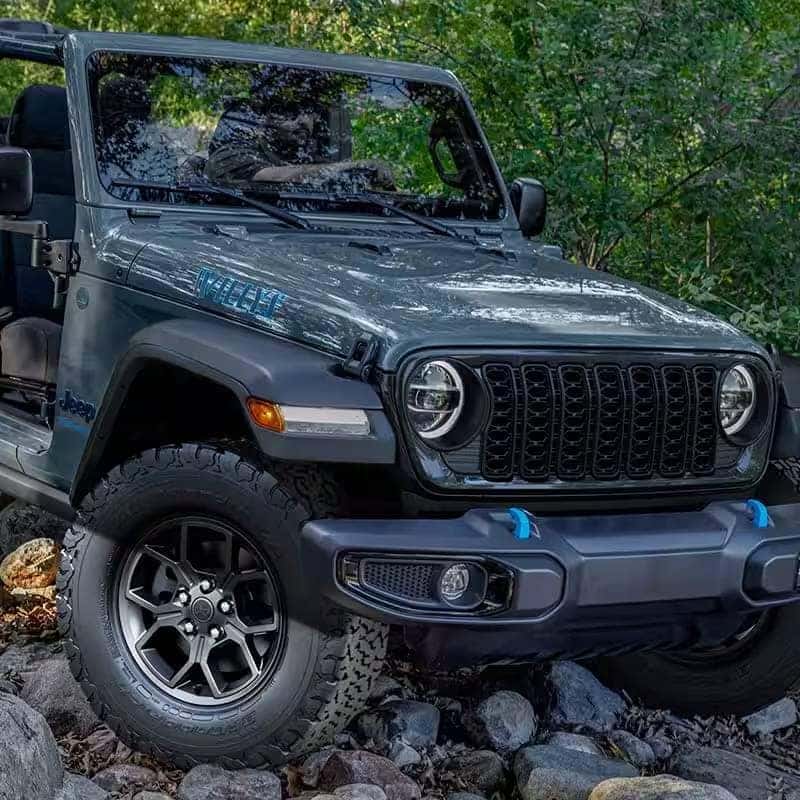
After introducing its fourth-generation Wrangler in 2018, Jeep will give its iconic SUV a midcycle refresh in 2024. With eight trim levels, including the brand-new Rubicon X, a Jeep Wrangler suits you whether you want an affordable entry-level vehicle, a capable off-roader, or an ultra-luxe ride. Meadowland of Carmel has compiled this guide to everything you need to know about these new vehicles. Search Wrangler Inventory 2024 Jeep Wrangler Sport The 2024 Jeep Wrangler Sport is Jeep's entry-level Jeep Wrangler, an affordable SUV with great value for money and plenty of customization options. It is available in two- and four-door configurations and is equipped with a capable 285-hp V-6 engine, four-wheel drive, and manual transmission. A 270-hp 2.0-liter turbocharged I-4 engine is an option. The standard manual and V-6 combo work well for off-roading, but if you spend most of your time in the city, you'll get more from the I-4 and optional automatic transmission. Some of the Sport's best features include: Wheels: 17-inch steel wheels with 32-inch tires. Off-roading features: Tow hooks, skid plates, and fog lights. Technology features: Uconnect 5 system with a 12.3-inch touch-screen display, wireless Apple CarPlay and Android Auto, and push-button start. Driver-assist features: ParkView rear backup camera. 2024 Jeep Wrangler Sport S The 2024 Jeep Wrangler Sport S is a more refined version of the Sport equipped with various creature comforts and technological innovations. Also available as a two- or four-door, you can opt for the Sport's V-6 engine or an eco-friendly 4xe plug-in hybrid engine, which increases horsepower to 475. Some of the Sport S's impressive features include: Wheels: 17-inch aluminum wheels with 32-inch tires. Driver-assist features: Adaptive cruise control, forward collision warning, and advanced brake assist. Technology features: Remote keyless entry, power windows and door lock, power heated mirrors, automatic headlamps, and eight-speaker sound system. Comfort features: Leather-wrapped steering wheel and air conditioning with automatic temperature control. 2024 Jeep Wrangler Willys While all Wranglers can handle themselves on the trails, the Willys is the first Wrangler trim with advanced off-road features. With 10.8 inches of ground clearance, 33-inch all-terrain tires, and plenty of off-roading kits, it's made for tackling all terrain. The Willys is also available as a two- or four-door vehicle with the 3.6-liter V-6 or 4xe plug-in hybrid engine. The 2024 Jeep Wrangler Willys' features include: Off-roading features: Rear-locking differential, Off-Road Plus driving mode, all-weather floor mats, Trailer Tow, and Heavy-Duty Electrical Group. Optional Xtreme 35 Package: 17-inch beadlock wheels with 35-inch all-terrain tires, 4.56 axle ratio, 1.5-inch factory lift, and swing gate reinforcement. 2024 Jeep Wrangler Sahara Jeep turns up the comfort levels with the Sahara. This vehicle is for people who want to travel in style, whether driving on smooth city and highway roads or more unpredictable terrain. Its body-color seven-slot grille and fender flares help it turn heads in any environment. Strictly a four-door, it comes with the turbocharged I-4 engine as standard. The 4xe plug-in hybrid is also an option for eco-conscious motorists. Some of the 2024 Jeep Wrangler Sahara's best features include: Wheels: 18-inch aluminum wheels with 32-inch tires. Comfort features: Heated front seats and steering wheel and dual-zone climate control. Technology features: Proximity key entry with remote start and upgraded 7-inch driver information display. 2024 Jeep Wrangler High Altitude Jeep based the High Altitude on the Sahara, giving you everything you loved about this trim with some extra refinement. It's also a four-door Wrangler with many technology and luxury features on board. The 375-hp 4xe plug-in hybrid powertrain comes standard. You can also look forward to these other perks when you choose the High Altitude: Wheels: 20-inch aluminum wheels with 32-inch all-terrain tires. Luxury features: Nappa leather seats and power-adjustable front seats. Driver-assist features: Navigation, parking sensors, and blind-spot monitoring with rear cross-traffic alert. Off-roading features: Selec-Trac 2.72:1 full-time transfer case, side steps, and an integrated front off-road camera. Technology features: Nine-speaker Alpine premium audio system. Optional features: Jeep 4xe Power Box for electricity on the move. 2024 Jeep Wrangler Rubicon Jeep's Wrangler Rubicons are vehicles made for pushing the limits. While any Wrangler can handle itself off-road, a Rubicon is your best option if you like extreme activities such as rock crawling. Like the High Altitude, the standard Rubicon builds on the Sahara trim, but the focus here is upping the off-road credentials. It comes in two- and four-door versions with the V-6 motor as standard or the optional 4xe powertrain. Features that help the 2024 Jeep Wrangler Rubicon on the trails include: Wheels: 17-inch machined wheels with 33-inch all-terrain tires. Off-roading features: Dana 44 HD front axle, Tru-Lok front, and rear axles, Rock-Trac 4:1 part-time four-wheel drive system, electronic front sway-bar disconnect, rock rails, and Off-Road Plus mode. Optional features: Steel bumpers with factory Warn winch, Xtreme 35 Package, and 4xe Power Box. 2024 Jeep Wrangler Rubicon X The Rubicon X, new for 2024, is a more sophisticated Rubicon. It's got the same door and power options but so much more polish. While it'll handle the trails, acoustic front glass and plush carpets should make the ride much quieter. There's also a host of cool technology on board. The Rubicon X's best features are the following: Comfort features: Heated nappa leather seats, power-adjustable front seats, and a heated steering wheel. Technology features: Nine-speaker Alpine audio system and navigation. Off-roading features: Xtreme 35 package as standard. 2024 Jeep Wrangler Rubicon 392 The ultra-tough and luxurious Rubicon 392 rounds out the range. It combines the off-roading credentials you expect of a Rubicon with the opulent touches of a High Altitude. This four-door Wrangler has an exclusive 470-hp 6.4-liter V-8 engine and all these excellent features: Wheels: 17-inch beadlock wheels with 35-inch all-terrain tires. Off-roading features: Fox shock absorbers, Selec-Trac 2.72:1 full-time transfer case, steel bumpers, and an integrated front off-road camera. Comfort features: Heated seats, power-adjustable front seats, and a heated performance steering wheel with paddle shifters. Technology features: Nine-speaker Alpine premium audio system. 2024 Jeep Wrangler Coming Soon From the affordable Sport to the luxe yet rugged Rubicon 392, Jeep will deliver an impressive selection of Wranglers that can take you from the city streets to the rugged tracks around Putnam County. Expect these vehicles at local dealerships in the third quarter of 2024. If you have any questions or want to organize a test drive as soon as they're in stock, our experienced Meadowland of Carmel team is well-equipped to help. Give us a call or visit us at our dealership to learn more about the highly-anticipated 2024 Jeep Wrangler. Photo Credit: Image via OEM

Jeep Wrangler tire sizes

What size tires work for the Jeep Wrangler?

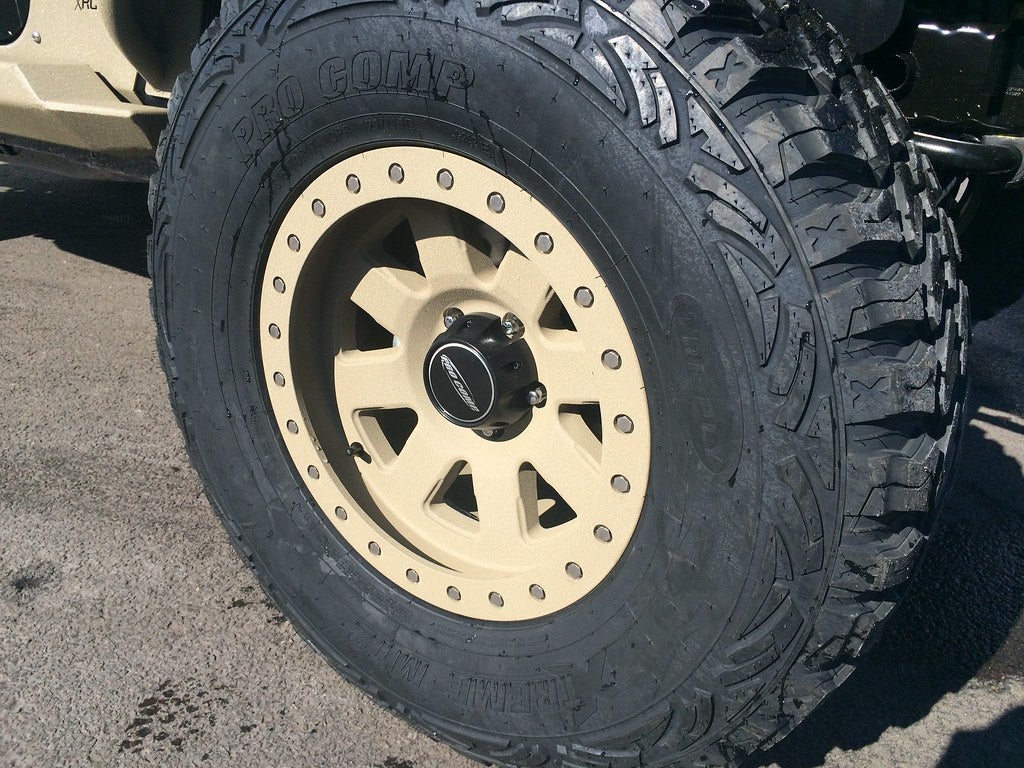
The Jeep Wrangler has plenty of personality, thanks to the customization features available from top to bottom. If you're looking for a vehicle to take off-roading, this one should be at the top of your list. Unbeatable performance, undeniable style, and unrelenting off-road capabilities make the Jeep Wrangler fun. Our Meadowland of Carmel team invites you to learn more about what size tires you need for your Jeep Wrangler. more New Wrangler Inventory Tire Service Call Us Today Understanding Tire Size The first step to understanding tire size is to examine the numbers on the sidewalls of your Jeep Wrangler tires and understand what those numbers mean. For this breakdown, we're using the example of 255/75R17: Tire Type A tire may or may not have a letter at the start of the number, such as P, LT, or ST if there's no letter, as in our example, the tire is considered a passenger tire. The lack of a letter signifies that the tire is a metric tire, which is measured in millimeters per European sizing. A P at the start of your tire number also signifies that it's a passenger tire, which automakers use on crossovers, sedans, smaller pickup trucks, and SUVs, including the Wrangler. LT stands for light truck tire. These tires are made to handle towing trailers, heavier loads, and heavy-duty options. LT tires are typically found on three-quarter and one-ton pickups and SUVs. If a tire has an ST at the start of the number, it's designed for a special trailer, such as a fifth wheel or a travel, utility, or boat trailer. Tire Width The first three numbers represent the tire width, from side to side, in millimeters. In our example, the tire is 255 millimeters from side to side when looking at it head-on. Aspect Ratio After the forward slash, you'll find a two-digit number representing the tire's aspect ratio. A higher aspect ratio indicates a taller or higher sidewall or tire profile. The aspect ratio is measured from the top of the tread to the wheel rim and shown as a percentage of the tire width. Our example shows that the tire has a 75% aspect ratio; in other words, the sidewall is 75% as high as the tire is wide. Construction Type Tires either have an R for radial or a D for diagonal piles. Most tires today are radial because they offer higher ride quality, better fuel efficiency, lower rolling resistance, a superior grip, and exceptional durability. Radial tires have plies, or layers of strong cords made of steel, polyester, and fabric coated in rubber, placed perpendicular to the travel direction. Diagonal tires have crisscrossed piles and can also be called x-ply, cross-ply, conventional, and bias-constructed. Trailers and motorcycles still use these tires. You may also have an F for a run-flat tire, followed by an R or a D to delineate the construction type. Other Tire Size Meanings Some tires also have a number indicating wheel diameter in inches, load index, and speed rating. Wheel diameter refers to the distance between where the tire is tightly sealed onto the wheel, known as the bead seat areas. A load index will indicate how much weight the tire can support when inflated to its maximum air pressure rating. Finally, the speed rating is represented by a letter, with higher letters indicating that the tire can handle heat better to improve control at faster speeds. Speed symbols start at A1 to A8 for 3 to 25 mph and go up to Y at 186 mph and (Y) for over 186 mph. Tires with a maximum speed rating over 149 mph may have a ZR for the size designation, while anything over 186 mph requires a ZR. Tires may also be referred to using inches. For example, a tire labeled as 33x12.50R15 is 33 inches in diameter, from the top of the tire to the ground, and has a 12.50-inch width. It's a radial tire featuring a 15-inch rim diameter. Jeep Wrangler Tires The Wrangler features 15- to 17-inch tires as standard from the factory, but you can upgrade your tires to fit various needs in your Wrangler customization. You could opt for 33-inch tires for casual off-roading or 40-inch for ultimate off-roading capabilities. You'll need to add a lift kit to your Wrangler to fit several larger tires, per the following instructions: A 2.5- to 3-inch lift kit is necessary to add 35-inch tires. A 4-inch lift kit and gear changes are needed to compensate for fuel and power loss to add 37-inch tires. Additional horsepower, plus the 4-inch lift kit and gear changes needed for the 37-inch tires, are also necessary for a 38-inch option. A 6-inch lift kit is necessary to use the 40-inch tires on your Wrangler for the best in off-roading performance. Different Types of Tires for Your Jeep Wrangler The type of tire you select for your Jeep Wrangler depends on how you intend to use the vehicle. The factory tires will likely be sufficient if you drive your Wrangler back and forth to work on your daily commute. However, if you plan to tackle off-road terrain, spend the day in the mud, or need to face the winter elements, you may want to swap out the factory tires. All-season tires are good if you use your Wrangler as a commuter vehicle, with or without the occasional off-road trek. All-terrain or mud-terrain tire tread patterns will give you better traction and control if you plan to take your Wrangler on off-road adventures. These tires also better withstand impacts from off-road obstacles, such as rocks and branches. Snow tires are designed to help you easily tackle the elements but should not be left on your Wrangler year-round. The tread on snow tires and low-temperature rubber compounds do not perform well on dry roads in fair weather. Talk to the Tire Experts at Meadowland of Carmel If you want to upgrade your tire size or switch out the factory set for better off-road options, stop by Meadowland of Carmel. For those looking to purchase a new Wrangler, our sales team can discuss new Jeep offers. Our tire experts can also answer any questions you have about lift kit requirements or the type of tire that best suits your needs. Find us at 1952 US Highway 6 in Carmel, New York. Call us at 845-842-7355 or complete our secure online form to start today. Photo Credit: 2016 Jeep Wrangler Unlimited Commando by Jeepalooza is licensed with CC BY 2.0

Contact Us

Fill out this form below and we'll contact you shortly
*Required Fields