




Blog / Jeep Vehicles

How Often Should You Service a Jeep Wrangler? Wrangler Maintenance Guide

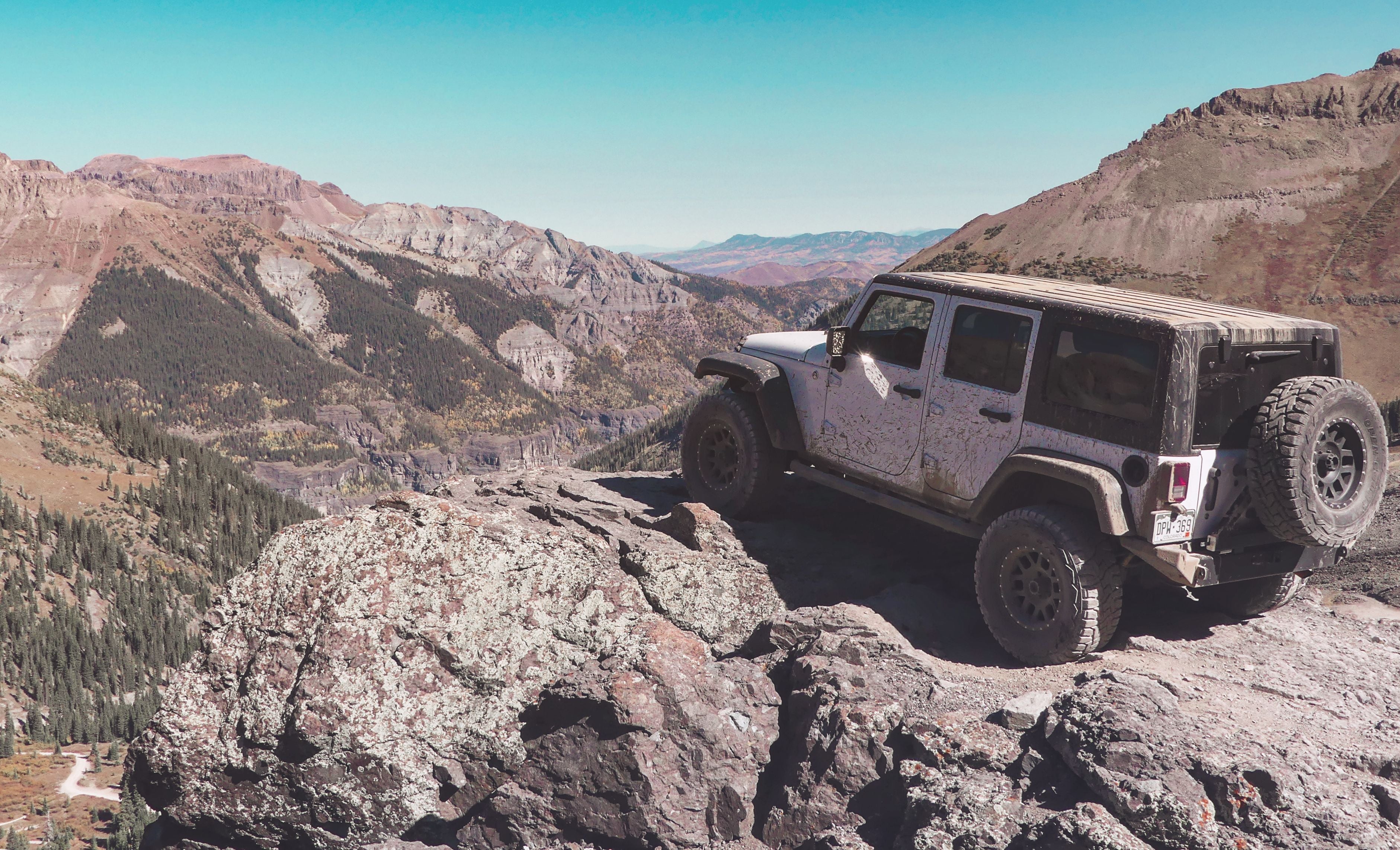
Jeep Wrangler that has seen some miles


Keeping your Jeep Wrangler in top condition is essential to ensure it can easily tackle the toughest terrains and challenges. A well-maintained vehicle is both proactive in preventing issues and reactive in addressing them promptly. Whether you’re hitting the trails or just commuting to work, your Wrangler deserves the same attention to detail you’d give any adventure gear. Stay ahead of breakdowns and keep it trail-ready with this maintenance guide.


Contact UsJeep InventorySearch Our Specials

Navigating Gas Engine Maintenance for Your Jeep Wrangler

If you own a Jeep Wrangler with a gas engine, staying on top of maintenance is key to ensuring your vehicle remains ready for any adventure.

Jeep Wrangler Oil Change

Your Jeep Wrangler is designed with an intelligent oil change indicator system. This helpful reminder takes the guesswork out of scheduling service appointments, but it's more than just a simple timer:

  • Factors influencing reminders: The system adapts based on your vehicle use. Whether you're making short trips around town or towing heavy loads, these conditions can prompt earlier maintenance notifications.
  • Indicator messages: When it's time for an oil change, expect a clear “Oil Change Required” message accompanied by a chime or a “Change Oil” alert flashing in the odometer area.
  • Resetting the indicator: Post-service, this indicator should be reset. While this is typically handled by an authorized dealer after servicing, procedures are available to reset the indicator if you change the oil yourself.
  • Interval guidelines: To keep your engine running smoothly, make sure your oil change intervals don't exceed 10,000 miles (16,000 km), 12 months, or 350 hours of engine operation. This is especially important for fleet vehicles.

Jeep Wrangler Maintenance Checks

Regular checks between service intervals are crucial and should include:

  • Engine oil level.
  • Windshield washer fluid level.
  • Tire pressure.
  • Coolant reservoir level.
  • Brake master cylinder fluid level.
  • Power steering fluid level.
  • Interior and exterior lights.

Comprehensive Service at Each Oil Change Interval

When you bring your Wrangler in for an oil change at Meadowland Crysler Dodge Jeep Ram's (CDJR's) service department, our experts will cover a full checklist, including:

  • Changing the oil and filter.
  • Rotating tires at signs of wear.
  • Inspecting and cleaning battery terminals.
  • Checking constant velocity (CV)/universal joints.
  • Evaluating brake components.
  • Assessing the cooling system and hoses.
  • Examining the exhaust system.
  • Inspecting the air cleaner filter.
  • Greasing the door latches as needed.
  • Lubricating the door hinge joints with white lithium grease biannually.

Additional Mileage-Based Maintenance Tasks

As you accumulate miles on your Wrangler, other maintenance tasks become due at specific intervals:

Every year or every 10,000 miles:
Inspect the CV/universal joints.

Every two years or every 20,000 miles:
Inspect and potentially replace front suspension components and brake linings. Adjust the parking brake as needed.

Every three years or every 30,000 miles:
Replace the engine air cleaner filter to ensure optimal engine performance.

Axle and transfer case fluid checks:
Inspect the axle fluids at two years or 20,000 miles, and then every four or 40,000 miles. Also, check the transfer case fluid at three-year intervals starting at 30,000 miles.

Spark plug replacement:
If you have a 2.0L engine, replace the spark plugs every 60,000 miles. For a 3.6L engine, replacement is due every 100,000 miles.

Cooling system service:
At the decade mark or 150,000 miles — whichever comes first — it's time to flush and replace the engine coolant to ensure your Wrangler doesn't overheat under pressure.

Following this detailed maintenance schedule will help ensure that each component of your gas-engine Jeep Wrangler functions seamlessly. When it's time for service or parts replacement, using certified original equipment manufacturer parts guarantees that your vehicle maintains its integrity and performance standards.

Diesel Engine Care for the Jeep Wrangler: A Tailored Approach

Diesel-powered Jeep Wranglers demand a specialized maintenance regimen to ensure longevity and reliability. Understanding the nuances of diesel engine care is crucial for keeping your rugged companion road-ready.

Jeep Wrangler Service Intervals

Your diesel Wrangler is also equipped with an automatic oil change indicator system. For diesel engines, it's essential to adhere to the following service intervals:

  • Regular oil changes: Stick to oil change intervals that do not exceed 10,000 miles (16,000 km) or 12 months.
  • Engine oil filter replacement: Replace the filter and ensure the filter cap is correctly tightened to maintain oil pressure.

Monthly Vigilance

In between services, perform monthly checks on the:

  • Engine oil level.
  • Windshield washer fluid level.
  • Tire pressures.
  • Coolant reservoir level.
  • Brake master cylinder fluid level.
  • Lighting functionality.

Comprehensive Diesel-Specific Checks

During every oil change, as your vehicle's system indicates, Meadowland CDJR's technicians will:

  • Change the engine oil and filter.
  • Refill diesel exhaust fluid tanks completely.
  • Drain water from the fuel filter assembly.
  • Rotate tires at signs of irregular wear.
  • Inspect and service battery terminals.
  • Check CV/universal joints and brake components.
  • Evaluate the cooling system, hoses, exhaust system, and engine air cleaner filter — especially important for off-road enthusiasts.

Every second oil change interval also calls for a fuel filter replacement — which is critical to maintaining diesel engine health.

Additional Diesel Maintenance Milestones

With continued use, other maintenance tasks are scheduled at these intervals:

Every two years or 20,000 miles:
Inspect the suspension components and brake linings. Consider axle fluid inspection if under heavy-duty use.

Every three years or 30,000 miles:
Transfer case fluid inspection and replacing the engine air cleaner filter are due.

Long-term commitment:
At the decade mark or upon reaching significant mileage landmarks, such as 100,000 or 150,000 miles, further replacements, such as drive belts and coolant flushes, are necessary for optimal operation.

Special Attention for Biodiesel Users

If you're using biodiesel blends from B6 to B20:

  • Shortened oil change intervals: Adjust your schedule to accommodate more frequent changes — every 8,000 miles (12,875 km) or six months.
  • Fuel filter focus: Maintain vigilance with fuel filters due to biodiesel's propensity for clogging; replace every second oil change unless severe conditions dictate more frequent changes.

Meadowland CDJR's experienced service team ensures that all aspects of your diesel Jeep Wrangler's maintenance are managed precisely.

Seasonal Maintenance Matters Too

Seasonal changes bring about different challenges for your Jeep Wrangler:

Winter prep:

  • Antifreeze levels are crucial as temperatures drop.
  • Tire tread depth matters more on icy roads.

Summer checks:

  • Cooling system efficiency is vital during hotter months.
  • Air conditioning systems need regular checks to keep cabin temperatures bearable on sizzling days.

Following the Jeep Wrangler Maintenance Schedule

Regular maintenance keeps your Jeep Wrangler running smoothly and protects your investment on rugged adventures. If you're near Brewster, Mahopac, or Patterson and need Jeep Wrangler service, Meadowland of Carmel has you covered. By paying attention to each milestone interval, our experienced technicians at Meadowland CDJR in Carmel, New York, will ensure you get the most out of every appointment. Keep adventuring with confidence knowing that a dedicated team backs your journey every step of the way.

Photo Credit: An Off Road Vehicle on a Natural Rock Formation by Gunnar Ensign is licensed with Pexels License
Posted in:

Related Posts

Blue 2026 Jeep Cherokee parked off-road

2026 Jeep Cherokee vs. Ford Bronco Sport: Compact SUV Face-Off

Compact SUVs are the go-to pick for drivers who want practicality without losing personality along the way. Stack the 2026 Jeep Cherokee against the 2026 Ford Bronco Sport, though, and real differences show up fast. For drivers across Carmel, Brewster, Poughkeepsie, and the Hudson Valley, this comparison matters: you need something that handles snowy winters and twisting backroads just as easily as the daily commute. If you're ready to see the Cherokee up close, browse the 2026 Jeep Cherokee for sale in Carmel, NY at Meadowland of Carmel CDJR. 2026 Jeep Cherokee vs. Ford Bronco Sport: Quick Verdict for Carmel Drivers The 2026 Jeep Cherokee brings more to the table for local drivers. It returns this model year after a three-model-year hiatus as a ground-up redesign, with standard 4x4 and a hybrid powertrain that blends genuine off-road capability with strong fuel efficiency and a generous safety package. The Ford Bronco Sport is a capable, rugged-looking machine with real off-road credentials, but it starts at a lower price and falls behind the Cherokee in fuel economy and range. If you're regularly driving Route 6, the Taconic, or unpaved roads around the Hudson Valley, the Cherokee's standard setup gives you a meaningful edge before pricing even enters the conversation. The 2026 Jeep Cherokee's Return as a Standard 4x4 Hybrid The Cherokee has always been Jeep's answer for buyers who want capability without sacrificing everyday livability. For 2026, Jeep (part of Stellantis) brings the Cherokee back with a standard hybrid powertrain and standard 4x4 across the entire lineup, making the base trim worth far more than it used to be. The hybrid system isn't a token gesture. Jeep built it to deliver real performance alongside real efficiency, not one at the expense of the other. 210 HP and 37 MPG Combined: How the Cherokee Hybrid Delivers The Cherokee pairs a 1.6L turbocharged engine with dual electric motors and a CVT, producing 210 horsepower and 230 lb-ft of torque combined. EPA ratings land at 39 city, 35 highway, and 37 combined MPG, and a 13.7-gallon tank gets you over 500 miles of range. Most compact SUV rivals force a tradeoff, either more power at the cost of efficiency, or better economy at the cost of performance. The Cherokee manages to split the difference. For drivers commuting between Carmel and White Plains, or running back and forth between Poughkeepsie and Danbury, that fuel economy adds up to real savings. The hybrid system also smooths out stop-and-go traffic; the electric motors pick up more of the work so the gas engine doesn't have to strain as hard. Standard 4x4 vs. Bronco Sport's Standard AWD Every 2026 Jeep Cherokee comes with Jeep Active Drive I 4x4, complete with rear-axle disconnect and four Selec-Terrain modes (Auto, Sport, Snow, Sand/Mud), standard. No trim upgrade, no extra cost. Ford also makes AWD standard across every 2026 Bronco Sport trim, so both vehicles guarantee all-wheel traction from the start. The real difference lies in how the systems work. AWD reacts to wheel slip after it's already happening, while the Cherokee's 4x4 setup hands drivers selectable terrain modes and more deliberate control before things go sideways. Anyone who's dealt with a January storm on a quiet Hudson Valley county road knows that extra control counts for something. Conquering Carmel and the Hudson Valley: Real-World Capability Both SUVs are built for more than mall parking lots, but they get there differently. The Bronco Sport leans hard into its trail-focused identity, with rugged styling and off-road hardware aimed at weekend adventure. The Cherokee takes a wider view, tuned to handle the trail while staying planted and composed on the highway and in the school pickup line. Around Carmel, road conditions can shift dramatically in just a few miles, plowed state highway one minute, muddy unlit back lane the next. Handling Slushy Winters with Confidence Winter driving in Putnam County doesn't wait around for a trim upgrade. The Cherokee's standard 4x4 system earns its keep the first time you're crossing a slushy intersection or backing out of an unsalted driveway, sending torque where it's needed to keep the vehicle predictable. The Bronco Sport handles snow well too, thanks to its standard AWD, but it doesn't get the Selec-Terrain equivalent or rear-axle disconnect tech that comes with the Cherokee. For families or commuters who see off-road capability as a safety feature rather than a hobby, that terrain-mode flexibility matters. Winding Hudson Valley Backroads Put to the Test Winding roads throughout Putnam and Dutchess counties tend to expose how a vehicle is actually tuned. The Cherokee's suspension leans toward ride composure, keeping occupants comfortable through elevation changes and tight curves while steering predictably at highway speed. The Bronco Sport is fun on trails, but its shorter wheelbase and off-road-focused suspension mean passengers may feel more body motion and a firmer ride on pavement. For daily drivers who occasionally head off-road rather than dedicated trail enthusiasts, the Cherokee fits the environments you're actually in most of the time. Safety and Fuel Efficiency: Feature-by-Feature Comparison Both vehicles offer modern safety packages, but the Cherokee is more generous with what comes standard. Standard Safety Technology Compared The 2026 Jeep Cherokee's standard Active Driving Assist suite includes: Forward collision warning Automatic emergency braking (AEB) Blind-spot monitoring Rear cross-traffic alert These are standard across the entire lineup, not premium add-ons you pay extra for. The Bronco Sport's Co-Pilot360 Assist+ suite is also standard and covers similar driver-assistance features, so both vehicles start buyers off with solid safety coverage. Shoppers should still check current NHTSA and IIHS ratings for both models before deciding, and Meadowland's team can walk through the specifics with you. Fuel Economy Breakdown Spec 2026 Jeep Cherokee 2026 Ford Bronco Sport City MPG 39 21-25 Highway MPG 35 28-30 Combined MPG 37 23-27 Estimated Range 500+ miles ~350-400 miles Tank Size 13.7 gallons Not hybrid-equipped Figures per official Jeep and Ford specifications and EPA ratings. Over a year of typical driving, that MPG gap adds up fast. Drivers commuting between Carmel and points in Westchester or Connecticut will feel it at the pump, and the Cherokee's hybrid system switches between electric and combustion power smoothly enough that you won't notice any tradeoff in how it drives. Pricing, Trims, and Value for Carmel NY Shoppers The 2026 Ford Bronco Sport starts at a lower MSRP of $31,845, according to Ford. The 2026 Jeep Cherokee's lineup starts at $35,000 for the base trim, with Laredo at $38,000, Limited at $40,000, and Overland at $43,000, per Jeep. All figures are manufacturer MSRP and don't include destination fees, and both MSRP and trim availability can change, so confirm current pricing with the dealership. The more important part of the value story is what's included at each price point. With standard 4x4, a hybrid powertrain, and a full safety suite across the lineup, the Cherokee's base trim delivers more standard capability than a comparably equipped Bronco Sport at a comparable price point. Towing tells a similar story: the Cherokee is rated for 3,500 lbs, while the Bronco Sport ranges from 2,200 to 2,700 lbs depending on configuration. For Carmel-area shoppers working within a set budget, the Cherokee's standard equipment often closes, or even reverses, that initial price gap. Side-by-Side Specs Comparison Table Here's how the two SUVs stack up across the specs that matter most. Feature 2026 Jeep Cherokee 2026 Ford Bronco Sport Powertrain 1.6L turbo hybrid + dual electric motors, CVT 1.5L or 2.0L turbo, 8-speed automatic Horsepower 210 HP combined 180-250 HP Torque 230 lb-ft 200-280 lb-ft Drivetrain Standard Jeep Active Drive I 4x4 Standard AWD Towing Capacity 3,500 lbs 2,200-2,700 lbs Starting MSRP $35,000 $31,845 Why the 2026 Jeep Cherokee Wins for Carmel and Hudson Valley Drivers The Cherokee wins on consistency, doing most things better than the Bronco Sport for the conditions Hudson Valley drivers actually face day to day. Standard 4x4 with Selec-Terrain modes means you're never caught off guard in a Carmel winter, the 37 MPG combined rating keeps your daily drive cheaper, and 210 horsepower means steep grades heading out of town won't leave you underpowered. The Cherokee's 3,500-lb towing capacity also beats the Bronco Sport, which comes in handy for small businesses or families hauling trailers and gear. The Bronco Sport has real appeal for buyers whose main goal is weekend trail driving and who love its look. But for drivers who need a reliable, efficient SUV that performs well through all seasons and varied terrain, the Cherokee is the more practical pick. It fits the life most Hudson Valley drivers actually live, day in and day out, not just the occasional adventure weekend. Check Availability at Meadowland of Carmel CDJR Today What Sets the Cherokee Apart Before you decide, keep these two things in mind: standard 4x4 that requires no upgrade, and a 3,500-lb towing rating that beats the Bronco Sport across the board, all backed by a 37 MPG combined hybrid powertrain. Visit or Contact Our Team If the 2026 Jeep Cherokee is on your radar, Meadowland of Carmel CDJR is the place to start. Located at 1952 US-6 in Carmel, NY, we carry a wide selection of new Jeep vehicles alongside quality used and certified pre-owned inventory. Browse our full lineup of new Jeep vehicles in Carmel, or check current Cherokee availability directly. Our financing team offers competitive rates and flexible payment plans, and our factory-trained technicians handle everything your Cherokee needs, from oil changes to bigger repairs down the road. Sales hours run Monday through Thursday from 9 AM to 7 PM, and Friday and Saturday from 9 AM to 6 PM. Call our sales team at 845-704-4245, or visit our contact page to schedule a test drive today.

2026 Jeep Grand Wagoneer interior

Top Interior Features in the 2026 Jeep Grand Wagoneer You'll Love

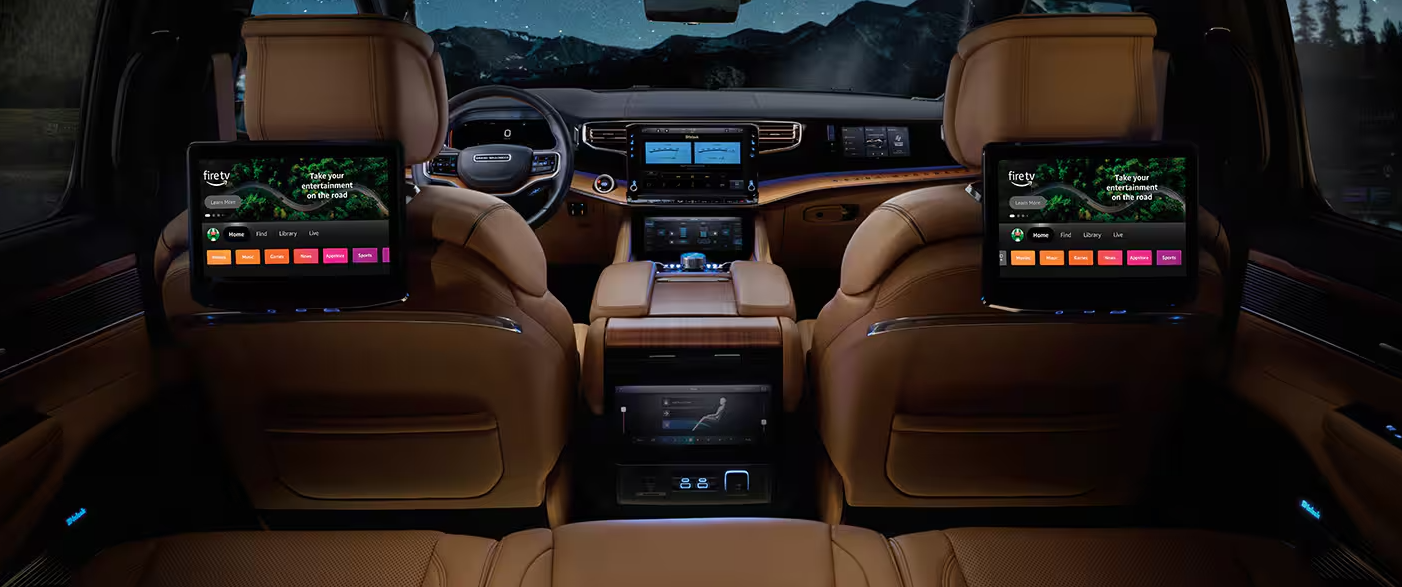
The 2026 Jeep Grand Wagoneer interior doesn't just compete in the luxury segment. Once you're inside, it's clear this cabin was designed with real intention. The materials hold up to scrutiny, the technology feels well thought out, and there's genuine space for everyone. If you've been searching for a three-row SUV that delivers on both comfort and capability, the Grand Wagoneer makes a strong case. more Why the 2026 Jeep Grand Wagoneer Interior Raises the Bar for Luxury SUVs Luxury SUVs have traditionally asked buyers to accept trade-offs. The third row is often barely usable, and the premium materials turn out to be surface-level. The Grand Wagoneer interior breaks from that pattern. Jeep built this cabin with enough detail to rival dedicated luxury brands, pairing real craftsmanship with livable space in a way that feels considered rather than cosmetic. What makes this generation stand out is how that design philosophy carries through the entire cabin rather than stopping at the driver's seat. Every row gets real attention, and every surface gets a finish worth noticing. For families who log meaningful time in their vehicles, whether on daily commutes through Putnam County or weekend road trips, that kind of consistency matters. A Digital Dashboard That's Hard to Ignore Technology is where the Grand Wagoneer dashboard makes its most immediate impression. The architecture is built around a well-integrated digital ecosystem that keeps everything visible and accessible without cluttering the cabin. The 75-Inch Screen Cluster and What It Does The centerpiece of the Grand Wagoneer interior is a setup that delivers up to 75 inches of total screen space across the first two rows, combining the driver display, infotainment screen, passenger display, and rear-seat entertainment into one cohesive system. The driver gets simultaneous access to navigation, vehicle performance data, and driver-assist monitoring, all laid out to minimize eye movement and keep key information in your peripheral field. For anyone who has spent time on unfamiliar stretches of Route 6 or the Taconic, that kind of clarity is genuinely useful. Passenger-Side Display and Controls The Grand Wagoneer also features a dedicated 10.25-inch Front Passenger Interactive Display. Front-seat passengers can browse entertainment options, adjust navigation inputs, or access vehicle cameras without pulling the driver's attention from the road. It's a subtle design shift with a real practical payoff: the front passenger becomes an active participant rather than just along for the ride. The layout also retains physical controls for key functions, so nothing important gets buried in touch menus. Second-row passengers can tap into available 10.1-inch Rear Seat Entertainment Screens with available Amazon Fire TV Built-In, plus an articulating lower comfort display for climate and seat settings. These screens make up much of that 75-inch total, so they're worth confirming on the trim and package you're considering. Premium Materials and Craftsmanship From Every Angle Technology is only half the story. The other half is what you feel when you run your hand across the door panel or settle into the seat. The Grand Wagoneer interior earns its luxury designation through materials that hold up to close inspection. Upholstery, Surface Finishes, and Interior Color Options Higher trims offer available Palermo leather-trimmed seating alongside genuine walnut wood accents and metal trim throughout. Leather-trimmed door panels and a leather-wrapped center console extend the premium feel beyond just the seats. Interior color combinations include Global Black, Sea Salt/Black, and Tupelo/Black, giving buyers real options for personalization. Photos don't fully communicate the tactile quality. You need to sit inside one to understand how the surfaces work together. Three-Row Comfort Built for Real Family Life Whether the third row actually works for adults is the question most families buying a three-row SUV care about most. In the Grand Wagoneer, it does, with enough legroom for teenagers and average-height adults to sit comfortably rather than just tolerate the space on short trips. Front and Second-Row Features Worth Knowing Grand Wagoneer seating capacity accommodates up to eight passengers across three rows, with second-row captain's chairs in the standard configuration and an available eight-passenger seating package that swaps in a second-row bench. Buyers who need the eighth seat should confirm the package is included on their build. Front seat adjustability varies by trim, climbing to available 24-way power-adjustable front seats with massage capability on the upper trims, paired with Palermo leather-trimmed seating. Lower trims offer fewer adjustment points, so buyers who want the full 24-way massage setup should confirm it's included on their chosen configuration rather than assuming it carries across the lineup. Heated and ventilated front seats are standard across the lineup, along with a heated steering wheel and memory settings for the driver seat, steering wheel, and audio. Second-row captain's chairs provide power adjustment, heating, and ventilation on select trims. Jeep also equips the Grand Wagoneer with more second-row legroom than competitors in its class, along with the most first- and second-row hip room in the segment. Third-Row Livability and Cargo Flexibility That third-row legroom is far from guaranteed in this class. Power-folding third-row seats are available on select trims, and with rows folded, cargo capacity expands meaningfully for ski trips or larger hauls. Concert-Quality Sound With the McIntosh Audio System The available McIntosh audio system is one of the more distinctive features in the full-size luxury SUV segment. Jeep equipped the Grand Wagoneer with 23 specifically tuned speakers, including a 12-inch dual voice coil subwoofer, all powered by a 24-channel, 1,375-watt amplifier. McIntosh has a long reputation in home audio, and their automotive work brings that same fidelity into the cabin. Whether you're streaming music or running audio through Apple CarPlay or Android Auto, the quality difference is immediately noticeable. We encourage anyone curious about this system to come experience it firsthand at our Carmel, NY location. How Interior Comfort Upgrades Vary Across Trim Levels The Grand Wagoneer lineup includes several configurations, each with a different approach to interior appointments. The table below summarizes how key interior features differ across trims. Trim Front Seat Adjustability Massage Seats Audio System Seating Material Head-Up Display Panoramic Sunroof Grand Wagoneer Power-adjustable No Standard audio Leather-trimmed Available Available Limited Altitude Power-adjustable No Upgraded audio Leather-trimmed Available Available Upland Power-adjustable No Upgraded audio Leather-trimmed Available Standard Limited Reserve Power-adjustable Available Available McIntosh Palermo leather available Available Available Summit Obsidian Up to 24-way power Yes Available McIntosh (23-speaker) Palermo leather available Available Standard Summit Reserve Up to 24-way power Yes Available McIntosh (23-speaker) Palermo leather available Available Standard The fundamental spaciousness and digital setup carry through at every level. The experiential details shift meaningfully as you move up, so buyers should compare trim features carefully to make sure the options they want most are actually included. If you're weighing the Grand Wagoneer against a slightly smaller three-row option, you can also browse the new Jeep Grand Cherokee to see how the two compare before deciding. Perfect for Hudson Valley Families: Long Drives and Daily Errands The Hudson Valley places specific demands on family vehicles. Winter road conditions are real. Weekends regularly mean longer drives out to Westchester, Dutchess County, or beyond. Daily life involves school pickups, highway commutes, and after-school logistics, often all in the same afternoon. The Grand Wagoneer handles all of it without compromise. The available four-wheel-drive system manages seasonal conditions with confidence, and the air suspension on higher trims adjusts ride height based on terrain. Inside, the cabin insulation keeps highway noise low enough that conversation doesn't require extra effort. For families driving regularly between Carmel, Poughkeepsie, Brewster, or into Danbury, CT, the Grand Wagoneer is a practical fit for the region's lifestyle. Explore the 2026 Jeep Grand Wagoneer at Meadowland of Carmel CDJR Reading about the Grand Wagoneer interior gets you most of the way there, but the full picture only comes together when you're sitting inside one. Meadowland of Carmel CDJR, located at 1952 US-6 in Carmel, NY, carries new Grand Wagoneer inventory and welcomes customers from across the Hudson Valley, including Poughkeepsie, Brewster, and Danbury, CT. We invite you to explore our new Jeep lineup to see what's currently available, or schedule a test drive to experience the cabin in person. Our team is available Monday through Thursday from 9 AM to 7 PM and Friday through Saturday from 9 AM to 6 PM. If you have questions about trim levels or want to explore financing options, don't hesitate to contact us directly at 845-704-4245. We're here to help you find the right configuration for your family.

Gray 2026 Jeep Compass on road

2026 Jeep Compass vs. Honda CR-V: Capability, Tech & Pricing

Choosing between two well-regarded compact SUVs is rarely simple, especially when each one brings genuine strengths to the table. The 2026 Jeep Compass vs. Honda CR-V debate comes up often among shoppers around Carmel, NY, and for good reason. Both vehicles sit comfortably in the same class, serve similar budgets, and target drivers who want a capable, tech-forward SUV for daily use. The similarities fade quickly once you look under the surface. The Compass leans into rugged capability and trail-ready design without sacrificing everyday comfort. The CR-V counters with a roomy cabin, smooth ride quality, and a family-first orientation that's hard to argue with. If you're weighing these two and trying to figure out which fits your actual lifestyle, the breakdown below should help you make a clearer call. more Getting to Know the 2026 Jeep Compass and Its Five Trims The 2026 Jeep Compass arrives with five distinct trims, each targeting a slightly different type of buyer. Rather than treating every trim as a minor variation of the last, Jeep has designed these configurations with clear personality differences. That structure makes it easier to find the exact version that fits your commute, your weekends, or your budget, without overpaying for features you don't need. If you want to experience Jeep capability firsthand, check out our new Jeep vehicles for sale in Carmel, NY. Latitude and Latitude Altitude: Everyday Confidence, Elevated Style The Latitude is the entry point into the Compass lineup, and it delivers more than you'd expect at its price. Standard AWD comes included across every trim, which is a meaningful advantage for anyone dealing with wet roads or light snow around Carmel, NY and the broader Putnam County area. The standard 8.4-inch Uconnect touchscreen with wireless Apple CarPlay and Android Auto is intuitive and responsive, the kind you can figure out without digging through a manual. The Latitude Altitude builds on that foundation with visual upgrades that sharpen the Compass's overall look. Darker trim accents and bolder badging give it a sportier, more assertive presence. For drivers who want something that stands out without jumping into a premium price range, the Altitude package delivers real appeal without a dramatic cost increase. Limited and Limited Altitude: Comfort and Premium Upgrades Move up to the Limited and the Compass starts to feel like a genuinely premium compact SUV. An available upgrade to the 10.1-inch Uconnect display, heated front seats, and upgraded interior materials make a noticeable difference on longer drives or family outings. These trims suit buyers who appreciate thoughtful details and don't want to feel like they made compromises just because they chose a compact over a midsize. The Limited Altitude blends the comfort-focused amenities of the Limited with the distinctive styling of the Altitude models. It's a strong combination for drivers who want their SUV to reflect both taste and practicality. If you're cross-shopping the Compass against competitors and looking for something with a more upscale feel at a reasonable price, these trims are worth a close look. To compare specific trim configurations, check out our matchup on the 2026 Jeep Compass Latitude vs. Limited Altitude. Trailhawk: Built for the Roads Less Traveled The Trailhawk is where the Compass separates itself most clearly from the CR-V and from most other vehicles in the compact SUV segment. This trim is purpose-built for off-road performance, featuring enhanced suspension geometry and a Selec-Terrain system with Rock mode, giving you hardware specifically designed to handle rough, uneven ground with confidence. Whether you're working through a muddy trail upstate or dealing with a rough winter back road near Carmel, the Trailhawk gives you tools the CR-V simply doesn't offer. The rugged design isn't just cosmetic either. It's a genuine off-road performance package, capable on surfaces that would stop most crossovers cold. For outdoor enthusiasts who see their SUV as a tool for getting somewhere rather than just driving to it, this trim makes a strong case. What the Honda CR-V Brings to the Table The CR-V has built a loyal following for very understandable reasons. It offers one of the most spacious interiors in the compact SUV class, with thoughtful storage solutions and a rear cargo area well-suited to grocery runs and longer road trips alike. Fuel efficiency is another strong suit, with EPA estimates of 28 city / 33 highway mpg in FWD configuration and 27 city / 31 highway mpg with AWD, making it an attractive option for commuters who spend significant time on the highway. The CR-V's safety technology suite is thorough, and its reliability reputation is well-established. Resale values tend to hold up solidly over time, which is worth factoring into total cost of ownership. When comparing the CR-V against the Compass on purely practical, family-focused criteria, it earns its reputation. What you give up, though, is off-road versatility and any real trail capability. All-Weather Capability and Real-World Performance Living in Putnam County means dealing with real weather: slick winter intersections, slushy streets, and wet back roads that can turn challenging quickly. Both SUVs are designed to handle it, though they approach all-weather confidence from different starting points. The CR-V delivers a composed, stable on-road experience in rain and light snow, with its optional AWD system working quietly in the background. AWD is not standard on the CR-V; it's available on most trims but requires an upgrade. The Compass takes a broader approach. Every trim comes standard with AWD, giving you that baseline confidence without any additional decisions. The Trailhawk goes further, with Selec-Terrain and Rock mode actively adjusting power delivery and stability control to match the surface you're on. For drivers who regularly encounter unpaved roads, muddy conditions, or weekend gear-hauling into the hills, that level of adaptability matters. The Compass can also tow up to 2,000 pounds, compared to the CR-V's 1,500-pound towing capacity, a useful difference if you haul a trailer or gear on weekends. Tech, Comfort, and the Everyday Cabin Experience Technology is a deciding factor for many compact SUV buyers, and the Compass vs. CR-V comparison in this area is competitive. A side-by-side look at the key specs: Feature 2026 Jeep Compass Honda CR-V Engine 2.0L turbo inline-four 1.5L turbo Horsepower 200 hp 190 hp Torque 221 lb-ft 179 lb-ft Transmission 8-speed automatic CVT AWD Standard Available (standard onTrailSport Hybrid and Sport Touring Hybrid) Towing 2,000 lbs 1,500 lbs Fuel Economy (AWD) 24/32 mpg 27/31 mpg The 2026 Compass features a standard 8.4-inch Uconnect touchscreen with wireless Apple CarPlay and Android Auto across the lineup, with an available 10.1-inch display on mid-range and higher trims. The CR-V's interface is clean and easy to use, and its connectivity options are well-implemented. Where the Compass has an edge is in the sense of premium polish and the variety of features available as you move through its trim structure. The Limited and Limited Altitude trims offer a level of comfort refinement that makes extended driving noticeably more enjoyable. For a deeper look into cabin materials and tech features, read our guide breaking down the 2026 Jeep Compass interior. Pricing and Value: What You Get at Each Step Up The 2026 Compass is structured to offer strong value at each trim step, with meaningful feature additions that justify the cost difference rather than incremental padding. The Latitude provides a capable, well-equipped starting point. The Limited and Limited Altitude trims add premium comfort features that bring the cabin experience closer to near-luxury territory. The Trailhawk commands a premium that reflects its unique off-road engineering and is genuinely unlike anything Honda offers in this class. To keep your vehicle covered over time, learn more in our article explaining what the Jeep Compass warranty includes. The CR-V sits at a comparable price range in most trims, and its higher configurations are well-justified for buyers prioritizing interior room and fuel efficiency. For those seeking a compact SUV that also brings genuine off-road capability, the Compass consistently delivers more at each price point without forcing you to choose between everyday usability and the ability to venture off the pavement. The Bottom Line: Which SUV Is Right for You? The choice between the 2026 Jeep Compass and the CR-V comes down to how you use your SUV. If off-road capability and trail-ready performance are priorities, the Compass is the clear answer. The Trailhawk has no real counterpart in Honda's lineup. If maximum cabin space and time-tested family practicality matter more, the CR-V is a sensible, well-rounded choice that earns its reputation. For drivers in Carmel, NY who want everyday comfort and the confidence to handle whatever Putnam County winters throw at them, the Compass makes a strong case. The five-trim structure means you can find the right version without overspending, and the all-weather capability built into every configuration fits the region's conditions well. If you're ready to explore your options, browse the new Jeep Compass inventory in Carmel, NY or take a look at the full new Jeep lineup for sale in Carmel, NY at Meadowland of Carmel CDJR. Our team can walk you through the trims, answer your questions, and get you behind the wheel at a time that works for you.